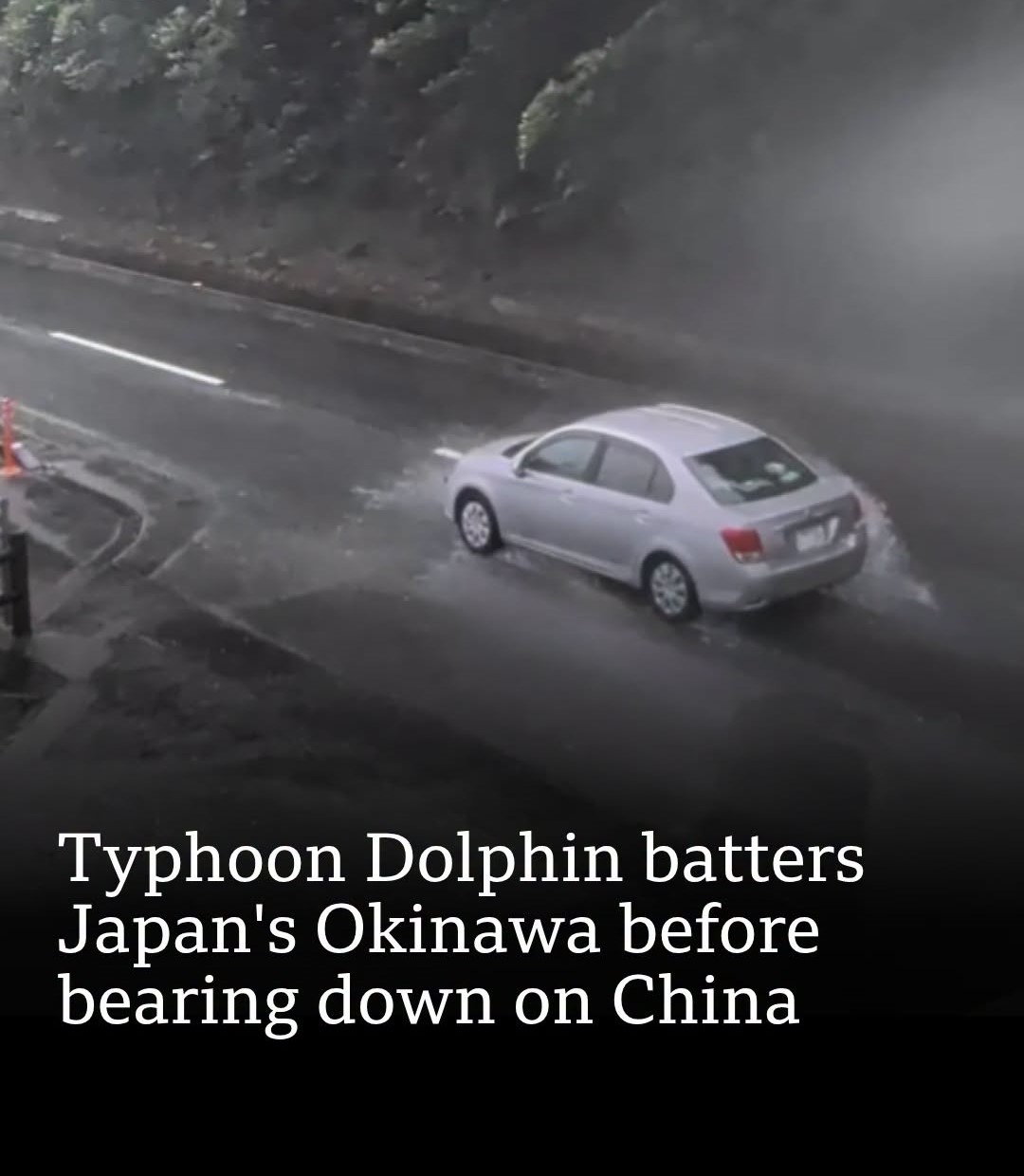
Typhoon Dolphin Strikes Okinawa, Leaving Thousands Without Power and Several Injured
A powerful typhoon brought dangerous winds, heavy rain, and widespread disruption to Japan’s Okinawa region, leaving tens of thousands of buildings without electricity and at least five people injured.
The storm, identified as Typhoon Dolphin, struck the area on Saturday, forcing residents to confront rapidly worsening weather conditions as strong winds battered communities and heavy rainfall created hazardous conditions across parts of the island.
For many residents, the arrival of the storm meant more than an unpleasant day of rain. Electricity supplies were disrupted, roads became difficult to navigate, and authorities faced the challenge of keeping people safe while the typhoon moved through the region.
According to the figures in the original report, at least 44,000 buildings lost power following the storm’s arrival. At least five people were also reported injured.
Although the number of injuries was relatively limited compared with some of the most destructive typhoons to strike Japan, the widespread power outages demonstrated the force of the weather system and the vulnerability of infrastructure during severe tropical storms.
Okinawa Faces the Full Force of the Storm
Okinawa is accustomed to powerful tropical weather. Located in the southwestern part of Japan, the island chain frequently experiences typhoons during the Pacific typhoon season.
However, familiarity with storms does not eliminate the danger.
Typhoons can produce destructive winds, torrential rain, flooding, landslides, and dangerous waves. Even buildings designed to withstand severe weather can experience damage when conditions become extreme.
As Typhoon Dolphin approached, residents and businesses were forced to prepare for the possibility of prolonged disruption.
Windows and doors were secured. Outdoor objects that could become dangerous in high winds were moved or tied down. Emergency supplies were gathered, while residents monitored weather updates and warnings from authorities.
For families, one of the biggest concerns during a major storm is electricity.
Power is essential for almost every aspect of modern life. When electricity disappears, refrigerators stop working, communications can become more difficult, and people may lose access to air conditioning during extremely hot and humid conditions.
For older residents and vulnerable people, a prolonged outage can be particularly challenging.
Thousands Left in the Dark
The reported loss of electricity affecting approximately 44,000 buildings became one of the clearest signs of the storm’s impact.
Power outages during typhoons can occur for several reasons. Strong winds may knock down trees and branches, which can damage electrical lines. Utility poles can also be affected by extreme weather, while flooding can create additional hazards for electrical infrastructure.
Restoring power is rarely as simple as switching a system back on.
Utility crews must first determine which parts of the network have been damaged. They then have to inspect lines, poles, transformers, and other equipment before repairs can safely begin.
During a typhoon, those crews may have to wait until winds and flooding conditions become less dangerous before entering affected areas.
That means some residents can remain without electricity long after the strongest winds have passed.
Injuries Reported
At least five people were reported injured in connection with the storm.
Even when a typhoon does not result in large numbers of fatalities, injuries can happen in numerous ways.
People can be struck by falling objects, injured by broken glass, involved in weather-related traffic accidents, or hurt while attempting to secure homes and property.
Strong winds can turn ordinary objects into dangerous debris.
A loose sign, branch, piece of roofing material, or outdoor structure can become airborne during severe weather. This is why emergency authorities routinely advise residents to remain indoors and avoid unnecessary travel when a typhoon is approaching.
The safest place during the most dangerous part of a storm is generally a secure building away from windows and exposed areas.
Life Disrupted Across the Island
The effects of a typhoon extend far beyond the immediate physical damage.
Businesses may have to close temporarily. Public transportation can be disrupted. Flights and ferry services may be canceled or delayed. Schools and other institutions may suspend operations depending on the severity of conditions.
For residents whose jobs depend on transportation or outdoor activity, the storm can mean lost income as well as inconvenience.
Restaurants, shops, hotels, farms, and other businesses can also experience losses.
Even after the weather improves, communities may need days to return to normal.
Debris must be removed. Roads and buildings have to be inspected. Electrical infrastructure must be repaired. Damaged homes may require temporary shelter or emergency assistance.
Why Okinawa Is So Familiar With Typhoons
Okinawa’s location makes it particularly exposed to tropical cyclones.
The region sits in a part of the western Pacific where tropical storms frequently develop or pass through. Over the years, residents have developed a culture of preparation based on experience.
Strong buildings, storm shutters, emergency supplies, weather monitoring, and evacuation planning all play important roles.
But preparation has limits.
A sufficiently powerful storm can still disrupt even a well-prepared community.
Modern technology has improved forecasting and warning systems, allowing residents to receive information earlier than previous generations could. Satellite observations, computer models, radar systems, and communication networks provide authorities with tools that can help communities prepare.
Yet the final outcome still depends on the storm’s strength, its path, and local conditions.
The Hours After the Storm
For residents who experienced the worst conditions, the hours after the storm can be almost as important as the hours before it.
The immediate temptation is to go outside and assess the damage.
But fallen power lines, unstable structures, flooding, broken glass, and debris can remain dangerous even after winds weaken.
Authorities typically urge residents to remain cautious until areas have been inspected and hazards have been removed.
Power restoration crews also face difficult working conditions.
They must repair damaged infrastructure while avoiding additional risks. In some locations, roads may be blocked by fallen trees or debris, making it harder for emergency and utility vehicles to reach affected neighborhoods.
The restoration process therefore becomes a community-wide effort.
A Reminder of Nature’s Power
The impact of Typhoon Dolphin serves as another reminder of the enormous power contained within tropical weather systems.
A storm can move across an ocean for days before reaching land, yet once it arrives, its effects can be felt immediately.
The reported 44,000 power outages illustrate how quickly essential services can be disrupted. The injuries reported during the storm also demonstrate why residents are urged to take official warnings seriously.
Typhoons are not simply periods of heavy rain.
They can produce dangerous winds, flooding, falling debris, transportation disruptions, and long-lasting damage.
Communities Begin the Recovery
For those affected, recovery begins one step at a time.
Families check on relatives and neighbors. Businesses inspect their properties. Utility workers begin assessing damaged infrastructure. Emergency personnel respond to calls for assistance.
The process may not make international headlines, but for people living in affected communities, these small actions are significant.
A repaired power line means a family can turn its lights back on.
A cleared road means emergency vehicles can move again.
A repaired roof means a household can begin rebuilding its life.
Natural disasters are often measured in statistics—buildings without electricity, people injured, roads blocked, or homes damaged. But behind every number is a person whose daily routine has been interrupted.
The reported impact of Typhoon Dolphin on Okinawa therefore represents more than a weather event.
It represents thousands of households suddenly dealing with darkness, uncertainty, and disruption.
And as the storm moves away, the focus shifts from survival to recovery.
The winds eventually weaken. The rain stops. The skies begin to clear.
But for the communities affected, the work of returning to normal begins only after the storm has passed.