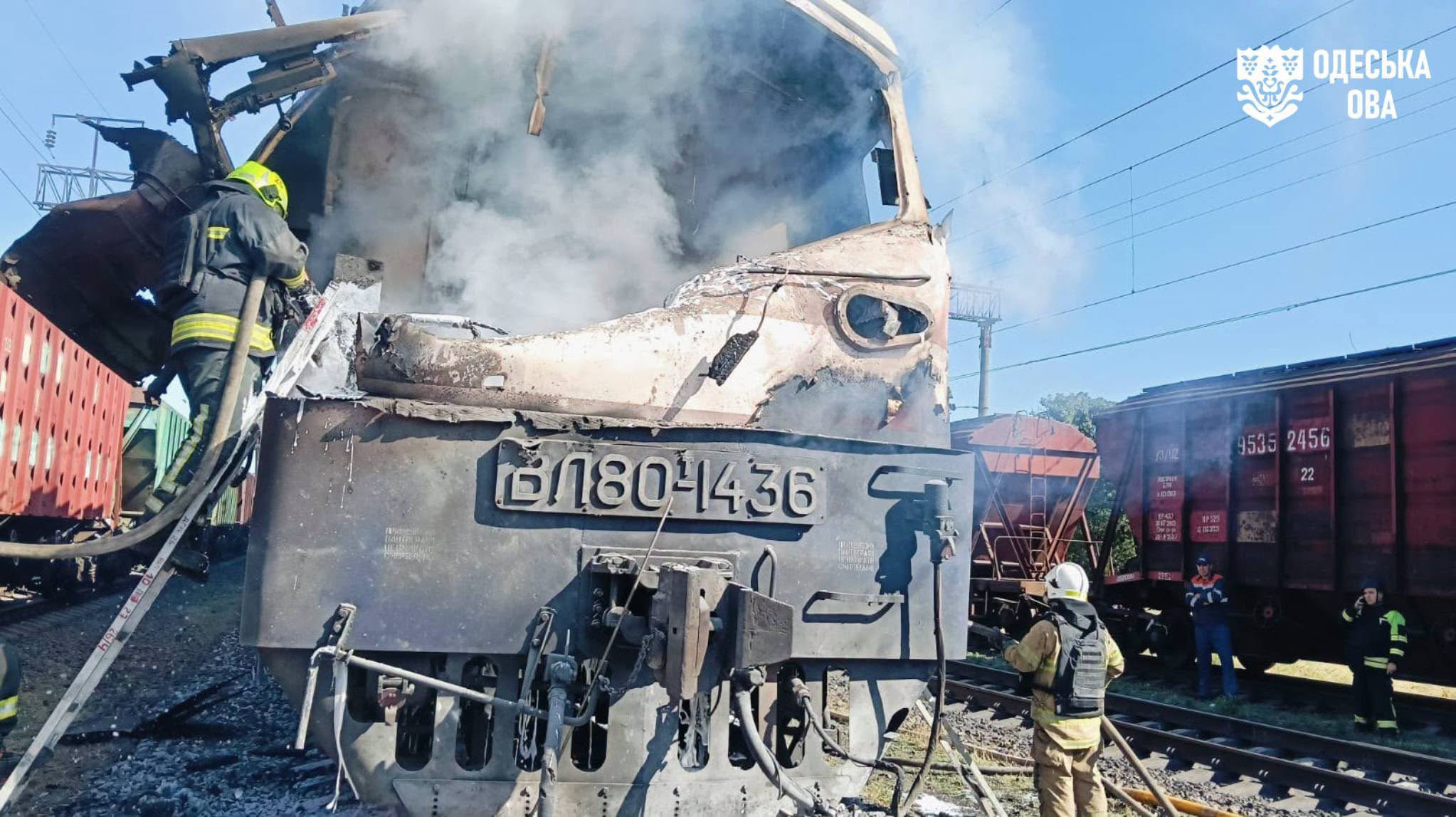
Russian Drone Strike Hits Passenger Train in Odesa Region, Killing Two Railway Workers
A devastating Russian drone strike struck a passenger train in Ukraine’s Odesa region on August 13, killing the train driver and his assistant while hundreds of passengers were forced to evacuate. The attack has drawn renewed attention to the dangers faced by civilians and railway workers as Russia’s war against Ukraine continues to affect transportation and other critical infrastructure.
According to reports from Ukrainian railway authorities, a jet-powered Shahed drone struck the locomotive of a passenger train traveling on the Odesa–Dnipro route in the Berezivka district of Odesa Oblast. The train was carrying approximately 340 passengers, including dozens of children.
The consequences were immediate.
The locomotive was severely damaged and caught fire. Emergency crews responded to the scene while passengers were evacuated from the train. Although the attack resulted in the deaths of the two railway workers operating the locomotive, the passengers were evacuated safely.
Reports said that a monitoring team had detected a drone threat shortly before the strike. The train was being brought toward a station so passengers could be evacuated. However, the drone reportedly made a sudden maneuver, leaving the locomotive crew with very little time to stop completely and escape.
For the passengers inside the train, the experience must have been terrifying.
A normal journey can change in an instant when an air-raid warning or drone threat occurs. People traveling with children, luggage, and personal belongings suddenly have to leave the train and move to safety. The sound of an approaching drone, an explosion, smoke, damaged windows, and emergency vehicles can turn an ordinary trip into a frightening survival situation.
Yet amid the chaos, the evacuation of the passengers was successful.
Ukrainian Railways said that the 340 passengers and other train personnel were evacuated safely. Reports indicated that buses were arranged to transport passengers toward Odesa after the attack.
The two railway workers, however, did not survive.
Their deaths have added another painful dimension to the attack. Train crews continue working during wartime because Ukraine’s railway system remains essential for moving people and goods across the country. Railway workers operate trains despite the continuing threat posed by missiles and drones.
On August 14, the community of Znamianka declared a day of mourning for the two railway workers who were killed in the Odesa region attack.
Their deaths are a reminder that behind every railway service are people performing jobs that millions of passengers depend on.
The attack also highlights the difficulty of protecting railway infrastructure during a war increasingly dominated by drones. Railways are essential to Ukraine’s transportation network, but their routes and stations cover large areas, making complete protection extremely difficult.
A passenger train is also different from a military target. It carries ordinary people: families, workers, students, elderly passengers, and children.
That is why attacks affecting passenger transportation create such intense concern.
Ukrainian officials condemned the strike and argued that the presence of civilians aboard the train could not have been unknown. President Volodymyr Zelenskyy used the incident to renew calls for stronger air defenses to protect Ukrainian cities and infrastructure.
The incident did not happen in isolation.
Later on August 13, another passenger train in the Odesa region was struck in a separate drone attack. That train was reportedly carrying around 500 people, and a child was injured. The second strike came only hours after the first attack, making the day’s events particularly alarming for railway workers and passengers.
Two railway incidents involving passenger trains in one day demonstrated the continuing vulnerability of transportation networks in the region.
For civilians, the attacks are another reminder that the war can reach places far from the most obvious battlefronts. A railway carriage is normally associated with routine travel rather than warfare. Passengers board expecting to reach their destination, not to face an attack from the sky.
The psychological impact of such incidents can therefore be enormous.
People who survive an attack may carry memories of it for years. Children who were traveling with their families may remember the sudden evacuation, explosions, damaged windows, emergency workers, and fear surrounding them.
At the same time, the response of emergency workers and railway personnel demonstrates the importance of preparation.
The successful evacuation of hundreds of passengers required coordination and rapid decision-making. Emergency responders had to deal with the damaged locomotive and fire while railway officials worked to move passengers away from danger.
Every second mattered.
The attack also raises broader questions about civilian infrastructure during wartime. Railways are essential not only for ordinary passengers but also for the movement of humanitarian supplies, medical equipment, workers, and other necessities.
When railway infrastructure is damaged, the effects can spread far beyond the immediate location of an attack.
Routes may be disrupted. Trains can be delayed or canceled. Passengers may need alternative transportation. Railway workers can be placed in additional danger while attempting to repair damaged infrastructure.
For Ukraine, maintaining transportation networks during the war has become a major challenge.
The August 13 attacks came during a period of intensified Russian attacks across Ukraine. Reports said Russian forces launched a large number of drones overnight, with Ukrainian air defenses intercepting many of them. Other parts of the country also experienced casualties and damage.
The attacks demonstrate how drones have become a major part of modern warfare.
Relatively inexpensive unmanned aircraft can travel long distances and threaten infrastructure far from the front line. Their use has changed how civilians think about safety, especially in areas where air-raid warnings have become part of everyday life.
For railway workers, this creates an especially difficult working environment.
They must continue operating trains while monitoring security warnings and responding to rapidly changing conditions. A train cannot always stop instantly, and a large passenger train cannot be evacuated in a matter of seconds.
The tragedy in Odesa illustrates that reality.
The driver and his assistant were reportedly given only a short amount of time after the threat was detected. Their deaths show the risks faced by people who continue working to keep essential services operating during wartime.
Meanwhile, the safe evacuation of the passengers represents an important part of the story that should not be forgotten.
Hundreds of people survived because warnings were issued, evacuation procedures were activated, and emergency personnel responded quickly.
The event is therefore both a tragedy and a reminder of the importance of emergency preparedness.
As investigations continue, authorities are expected to examine the circumstances surrounding the strike, including the drone’s movements, the timing of the warning, the damage to the train, and the response that followed.
It is important for the public to wait for verified information rather than spreading rumors or unconfirmed claims about the incident.
In wartime, misinformation can spread almost as quickly as the news itself. Dramatic photographs and videos may circulate without context, while inaccurate claims about casualties or the circumstances of an attack can cause additional distress.
The confirmed facts are already serious enough.
A passenger train carrying about 340 people was struck in Odesa Oblast on August 13. The locomotive was hit by a Russian jet-powered Shahed drone. The driver and assistant driver were killed. The passengers were evacuated safely. And hours later, another passenger train in the region was struck, injuring a child.
For the families of the two railway workers, however, these facts are not simply numbers in a news report.
They represent two people who went to work and never returned home.
Their colleagues lost members of their railway community. Their families lost loved ones. And hundreds of passengers who survived the attack will likely remember the journey for the rest of their lives.
The tragedy in Odesa is another painful chapter in a war that continues to affect ordinary people far beyond the battlefield.
A railway journey should be about reaching a destination.
On August 13, for hundreds of passengers in Odesa Oblast, it became a fight to reach safety.
The successful evacuation saved many lives, but the deaths of the two railway workers remain a solemn reminder of the human cost of the conflict.
As Ukraine continues to defend its territory and protect its population, the safety of civilians and essential workers remains one of the greatest challenges.
The attack ultimately leaves behind a message that is difficult to ignore: even an ordinary passenger train can become a place of danger during wartime, and the people keeping that train moving may pay the highest price.