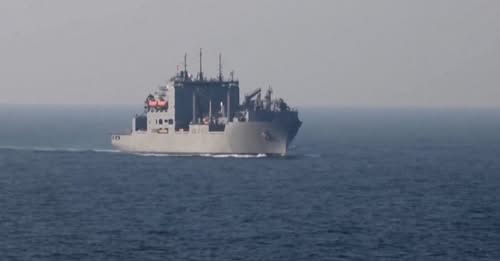
Trump Dismisses Concerns Over Conditions Aboard the USS Abraham Lincoln
President Donald Trump has dismissed concerns about conditions aboard the USS Abraham Lincoln, the U.S. Navy aircraft carrier that has remained deployed for more than eight months in support of U.S. military operations involving Iran.
The comments came as concerns from sailors’ families, lawmakers and military advocates have drawn growing attention to the extraordinary length of the deployment. The carrier has reportedly spent more than 250 consecutive days at sea without a major port visit, placing unusual pressure on the approximately 5,000 sailors and Marines aboard.
For the families watching from home, the situation has become increasingly worrying.
Some relatives have described concerns about exhaustion, morale, supplies and the mental health of sailors. Military news organizations have also reported accounts of sailors experiencing serious psychological distress during the prolonged deployment.
When Trump was asked about the concerns, he rejected the suggestion that the families were alarmed.
“No, they’re not,” Trump said when a reporter referred to concerns from military families, according to reporting by The Washington Post. He added that the Lincoln would soon be replaced by another carrier.
Trump later characterized the carrier’s deployment as not having lasted long enough, despite the fact that the ship had already been at sea for more than eight months.
His comments have intensified a debate over the balance between military necessity and the wellbeing of service members.
A Deployment That Went Far Beyond the Original Schedule
The USS Abraham Lincoln left San Diego in November 2025. Its deployment was originally expected to last roughly seven months, but circumstances changed as U.S. military operations involving Iran continued.
Instead of returning home as planned, the carrier remained in the region.
By August 2026, the crew had spent hundreds of days away from home and more than 250 consecutive days without making a major port visit. That represents an extraordinary period for an aircraft carrier crew.
Aircraft carriers are designed to remain at sea for long periods, but long deployments can still place considerable pressure on personnel.
Sailors live in confined spaces, work demanding schedules and remain separated from their families for months at a time. Port visits normally provide opportunities to rest, replenish supplies and briefly escape the intensity of life aboard the ship.
The Lincoln’s crew has had fewer such opportunities.
That has become one of the central concerns surrounding the deployment.
Families Raise Alarm
Military families have increasingly spoken publicly about the conditions their loved ones are experiencing.
According to reports, concerns have included shortages of certain supplies, difficult living conditions and problems affecting morale. Families have also expressed anxiety about sailors’ mental health after such a long period without returning home.
Those concerns were brought directly to Navy leadership during meetings involving relatives of sailors.
The discussions reportedly focused heavily on mental health and the impact of the prolonged deployment.
For families, the issue is not simply the number of days displayed on a calendar.
It is the uncertainty.
A sailor who expects to be home after six or seven months can mentally prepare for that separation. When the deployment keeps being extended, however, the emotional strain can become much more difficult.
Family members may also worry about whether their loved ones are receiving adequate medical care, food, supplies and opportunities to communicate.
Mental Health Concerns
Perhaps the most serious aspect of the controversy involves reports of psychological distress aboard the carrier.
Military publications have reported multiple alleged attempts by sailors to go overboard during the extended deployment. The Navy has not publicly confirmed all of the reported incidents or provided a complete number. Officials have emphasized that mental-health resources are available aboard the ship.
Nevertheless, the reports have raised questions about the psychological effects of prolonged deployments.
Military service is demanding even under normal circumstances.
Sailors must remain alert, maintain complicated equipment and perform their duties regardless of fatigue. When a deployment extends unexpectedly, those pressures can become more difficult to manage.
The confined environment of a carrier can add another challenge.
Thousands of people live and work in a relatively small space. Privacy is limited. Working hours can be long. The ocean surrounds the ship in every direction.
For months, the ship can become the sailor’s entire world.
That makes opportunities to rest and reconnect with family particularly important.
Pentagon Pushes Back
Trump is not the only senior official to reject descriptions of the carrier’s conditions.
Defense Secretary Pete Hegseth has also pushed back against reports describing conditions aboard the Lincoln as severely deteriorated. He said reports about problems on the carrier had been misrepresented and defended the Navy’s ability to support its personnel.
The Navy has likewise emphasized that sailors have access to medical professionals, chaplains and mental-health resources.
This has created a sharp contrast between official statements and the concerns expressed by some families and military publications.
Officials say the ship remains capable of performing its mission.
Critics argue that operational capability does not necessarily mean that conditions aboard the ship are acceptable.
Both questions can exist at the same time.
A carrier can remain fully operational while its crew is experiencing significant stress.
Why the Lincoln Has Stayed at Sea
The central reason for the extraordinary deployment is the continuing military situation involving Iran.
The Abraham Lincoln has been operating in the region as part of America’s military presence during the conflict. Its aircraft and accompanying naval forces provide the United States with significant combat and defensive capabilities.
For military planners, maintaining a carrier in the region can be strategically important.
But keeping the same crew deployed for such a long period creates another problem.
The Navy has to balance strategic requirements with the need to rotate personnel and maintain ships properly.
Eventually, even the most capable crews need rest.
Ships also require maintenance.
Aircraft require inspections and repairs.
Equipment wears down.
Personnel need time away from demanding operational environments.
That is why the arrival of another carrier is so significant.
The USS George Washington Moves Toward the Region
The USS George Washington is being sent from the Pacific toward the Middle East to replace the Abraham Lincoln. The move is intended to provide a transition that will allow the Lincoln and its crew to leave the region after their unusually long deployment.
The replacement itself demonstrates how difficult the Navy’s current situation has become.
Moving a carrier from the Pacific to the Middle East is not a simple matter. It requires coordination with other naval forces and changes America’s military posture in the Pacific.
The deployment has therefore created strategic consequences far beyond the Abraham Lincoln itself.
The Pacific is temporarily losing a carrier presence while the Middle East receives another one.
Military planners must now consider whether the replacement can provide the necessary capabilities while allowing the Lincoln’s crew to finally return home.
A Larger Question for the Navy
The controversy surrounding the Abraham Lincoln has raised a much broader question:
How long can the United States realistically keep aircraft carriers deployed before the human and mechanical costs become too great?
The U.S. Navy has a limited number of aircraft carriers.
Each one represents an enormous investment in money, technology and personnel.
When one ship remains deployed for an extraordinary period, the pressure can spread throughout the fleet.
Future deployments may need to be adjusted.
Maintenance schedules can be delayed.
Crews can become exhausted.
Families can experience prolonged separation.
The Lincoln’s deployment is therefore not simply a story about one ship.
It is also a story about the challenges facing a military attempting to operate simultaneously in several strategically important parts of the world.
The Human Side of the Story
Behind all of the political arguments are thousands of sailors.
They are the people operating aircraft, maintaining engines, repairing equipment, standing watches and keeping the ship ready for combat.
They are also parents, husbands, wives, sons, daughters, brothers and sisters.
Their families have spent months waiting for them.
For some relatives, the most important news is not another military operation or political statement.
It is simply knowing that their loved one is safe.
That is why the debate over the Abraham Lincoln has become so emotional.
Supporters of the Navy’s mission argue that sailors volunteered to serve and understand that military operations sometimes require sacrifice.
Critics respond that military service does not eliminate the responsibility of commanders and political leaders to protect the health and wellbeing of service members.
The challenge is finding the balance.
What Happens Next?
The immediate priority will be the planned transition from the Abraham Lincoln to the USS George Washington.
If the replacement proceeds as expected, thousands of sailors aboard the Lincoln will eventually be able to leave the demanding deployment.
For those sailors, returning home could be an emotional moment.
After months at sea, they will once again see their families, sleep in familiar surroundings and experience ordinary life away from the constant demands of military operations.
But the questions raised by the deployment will not disappear when the ship returns.
The Navy will still have to examine what went wrong, what worked and what should change in future prolonged deployments.
Mental-health support may become an especially important part of that discussion.
So will supply chains, maintenance schedules and communication between military families and Navy leadership.
The Abraham Lincoln’s record-setting deployment has demonstrated the extraordinary endurance of the sailors aboard it.
But it has also demonstrated that even the most advanced warship in the world depends on human beings.
And human beings have limits.
Trump may believe the deployment was not long enough from a military perspective.
For many of the families waiting at home, however, the question is different.
After more than eight months away, they simply want their loved ones to come home safely.
That is the human story behind the controversy surrounding the USS Abraham Lincoln.