Prosecutors Narrow Case Against Man Accused of Starting Devastating Palisades Fire
Federal prosecutors are taking a different approach in their second attempt to convict Jonathan Rinderknecht, the man accused of starting the devastating 2025 Palisades Fire in Los Angeles.
After a jury failed to reach a unanimous verdict in his first trial, prosecutors have reduced the number of charges they will pursue. The new indictment contains two charges instead of the three Rinderknecht faced during his first trial. His retrial is expected to begin in the fall.
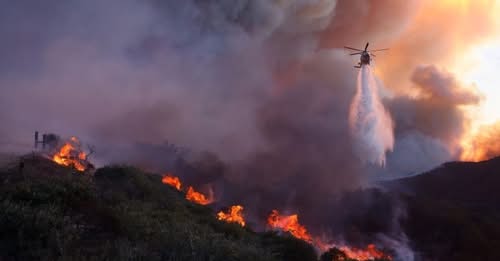
The case has attracted enormous attention because the Palisades Fire became the deadliest and most destructive wildfire in Los Angeles history. Twelve people died, more than 6,800 buildings were destroyed, and large areas of Pacific Palisades and Malibu were devastated.
For residents who lost homes, businesses and loved ones, the criminal case represents one part of a much larger search for answers.
A Case That Ended Without a Verdict
Rinderknecht’s first trial ended in June after jurors were unable to agree on whether he was guilty.
The split was significant. Ten of the 12 jurors reportedly favored acquitting him on all three felony counts, while two wanted to convict him. Because the jury could not reach a unanimous decision, the judge declared a mistrial.
A mistrial does not mean that the defendant was found innocent. It means the jury could not reach the required unanimous verdict.
Federal prosecutors subsequently announced that they would try the case again.
Now they have changed their strategy.
The new indictment drops one of the previous charges and narrows the government’s allegations.
Rinderknecht now faces charges involving destruction of property by means of fire and arson affecting property used in interstate commerce. The previous timber-related charge has been removed.
What Prosecutors Allege
Prosecutors allege that Rinderknecht deliberately started a fire on January 1, 2025, using a barbecue lighter.
According to the government’s theory, that initial fire did not immediately become the enormous wildfire that later devastated Pacific Palisades. Instead, prosecutors say the flames burned underground in root systems and remained undetected.
Days later, on January 7, the fire allegedly reignited and grew into the Palisades Fire.
The government’s case therefore depends on establishing a connection between the January 1 fire and the catastrophic blaze that followed several days later.
That connection is one of the central issues likely to remain important during the retrial.
The Devastation Left Behind
The Palisades Fire became one of the defining disasters of the January 2025 Southern California wildfire crisis.
Fueled by powerful winds and extremely dry conditions, the fire spread rapidly through communities in Los Angeles County.
Homes disappeared within hours.
Entire neighborhoods were transformed.
Thousands of residents were forced to evacuate.
Twelve people ultimately died in the Palisades Fire, while more than 6,800 structures were destroyed.
For survivors, the damage was not simply measured in buildings.
People lost family photographs, personal possessions, businesses and homes where they had lived for decades.
Some residents returned to find little more than ashes.
That devastation has given the criminal case enormous emotional significance.
Why Prosecutors Reduced the Charges
The decision to pursue fewer charges does not necessarily mean prosecutors have abandoned their central theory.
Instead, the new indictment appears to narrow the government’s case.
During the first trial, prosecutors accused Rinderknecht of responsibility for both the January 1 fire and the larger Palisades Fire under all three charges.
Under the new indictment, only one charge refers to both fires, while the other focuses specifically on destruction caused by the initial January 1 fire.
The narrower approach could allow prosecutors to focus more directly on the evidence they believe is strongest.
For the defense, however, the fundamental question remains whether prosecutors can prove beyond a reasonable doubt that Rinderknecht deliberately started the fire.
The Defense’s Argument
Rinderknecht’s attorneys have argued that the government does not have direct evidence proving that he started the fire.
They have also challenged the prosecution’s consideration of alternative explanations for how the initial fire began, including the possibility that fireworks could have been involved.
That disagreement is likely to remain central during the second trial.
Criminal cases involving fires can be particularly complicated because investigators must reconstruct what happened from physical evidence, witness accounts, surveillance footage, digital information and fire-science analysis.
The prosecution must ultimately convince a jury that the evidence establishes Rinderknecht’s guilt beyond a reasonable doubt.
Digital Evidence and Investigators’ Theory
During the first trial, prosecutors presented what they described as a digital trail connecting Rinderknecht to ideas about economic inequality and anger toward society.
They also presented recorded interviews in which they said Rinderknecht gave inconsistent accounts about his movements around the time of the January 1 fire.
Prosecutors have alleged that his motivations were connected to grievances over economic inequality.
The defense, however, has challenged the government’s interpretation of the evidence.
The existence of suspicious behavior or controversial online activity does not automatically establish that someone committed a crime. Prosecutors must connect the evidence directly to the alleged act of setting the fire.
That distinction will be crucial in the retrial.
A Community Still Recovering
While the legal process continues, the communities affected by the Palisades Fire are still dealing with the consequences of the disaster.
Rebuilding after a wildfire can take years.
Homes must be reconstructed.
Infrastructure must be repaired.
Businesses must reopen.
Residents must navigate insurance claims, permits and construction.
And families who lost loved ones must continue living with an absence that cannot be repaired.
For many survivors, the criminal case cannot undo what happened.
But a conviction, if one occurs, could provide a sense of accountability.
For others, the most important outcome may simply be learning exactly how the fire began.
The Importance of the Retrial
The second trial will give prosecutors another opportunity to present their evidence.
But the first trial demonstrated that the case faces significant challenges.
The jury did not reach a verdict, and the large majority of jurors reportedly favored acquittal. That does not determine the outcome of the next trial, because a new jury will hear the evidence.
Still, it demonstrates that prosecutors must present a compelling case.
The government’s decision to reduce the number of charges may be an attempt to make that case more focused and easier for jurors to evaluate.
The defense will have another opportunity to challenge the prosecution’s evidence and present its alternative explanations.
A Disaster That Changed Los Angeles
The Palisades Fire was more than another wildfire.
It changed the landscape of Los Angeles.
Communities that had existed for generations were suddenly confronted with destruction.
The disaster also raised broader questions about wildfire preparedness, evacuation systems, emergency communication, climate conditions and the vulnerability of densely populated communities located near wildland areas.
The criminal case is only one piece of that larger story.
Even if prosecutors eventually obtain a conviction, many of the broader questions surrounding the disaster will remain.
How can future fires be prevented?
How can communities evacuate more quickly?
How can firefighters respond to rapidly spreading flames?
And how can residents rebuild after losing everything?
Those questions will continue long after the courtroom proceedings end.
What Happens Next?
A federal judge is scheduled to hold a status conference and arraignment as the case moves toward the second trial, which is expected in the fall.
The prosecution will present its revised case.
The defense will challenge it.
A new jury will eventually be asked to decide whether the government has proved its allegations beyond a reasonable doubt.
Until that happens, Rinderknecht remains accused, not convicted.
That distinction is important.
The first jury did not convict him. It deadlocked, resulting in a mistrial. The second trial will begin with a new jury and a revised indictment.
For the victims and survivors of the Palisades Fire, however, the legal process represents only one chapter in a story that began with flames spreading across Los Angeles in January 2025.
The physical scars of the disaster remain.
So do the memories.
As prosecutors prepare for another attempt to prove their case, the central question remains the same:
Who started the fire that destroyed thousands of buildings and killed 12 people?
The retrial may bring the justice and answers that many victims and families have been waiting for—but until a jury reaches a verdict, the allegations against Rinderknecht remain just that: allegations.