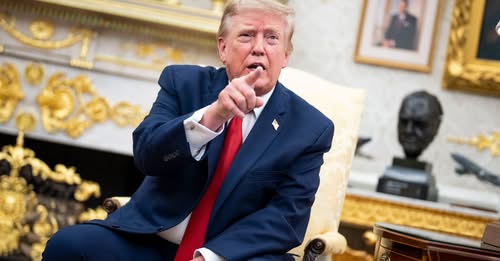
Trump Threatens to Bomb Oman as Iran War and Hormuz Crisis Escalate… See More
A dramatic new development in the Middle East has placed Oman at the center of an already dangerous confrontation between the United States and Iran.
President Donald Trump has threatened to bomb Oman if he believes the Gulf nation is getting in the way of efforts to reach an agreement with Iran over the strategically important Strait of Hormuz. The remarks have generated immediate concern because Oman has traditionally played a diplomatic role between Washington and Tehran and is considered an important regional partner for the United States.
The comments came as negotiations surrounding the Strait of Hormuz became increasingly complicated.
Hormuz is one of the world’s most important waterways. Large quantities of oil and other energy products normally pass through the strait, meaning that any prolonged disruption can affect fuel prices, shipping, businesses, and economies far beyond the Middle East.
The situation has become even more serious because the United States and Iran remain locked in a broader conflict.
According to recent reports, efforts to reach a durable agreement have stalled. A temporary understanding expired without producing the long-term settlement Washington wanted, while Iranian officials have indicated that they could adopt a more aggressive military position if diplomacy fails.
Against that background, Oman’s role has become extremely important.
Oman has historically maintained relationships with both the United States and Iran. Rather than simply choosing one side, Muscat has often presented itself as a diplomatic bridge. That position has allowed Oman to host or facilitate sensitive discussions that might otherwise have been difficult to arrange.
That makes Trump’s threat particularly striking.
Instead of being a direct participant in the war, Oman has been involved in efforts connected to diplomacy and the reopening of commercial shipping through the Strait of Hormuz. Reports say Oman has been negotiating with Iran over arrangements concerning shipping through the waterway.
Trump’s frustration appears to center on the possibility that an Omani-Iranian arrangement could undermine the objectives of his administration’s pressure campaign against Tehran.
The president has repeatedly demanded that Iran make major concessions, particularly concerning its nuclear capabilities. He has also rejected suggestions that the United States should simply accept an agreement that does not meet his conditions.
That has left diplomacy at a dangerous crossroads.
If negotiations succeed, the Strait of Hormuz could gradually return to normal commercial operations and some of the pressure on energy markets could ease.
If negotiations collapse, however, the consequences could spread quickly.
Oil prices have already responded to fears surrounding the conflict. Reports indicate that crude prices rose as investors worried about continued disruption around Hormuz. The waterway is critical to international energy supplies, so even the possibility of a prolonged crisis can cause businesses and governments to prepare for higher costs.
For ordinary people, the consequences of a geopolitical confrontation may eventually appear far away from the battlefield.
Higher oil prices can increase transportation costs. Those costs can affect airlines, trucking companies, manufacturers, and retailers. In turn, consumers can face higher prices for fuel and other goods.
That is why governments around the world are watching the situation closely.
But the diplomatic consequences could be just as significant.
Oman is not simply another country in the region. Its position has allowed it to maintain communication with parties that frequently disagree with one another. Threatening military action against such a country could make future diplomatic efforts considerably more difficult.
It could also create concerns among other American partners in the Gulf.
Allies may begin asking whether their relationship with Washington could become strained if they pursue policies that differ from American preferences.
The situation therefore goes beyond one statement.
It raises questions about how the United States intends to balance military pressure with diplomacy.
The Trump administration has emphasized strength and deterrence, arguing that Iran must not be allowed to obtain nuclear weapons and that American pressure is necessary to force Tehran toward an acceptable agreement. At the same time, diplomacy remains essential if the United States wants to end the conflict without an even larger regional war.
Oman sits directly in the middle of that contradiction.
It is both a close American partner and a country with longstanding ties to Iran.
That makes Muscat uniquely positioned to communicate with both sides—but it also means Oman can become vulnerable to pressure from competing powers.
For now, there is no indication that the threat itself means an attack on Oman is imminent.
A presidential threat or warning is not the same thing as an announced military operation. Military action would involve additional decisions, planning, legal considerations, and potentially significant diplomatic consequences.
Nevertheless, the statement has already had an impact.
It has drawn attention from members of Congress and foreign-policy observers. Some lawmakers have discussed using congressional war-powers mechanisms to restrict potential military action against Oman.
That means the controversy could become a domestic political issue as well as an international one.
The central question now is whether the confrontation can be brought back toward diplomacy.
Oman has historically demonstrated that it can play a useful role in difficult negotiations. If Washington, Tehran, and Muscat can find common ground over the Strait of Hormuz, the current crisis could potentially move toward a less dangerous phase.
But if threats continue and negotiations collapse, the risk of further escalation will remain.
The Strait of Hormuz is simply too important for the world economy to ignore.
Every ship that passes through the region becomes part of a much larger geopolitical calculation. Every threat can influence insurance costs, shipping decisions, energy prices, and government planning.
And every failed diplomatic conversation can make the next one more difficult.
For President Trump, the challenge is now enormous.
He must maintain pressure on Iran while avoiding a wider conflict that could pull additional countries into the crisis. He must also deal with the economic consequences of instability while convincing allies that American diplomacy remains reliable.
For Oman, the challenge is equally difficult.
The country must protect its own interests while continuing to navigate relationships with Washington and Tehran.
And for the rest of the world, the hope is that the crisis does not spiral into something much larger.
What happens next could depend on diplomacy as much as military power.
The threat against Oman has therefore become another warning sign of how fragile the current situation has become. A country that has spent years helping bring opposing sides together is now caught between them.
The coming days could reveal whether the rhetoric leads to further escalation or whether diplomats manage to pull the region back from the edge.
For now, the world is watching the Strait of Hormuz, watching Washington, watching Tehran—and watching Oman.
The next move could have consequences far beyond the Middle East.
See More