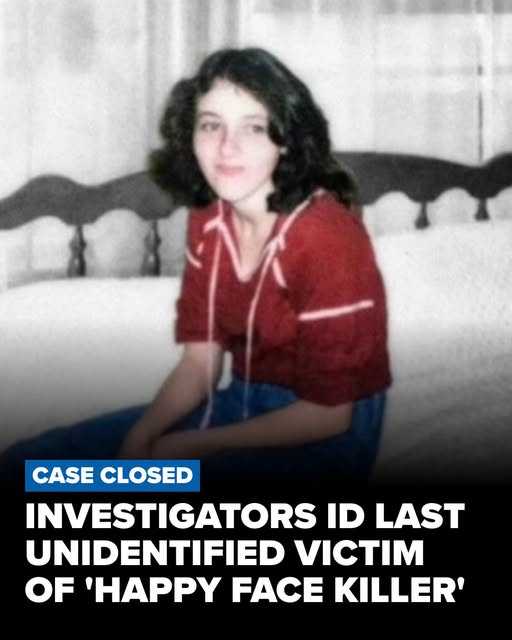
After 34 Years, “Claudia” Finally Has a Name: The Cold Case That Ended With DNA… See More
For more than three decades, she existed in the records under a name that was never truly hers.
Investigators called her “Claudia.”
That was the name given to her by the man who admitted killing her—a serial killer whose crimes stretched across several states. But the woman herself remained unidentified for 34 years, leaving behind a mystery that investigators repeatedly tried to solve.
Now, that mystery has finally been answered.
Authorities in Riverside County, California, have identified the woman as Lydia Jane Wade McWhorter, a Texas woman whose remains were discovered along Highway 95 approximately seven miles north of Blythe on August 30, 1992. DNA testing and genetic genealogy ultimately provided the connection investigators needed to restore her identity.
For Lydia’s family, the announcement represents something they had waited decades to hear: her name.
A Woman Known Only as “Claudia”
When Lydia’s body was discovered in the desert in 1992, investigators had very few answers.
The woman had no confirmed identity.
There was no family waiting at the scene.
There was no clear explanation of who she was, where she had come from or how she ended up in the remote area near Blythe.
The case became even more disturbing when investigators learned that serial killer Keith Hunter Jesperson had confessed to killing her.
Jesperson, who became known as the “Happy Face Killer,” eventually admitted responsibility for eight murders committed across several states. He told investigators that he knew this particular victim as “Claudia,” although detectives could never establish whether that was actually her name.
For years, that single word was essentially all investigators had.
Claudia.
A name without a confirmed identity.
A victim without a complete biography.
A person whose family might not even know what had happened to her.
The Killer’s Account
According to investigators, Jesperson met the woman while working as a long-haul truck driver.
He later told authorities that he encountered her at a brake-check area in Southern California. She reportedly wanted transportation toward Los Angeles, but Jesperson’s route was taking him in another direction.
Their journey eventually continued through several locations.
Investigators said the two later argued about money, and Jesperson admitted killing her. He subsequently disposed of her body near Blythe.
The details were horrifying, but one question remained unanswered:
Who was she?
Knowing the identity of a killer does not necessarily mean knowing the identity of every victim.
In Lydia’s case, the killer had been convicted, but she remained nameless.
The Search for Her Family
Investigators continued looking for answers long after the original investigation.
Advances in forensic science eventually changed what was possible.
DNA could provide clues that detectives in 1992 could never have imagined. Genetic genealogy, in particular, offered a new way to approach unidentified remains by comparing genetic information with relatives and building family connections.
In 2024, Riverside County investigators publicly renewed their effort to identify “Claudia.” They had made progress, but the case still lacked the definitive connection necessary to establish her identity.
Investigators eventually identified relatives on Lydia’s paternal side.
But that wasn’t enough.
They needed another genetic connection.
They needed evidence linking the unknown woman to her maternal family.
That search continued.
The Breakthrough
The breakthrough finally came this week.
According to authorities, investigators developed a lead to one of Lydia’s direct maternal relatives. Further DNA analysis produced the confirmation they had been seeking.
The result was definitive.
The woman known for decades as “Claudia” was Lydia Jane Wade McWhorter of Texas.
After nearly 34 years, investigators could finally replace the unidentified label with her real name.
For a cold-case investigator, that is an extraordinary moment.
For a family, it can be something even more profound.
A Family’s Long Wait
Lydia’s sisters had grown up with her.
Then she disappeared from their lives.
For decades, they lived without knowing exactly what had happened to her or where she was.
That kind of uncertainty can be extraordinarily painful.
There is a particular cruelty in not knowing.
Families cannot properly mourn.
They cannot answer questions.
They cannot put photographs alongside a grave.
They cannot tell future generations exactly what happened.
Instead, they live with an empty space.
The identification changes that.
Authorities said the Riverside County District Attorney’s Division of Victim Services is working with Lydia’s family as they decide how to honor her and lay her to rest.
The case therefore isn’t simply about solving a mystery.
It is about returning someone to her family.
Why Genetic Genealogy Matters
Lydia’s identification illustrates how dramatically forensic investigations have changed.
In 1992, investigators relied heavily on traditional detective work, physical evidence, photographs, witness accounts and available forensic technology.
Today, DNA can potentially reveal family relationships decades after a crime occurred.
Genetic genealogy allows investigators to search for biological connections that may not appear in conventional law-enforcement databases.
Those connections can lead investigators toward relatives, family trees and eventually an individual’s identity.
It does not solve every case.
But when combined with traditional investigative work, it can provide a breakthrough where decades of conventional investigation produced no answer.
Lydia’s case is another example of how technology can give cold cases a second life.
The “Happy Face Killer” Connection
Lydia was the final unidentified victim associated with the murders for which Jesperson was convicted, according to authorities.
Jesperson’s nickname came from the smiley faces he used when signing letters he sent to media outlets and authorities while discussing his crimes.
He ultimately confessed to killing eight women between 1990 and 1995 in multiple states.
He pleaded guilty to Lydia’s murder in Riverside County in 2010.
Although the killer’s identity had long been known, Lydia’s identity remained a missing piece.
Now that piece has been found.
More Than a Name
It can be easy to describe a cold-case breakthrough simply as an identification.
But a name represents much more than a line in a police report.
Lydia was someone’s sister.
Someone’s daughter.
Someone’s friend.
She had a childhood.
She had memories.
She had hopes and plans that existed before her life was violently taken from her.
For 34 years, the public knew her primarily through the circumstances of her death.
Now, she can finally be remembered as Lydia.
That distinction matters.
A victim should never be defined solely by the person who killed them.
A Long-Awaited Answer
There is still sadness surrounding the case.
DNA cannot return the years Lydia’s family lost.
It cannot erase what happened in 1992.
It cannot undo the violence that ended her life.
But it can provide something that families of unidentified victims desperately need:
certainty.
After decades of questions, Lydia Jane Wade McWhorter finally has her identity back.
The desert road near Blythe where she was once known only as “Claudia” is now connected to a real woman with a real name and a real family.
And perhaps that is the most important part of this story.
For 34 years, the world knew her as an unidentified victim.
Today, she is Lydia.
Her family finally knows where she belongs.
And a case that began with an unknown woman beside a California highway has finally reached the answer investigators and relatives had been searching for all these years.