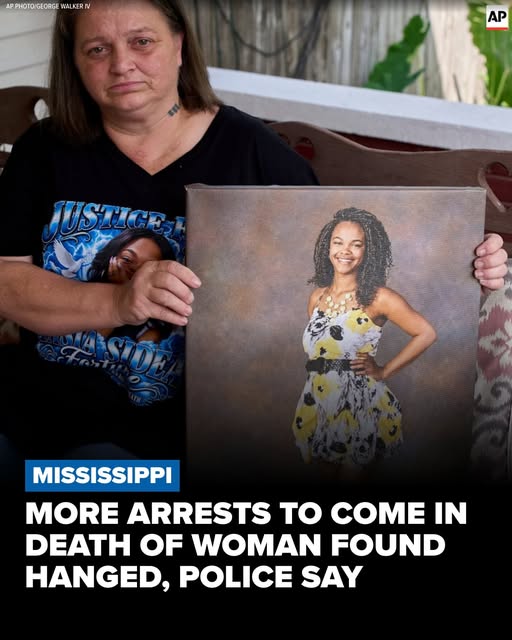
UPDATE: Jackson Police Arrest 51-Year-Old Man in Connection With the Death of Tasia Fortune
A case that has drawn attention and concern in Jackson has taken a significant turn following the arrest of 51-year-old Jarques Ratliff in connection with the death of Tasia Fortune.
According to the update, Jackson police arrested Ratliff on a murder charge following an investigation into Fortune’s death. Fortune, a Black woman, was reportedly found hanging from a tree, a discovery that raised serious questions and prompted an investigation into the circumstances surrounding her death.
The arrest represents an important development in a case that has left family members, friends, and members of the community searching for answers.
At the center of the investigation is the death of Fortune and the circumstances surrounding how she was found. While the discovery of a person hanging from a tree can immediately generate speculation, investigators must establish what actually happened through evidence, interviews, forensic examination, and other investigative procedures.
An arrest on a murder charge is a serious legal development, but it is important to remember that an arrest is not the same as a conviction. Ratliff is entitled to the presumption of innocence unless and until prosecutors prove the allegations against him in court.
The investigation will now move into another important phase as authorities work to establish the evidence supporting the charge and determine what happened before Fortune’s death.
Cases involving suspicious or unexplained deaths can be particularly difficult for families. Loved ones are often left with questions that cannot immediately be answered. They may want to know where the victim was before the incident, who last saw her, whether she had communicated with anyone, and what events led investigators to identify a potential suspect.
Those questions can remain unanswered for weeks or months while investigators work to reconstruct a timeline.
For Fortune’s family and those who knew her, the investigation is about more than a criminal case. It is about understanding what happened to someone they loved.
When a death occurs under disturbing circumstances, communities can also experience fear and uncertainty. People may begin sharing information online, sometimes before authorities have released verified details. Social media can help bring attention to a case, but it can also spread rumors and unconfirmed claims.
That makes verified information especially important.
The arrest of Ratliff provides one confirmed development in the case, but many details may still need to be established through the legal process.
Investigators will likely examine the circumstances surrounding Fortune’s death, physical evidence, communications, witness statements, and any other information that could help establish what happened. Prosecutors will ultimately have to present evidence sufficient to support the murder charge in court.
For members of the public following the case, the most responsible approach is to distinguish between confirmed information and speculation.
The wording of a social-media post can sometimes make an event appear more certain than the available evidence actually supports. Headlines designed to attract attention may leave out important context or imply conclusions that have not yet been established.
In a criminal investigation, those distinctions matter.
The family of a person who has died deserves accurate information rather than rumors. A person accused of a crime also has legal rights that must be respected. And investigators need the freedom to follow evidence without being influenced by online speculation.
The arrest nevertheless marks a major moment in the investigation.
For those who have been waiting for answers, it may provide a sense that authorities have identified a person they believe is connected to the case. At the same time, an arrest can be only one step in a much longer legal process.
The coming stages could include court appearances, the filing or review of formal charges, hearings, additional investigative work, and potentially a trial.
During that process, evidence will be examined and challenged.
That process can sometimes feel frustratingly slow to people outside the investigation, especially when a death has generated intense public interest. But establishing the truth requires more than a headline.
It requires evidence.
It requires careful examination of the facts.
And ultimately, it requires a court to determine whether the prosecution has met its burden of proof.
For Fortune’s loved ones, however, no legal process can undo the loss.
The investigation may eventually answer important questions, but it cannot bring her back. That reality is often the most painful part of cases like this.
Every victim has a life beyond the circumstances of their death—a family, friendships, memories, experiences, and people who cared about them. As attention focuses on the investigation, it is important not to allow the person at the center of the case to become reduced to a headline.
Tasia Fortune was a person whose death has now become the subject of a murder investigation.
The arrest of Jarques Ratliff means authorities believe there is sufficient basis to charge him in connection with the case, but the legal system must now determine what the evidence ultimately shows.
Until more verified information is released, many questions remain.
What led to Fortune’s death?
What evidence connected Ratliff to the case?
What happened before she was found?
And what will investigators and prosecutors uncover as the case moves forward?
Those questions may be answered as the investigation and court proceedings continue.
For now, the most significant confirmed development is the arrest itself.
The case remains a reminder of why thorough investigations matter. When a person dies under disturbing circumstances, determining the truth requires patience, evidence, and due process.
For Fortune’s family and community, the hope will be that the investigation provides clarity and that the legal process ultimately establishes what happened.
As the case develops, additional verified information may provide a clearer picture of the circumstances surrounding Tasia Fortune’s death and the allegations against Jarques Ratliff.
Until then, the facts that have been confirmed should remain at the center of the story—and speculation should not be mistaken for evidence.