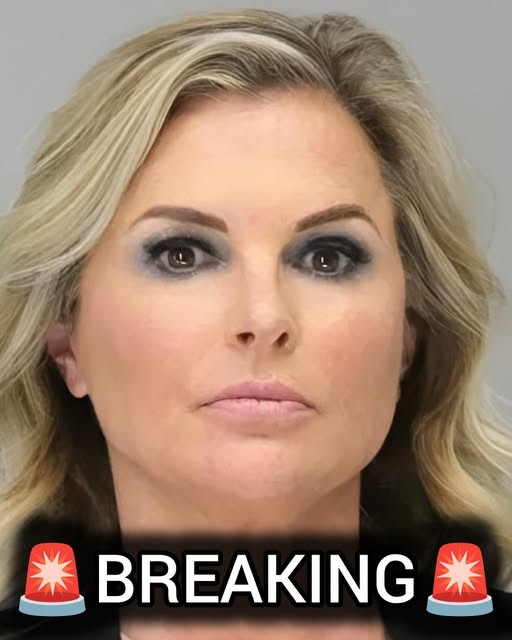
Shelley Luther and the Salon Shutdown That Became a National Controversy
In 2020, as governments around the world introduced unprecedented restrictions in response to the COVID-19 pandemic, one Texas salon owner became the center of a political and legal controversy that attracted national attention.
Her name was Shelley Luther.
Luther owned Salon À la Mode in Dallas, Texas. When authorities ordered many businesses to close during the early stages of the pandemic, she faced a difficult decision. Like thousands of other small-business owners, she was confronted with the possibility of losing her income while continuing to pay rent, employees, and other expenses.
Eventually, Luther chose to reopen her salon despite restrictions that were still in place.
The decision quickly transformed her from a local business owner into a national political figure.
The story became particularly controversial because Luther did not simply reopen quietly. She publicly defended her decision, arguing that she needed to work and support herself and her employees.
Her actions came during a period of extraordinary uncertainty.
In spring 2020, governments were attempting to slow the spread of a new virus. Businesses were being ordered to close, schools were shutting down, and millions of people were being asked to remain at home.
For small-business owners, however, the restrictions created serious financial consequences.
Salons were especially affected because their work requires close physical contact. Hairdressers, barbers, nail technicians, and other beauty professionals could not simply operate from a distance.
For Luther, closing meant losing her livelihood.
When she reopened Salon À la Mode, authorities took legal action. The confrontation quickly became a symbol in the broader debate over government restrictions, personal liberty, public health, and the economic survival of small businesses.
Luther was eventually held in contempt of court after refusing to comply with orders requiring her salon to remain closed.
The situation escalated dramatically when a judge ordered her to serve jail time.
That decision triggered a major public reaction.
Supporters argued that Luther was being punished for trying to earn a living during an unprecedented economic crisis. Critics argued that public-health rules existed for a reason and that businesses were expected to follow legal orders during an emergency.
The disagreement reflected a much larger national debate.
Across the United States, people were arguing over how much power governments should have during a public-health emergency. Some believed strict restrictions were necessary to protect lives and prevent hospitals from becoming overwhelmed.
Others believed the restrictions went too far and imposed unacceptable costs on workers, business owners, and individual freedoms.
Luther’s case became a powerful symbol for the second argument.
Her appearance in court drew national attention. Supporters gathered around her, while political figures publicly criticized the decision to jail her.
Texas Attorney General Ken Paxton filed legal action challenging the jail order, and Governor Greg Abbott also became involved in the controversy.
The case eventually reached a turning point when the Texas Supreme Court ordered Luther released from jail.
Her release transformed the story again.
What had begun as a dispute involving one salon had become part of a much larger political conversation about the government’s response to COVID-19.
Luther subsequently became associated with the political movement opposing pandemic restrictions. Her experience brought her national recognition and helped make her a prominent figure among people who believed lockdown policies had gone too far.
But the story cannot be understood without remembering the atmosphere of 2020.
At the time, Americans were living through circumstances few had ever experienced.
Businesses were closing.
Unemployment was rising.
Families were separated.
Hospitals were under enormous pressure.
People were uncertain about how the virus spread, how dangerous it would become, and how long restrictions would last.
Government officials were making decisions under extraordinary pressure and incomplete information.
Those circumstances created intense disagreement.
For business owners like Luther, the issue was not theoretical.
A closed salon meant bills could go unpaid. Employees could lose wages. Customers could disappear. A business built over years could potentially collapse.
For public-health officials, however, salons represented another concern: close contact between people could increase the possibility of transmission.
Both sides of the debate involved real consequences.
That is why Luther’s story resonated so strongly with people across the political spectrum.
To her supporters, she represented independence and resistance.
To her critics, she represented a refusal to comply with emergency measures intended to protect public health.
The controversy also raised questions about how authorities should enforce emergency orders.
Should someone who violates a public-health rule face criminal penalties? Should jail be used when the violation involves keeping a business open? Could financial penalties or other measures have been more appropriate?
These questions continue to generate debate even years later.
The events surrounding Luther also demonstrate how quickly an ordinary citizen can become a national symbol.
Before 2020, most Americans had never heard of Shelley Luther. After the salon controversy, her name appeared in national news coverage and political discussions.
Her story became part of the larger history of the pandemic.
Today, memories of the 2020 lockdown period can be very different depending on a person’s experiences.
Some remember fear and uncertainty.
Others remember financial hardship.
Some remember the loss of loved ones.
Others remember frustration with government restrictions.
Many people remember several of these experiences at the same time.
That complexity is important.
The pandemic was not experienced in exactly the same way by everyone. A person working from home may have experienced restrictions differently from a restaurant owner, hairdresser, nurse, delivery worker, or small-business employee.
For Luther, the central issue was her business and her ability to continue working.
Her decision to reopen became a national argument about where the line should be drawn between individual freedom and collective responsibility.
Regardless of where someone stands politically, the story illustrates how extraordinary circumstances can produce difficult choices.
It also shows how quickly those choices can become symbolic.
Luther’s salon was not simply a salon anymore.
It became a stage for a national argument.
Her arrest and release became political talking points. Her courtroom appearances attracted attention. Her story was repeatedly shared online.
Years later, the controversy remains memorable because it captured the intense divisions of the pandemic era.
The phrase “she was jailed for keeping her salon open” can sound simple, but the underlying story was much more complicated. It involved court orders, government regulations, public-health concerns, financial survival, constitutional arguments, political activism, and an unprecedented national crisis.
The most important lesson may be that historical events are rarely as simple as a viral headline makes them appear.
A short post can tell readers that someone was jailed.
The full story explains why, under what legal circumstances, what happened afterward, and why the case became so controversial.
Shelley Luther’s experience remains an example of how a single business dispute can become a national political flashpoint.
Her salon became a symbol of resistance for some Americans and a symbol of defiance against emergency rules for others.
Whatever one’s political position, the episode provides a fascinating glimpse into the extraordinary tensions of 2020.
It was a time when ordinary decisions suddenly carried enormous consequences.
For Luther, opening the doors of her salon became a decision that changed the course of her life and placed her at the center of a national debate.
And that is why, years after the original controversy, her name continues to appear whenever people revisit the complicated and deeply divisive story of America’s 2020 lockdowns.