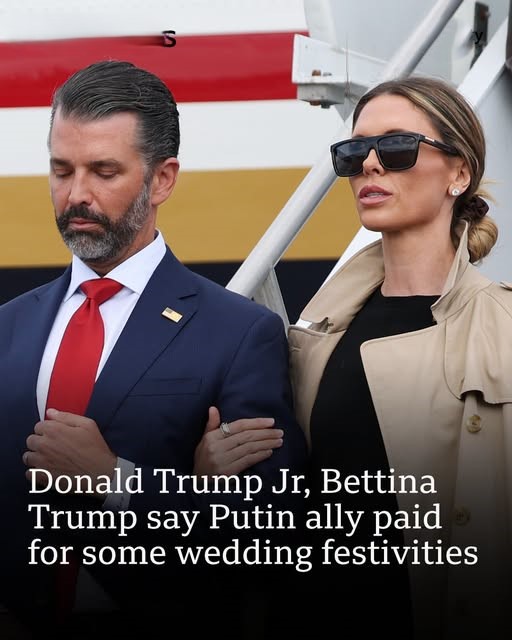
Donald Trump Jr. and the Question of Gifts From Foreign Nationals
Questions about foreign gifts and American politics can quickly become complicated, particularly when a prominent political family is involved. A claim circulating online says that Donald Trump Jr., one of President Donald Trump’s sons, is a private citizen and therefore can legally accept gifts from foreign nationals. The reality is more nuanced than that short statement suggests.
Donald Trump Jr. is a businessman and public figure, but he is not a government official simply because his father is president. That distinction matters when considering laws governing gifts, campaign activity, bribery, and foreign influence.
Being a private citizen, however, does not automatically mean that every gift from a foreign national is lawful. Different laws can apply depending on the nature of the gift, its value, the circumstances surrounding it, and whether it is connected to political activity or an official government matter.
One important area is campaign-finance law. U.S. law places restrictions on foreign nationals making contributions, donations, expenditures, or other things of value in connection with American elections. Those rules exist because the United States has a strong interest in preventing foreign governments or foreign individuals from improperly influencing domestic elections.
That means the context surrounding a foreign gift can be extremely important.
A personal gift that has no connection to an election is different from something provided to influence a campaign. Similarly, a private citizen receiving a personal item is not automatically in the same legal situation as a government official receiving something in exchange for an official action.
This distinction is frequently lost in social-media discussions.
When a political controversy emerges, people often reduce complicated legal questions to a single sentence: “It’s legal,” or “It’s illegal.” But lawyers and investigators generally need to examine the specific facts before reaching such conclusions.
Another issue is the Foreign Corrupt Practices Act, commonly known as the FCPA. That law primarily addresses bribery involving foreign officials and certain business activities. It does not simply prohibit every gift received by every American from every foreign person.
Other federal laws can also become relevant depending on the circumstances.
For example, bribery laws may apply when something of value is offered or received in exchange for an official act by a public official. But a private citizen is not automatically subject to every restriction that applies to a federal officeholder.
This is why Donald Trump Jr.’s status as a private citizen can be relevant, but it is not the entire legal analysis.
There is also a difference between something being technically lawful and something being politically controversial.
A gift can generate serious questions about ethics, influence, or appearances even if prosecutors ultimately determine that no criminal law was violated. Public officials and political families are often judged not only by criminal statutes but also by broader standards concerning transparency and potential conflicts of interest.
The public naturally becomes interested when foreign nationals interact financially with people closely connected to a president.
The concern is understandable. Foreign governments and wealthy foreign individuals can have interests that conflict with American political or economic interests. People therefore want reassurance that money, gifts, or business relationships are not being used to purchase influence.
At the same time, suspicion should not automatically be treated as proof.
A foreign connection does not, by itself, establish wrongdoing. The important questions are what was given, who gave it, why it was given, whether there was an expectation of something in return, and whether any applicable laws or regulations were violated.
Those details can completely change the legal picture.
The issue also demonstrates why political claims should be examined carefully before being shared online. A headline may correctly describe one part of a situation while leaving out important qualifications.
For example, saying that someone is a private citizen may be factually relevant, but readers could incorrectly interpret the statement to mean that the person faces no restrictions whatsoever. That would be an overly broad conclusion.
Legal questions involving foreign nationals, political campaigns, government officials, and members of political families are rarely that simple.
Another important consideration is transparency.
Even when an action is lawful, disclosure can help the public understand financial relationships and potential conflicts. Transparency allows journalists, voters, and watchdog organizations to examine circumstances that might otherwise remain hidden.
That is especially important when people involved have close connections to elected officials.
Donald Trump Jr. has remained a prominent public figure because of his business career, political activity, and relationship to his father. His status as the president’s son can create public interest even when he is acting in a personal capacity.
But family relationships alone do not automatically transform a private individual into a government official.
That distinction should be preserved when discussing legal responsibility.
At the same time, if a private citizen participates in political campaigns or activities, other rules may become relevant. The question then shifts from simply asking whether the individual is a private citizen to asking what role they were playing and what the foreign national was providing.
That is why context matters so much.
The public debate surrounding foreign gifts also reflects a larger concern about foreign influence in American politics. Over the past several decades, lawmakers and regulators have developed rules intended to prevent foreign money from improperly affecting U.S. elections and government decisions.
Those rules are not designed to prohibit ordinary interactions between Americans and foreigners. They are intended to protect the integrity of American political institutions.
The challenge is determining where the line is drawn in each particular situation.
That determination should be based on evidence and the applicable law rather than assumptions.
Ultimately, the statement that Donald Trump Jr. is a private citizen may be an important starting point, but it should not be presented as the complete answer to every question about foreign gifts.
Whether a particular gift is lawful depends on the facts surrounding it and on which laws apply.
The distinction between private activity, political activity, and official government activity is critical.
It is also worth remembering that legality and ethics are separate questions. Something can be legal while still generating legitimate questions about judgment or transparency. Conversely, something that looks suspicious from the outside may ultimately have an entirely innocent explanation.
That is why careful investigation matters.
Rather than relying solely on a viral headline, readers should look for the underlying facts and authoritative legal analysis. Political disagreements are inevitable, but accurate information should remain the foundation of the discussion.
The question is therefore not simply, “Can Donald Trump Jr. accept a gift from a foreign national?”
The better question is: What was the gift, who provided it, why was it provided, and was it connected to political activity, business dealings, or an expectation of influence?
Those are the details that determine the significance of the situation.
And as with many politically charged stories, the most responsible approach is to distinguish what is confirmed from what is alleged, and what is legally established from what is merely being debated.
The public deserves clear answers—but those answers should come from facts, evidence, and the law rather than speculation.