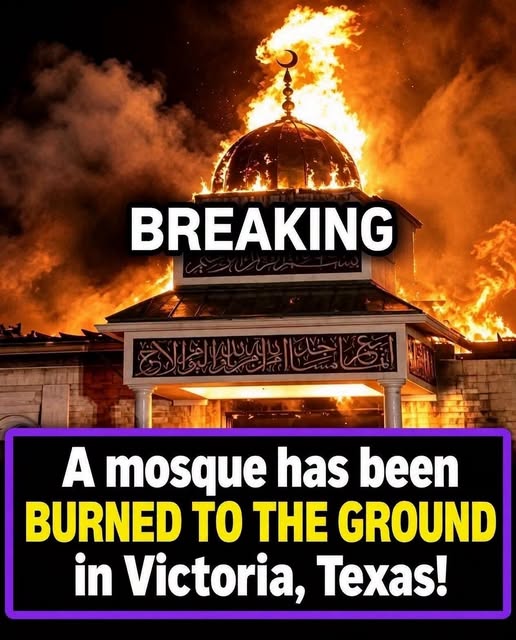
Mosque Burned to the Ground in Victoria, Texas: The Fire That Shocked a Community
VICTORIA, TEXAS — A devastating mosque fire in South Texas became a national story in 2017, leaving a Muslim congregation without its place of worship and prompting an extraordinary wave of community support.
A fire that destroyed the Victoria Islamic Center on January 28, 2017, shocked residents and drew attention from across the United States. What initially appeared to be a devastating building fire soon became the focus of a major criminal investigation.
The mosque, which had served local Muslim families for years, was almost completely destroyed. Members of the congregation faced the loss of their spiritual home, important records, and a familiar gathering place where families had come together for prayer and community activities.
But the tragedy also revealed another side of the city. People from different religious and cultural backgrounds rallied around the congregation, offering donations, encouragement, and practical assistance as members began considering how to rebuild.
A Devastating Fire
The fire was reported during the early hours of January 28, 2017.
According to contemporary reporting, a nearby convenience-store employee noticed heavy smoke coming from the mosque and alerted authorities.
Firefighters responded and worked for hours to control the blaze. Despite their efforts, the building suffered catastrophic damage.
The Victoria Islamic Center had served the local Muslim community for approximately 16 years. Its destruction meant that families suddenly lost a place associated with religious observance, education, social gatherings, and community life.
The building also contained important documents and records that were destroyed in the fire.
For members of the congregation, the damage was not simply a financial setback. The mosque represented years of work, personal memories, and a shared commitment to maintaining a place where Muslims could practice their faith.
An Investigation Begins
In the immediate aftermath, investigators worked to establish what had caused the fire.
The timing attracted national attention. The blaze occurred only hours after President Donald Trump signed an executive order restricting travel from several Muslim-majority countries and suspending refugee admissions.
That coincidence intensified concerns among some members of the Muslim community about whether the mosque had been deliberately targeted.
However, investigators initially cautioned against drawing conclusions before the evidence had been examined.
On February 8, 2017, investigators announced that the fire had been intentionally set. At that stage, authorities said they had not established that it was motivated by religious bias.
The investigation continued as federal, state, and local authorities worked to identify the person responsible.
A Community Responds
As investigators examined the scene, residents began organizing support for the congregation.
People from different backgrounds visited the damaged property, expressed sympathy, and offered assistance.
Students and faculty from a local Catholic school were among those who visited the site. They brought messages of support and demonstrated solidarity with the Muslim community.
Their actions became an example of how neighbors can respond when a community experiences a devastating loss.
Financial assistance also arrived from beyond Victoria. Donations poured in from people across the country and internationally, helping the congregation begin planning for the future.
The response demonstrated that the destruction of a religious building did not have to result in the isolation of the people who worshipped there.
Instead, the tragedy prompted many residents to emphasize compassion, cooperation, and the importance of religious freedom.
A Criminal Case Develops
The investigation eventually led to the prosecution of Marq Vincent Perez, a Victoria resident.
In June 2017, federal authorities announced that Perez had been charged in connection with the mosque fire.
The case proceeded through the federal court system, where prosecutors presented evidence concerning the destruction of the building and the defendant’s conduct.
In July 2018, a federal jury found Perez guilty of the charges related to the mosque burning, including a hate-crime offense involving religious property.
The verdict established criminal responsibility through the judicial process rather than through speculation based on the timing of the fire.
In October 2018, Perez was sentenced to more than 24 years in federal prison.
The case demonstrated the seriousness with which federal authorities treated the destruction of a place of worship and the violation of the congregation’s religious rights.
Rebuilding After the Destruction
Even before the criminal proceedings concluded, members of the Victoria Islamic Center were working to rebuild their community.
The outpouring of donations provided essential support for that effort.
The congregation’s experience showed that rebuilding after a disaster involves more than replacing walls, roofs, and other physical structures.
A religious center serves many purposes. It can be a place for daily prayer, religious education, celebrations, meetings, and the development of relationships between generations.
When such a building is destroyed, members must find ways to maintain those activities while also dealing with grief, uncertainty, and practical challenges.
Support from neighbors and donors helped the congregation move forward.
The rebuilding effort also became a symbol of resilience for residents who wanted to see the community recover.
Religious Freedom and Community Safety
The case raised broader questions about the safety of religious institutions and the protection of people exercising their faith.
Places of worship are important to communities of many different religions. They provide spaces for spiritual practice and often serve as centers for charitable activities, education, and social support.
An attack on such a building can affect far more people than those who are physically present when the incident occurs.
It can leave an entire congregation feeling vulnerable and uncertain about whether its members can gather safely.
The federal prosecution in Victoria underscored that religious property is protected by law and that criminal attacks motivated by religious hostility can carry serious consequences.
The case also highlighted the importance of allowing investigators and courts to establish responsibility through evidence.
A Lasting Reminder
The destruction of the Victoria Islamic Center remains a significant event in the city’s recent history.
The fire caused extensive damage and disrupted the lives of local Muslim families. The subsequent investigation and prosecution established that the blaze was not simply an unexplained accident.
Yet the story also includes the response of residents who chose to help their neighbors.
Donations, visits, messages of encouragement, and rebuilding efforts demonstrated the practical meaning of community solidarity.
For the congregation, the loss of the mosque was devastating. But the support it received helped create a path toward recovery.
The case remains a reminder that protecting religious freedom involves more than words. It requires respect for the rights of people to worship safely and the willingness of communities to stand together when those rights are violated.
The Victoria mosque fire was a tragedy, but the response that followed showed how compassion and collective action can help a community rebuild after an act of destruction.