House Passes PROOF Act: What the New Federal Fraud-Information Bill Would Mean for States
The U.S. House of Representatives has passed a major piece of anti-fraud legislation that would expand the federal government’s ability to obtain information from states when investigating suspected fraud involving federally funded programs.
The legislation, known as the Preventing Rip-offs and Obtaining Oversight of Funds Act, or the PROOF Act, is attracting significant attention because it would require state agencies to provide certain records requested by the U.S. attorney general when those records are relevant to a federal fraud investigation or prosecution.
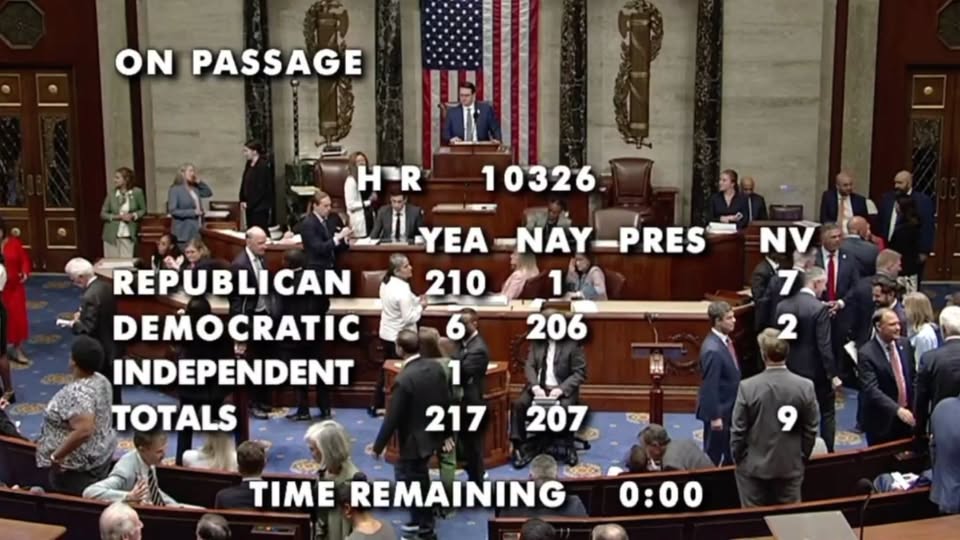
The House approved the measure on September 16, 2026, by a vote of 217–207. Six Democrats joined Republicans in supporting the legislation, while one Republican and 206 Democrats voted against it, according to reporting on the congressional vote.
Social-media posts have described the bill as forcing states, including Minnesota and California, to hand over “any and all” information demanded by the attorney general. That description needs some qualification.
The legislation is broad, but it does not simply give the attorney general unlimited access to every piece of information held by every state government for any reason. The bill’s provisions concern information connected to investigations or prosecutions involving suspected fraud against federal programs.
That distinction is important as the legislation moves into the next stage of the legislative process.
What the PROOF Act would do
The legislation is designed to make it easier for federal investigators to obtain records from state agencies when federal money is involved.
Programs covered by the measure include Medicaid, the Supplemental Nutrition Assistance Program, commonly known as SNAP, Temporary Assistance for Needy Families, unemployment compensation programs, disaster assistance and several grant programs.
The legislation also addresses certain COVID-era assistance programs, broadband grants, emergency rental assistance, community development programs and other federally supported initiatives.
The underlying idea is that federal investigators cannot effectively investigate fraud involving federal dollars if relevant records remain inaccessible across different state systems.
Supporters of the legislation have argued that federal taxpayers should have stronger protections when money distributed through state-administered programs is suspected of being improperly obtained or used.
Rep. Jeff Van Drew, the New Jersey Republican who introduced the measure, has argued that states should not be able to prevent federal investigators from accessing information necessary for fraud investigations when federal taxpayer money is involved.
Why Minnesota and California are receiving attention
Minnesota and California have become especially prominent in the national debate over federal oversight of state-administered programs.
The federal government has already increased scrutiny of Medicaid and other programs in several states during 2026.
According to the Kaiser Family Foundation, the Centers for Medicare & Medicaid Services deferred hundreds of millions of dollars in federal Medicaid payments involving Minnesota and $1.3 billion involving California while federal officials examined questions concerning program integrity and the allowability of certain expenditures. KFF also reported that federal agencies had requested information from multiple states concerning Medicaid oversight and fraud prevention.
California Attorney General Rob Bonta has separately challenged federal efforts to obtain certain sensitive state data.
On September 18, Bonta announced that a federal district court had issued a preliminary injunction blocking an administration effort to obtain sensitive commercial-driver information from a coalition of states. That case involves transportation records rather than the PROOF Act, but it illustrates the broader legal disagreement over how much information states must provide to the federal government.
The PROOF Act would add another layer to that debate by establishing statutory requirements for sharing information in specified federal-fraud investigations.
What information could be requested?
The bill is designed to give federal investigators access to records that could help establish whether federal funds were improperly obtained, distributed or used.
Depending on the program and investigation, records could include information connected to benefit payments, eligibility verification, provider billing and other program-administration records.
However, the phrase “any and all information” circulating on social media can give the legislation a broader meaning than the actual text supports.
The purpose of a request must be connected to an investigation or prosecution involving alleged fraud against a federal program. The legislation also contains provisions concerning the handling, security and use of information obtained by federal investigators.
That means the bill is not simply a blanket authorization for federal officials to examine anything they want inside state government.
Instead, it creates a federal mechanism for obtaining relevant state information when investigating potential fraud involving covered federal programs.
Privacy is part of the debate
Because many state benefit programs contain sensitive personal information, privacy protections are an important part of the discussion.
Records involving Medicaid recipients, for example, can contain highly sensitive personal and medical information.
The legislation includes requirements concerning the handling of information obtained by federal investigators, including security provisions and restrictions concerning how the records may be used. The bill also addresses the continued application of federal privacy protections to information that is subject to those laws.
Supporters therefore describe the measure as an effort to improve fraud detection while maintaining rules governing sensitive records.
Critics, meanwhile, have raised concerns about the scope of federal authority and the potential consequences of requiring states to provide information to federal investigators.
Those disagreements are likely to continue if the legislation advances in the Senate.
The bill is not law yet
One of the most important facts missing from many viral posts is that House passage does not mean the PROOF Act has become federal law.
The legislation must still be considered by the Senate.
If the Senate passes the bill, it would then have to be presented to the president for signature or otherwise become law through the constitutional legislative process.
Until that happens, states are not being subjected to a new legal requirement created by the House vote alone.
The House action nevertheless represents a significant step because it establishes the position of the House majority on how federal authorities should investigate suspected fraud involving federally funded programs.
A broader federal fraud crackdown
The PROOF Act comes as the federal government is increasing its emphasis on fraud investigations.
The Justice Department launched a National Fraud Detection Center in August 2026 as part of its National Fraud Enforcement Division. According to the FBI, the center is intended to connect information held by federal law-enforcement agencies, inspectors general and state partners to identify fraud involving taxpayer-funded programs.
The FBI has described the initiative as a nationwide effort because fraudulent schemes can cross state boundaries and involve multiple government programs.
Another bill passed by the House during the same legislative push, H.R. 9576, the National Fraud Enforcement Division Act of 2026, would establish the Justice Department’s National Fraud Enforcement Division in federal law. That measure passed the House 352–72.
Together, the measures reflect a broader congressional effort to strengthen federal anti-fraud enforcement.
What happens next?
For now, attention turns to the Senate.
The Senate will determine whether it takes up the PROOF Act and whether the legislation can obtain enough support to advance.
If enacted, the measure could change the relationship between federal fraud investigators and state agencies by establishing clearer federal authority to request information connected to suspected fraud involving covered federal programs.
For states such as Minnesota and California, which have already faced heightened federal scrutiny over Medicaid and other programs, the legislation could become particularly significant.
But the viral description should be read carefully.
The House did pass legislation requiring states to provide certain information to federal authorities in specified fraud investigations. However, the bill does not simply authorize unrestricted access to every piece of state information for any purpose.
Its future depends on what happens in the Senate and, ultimately, whether it becomes federal law.
The debate is therefore far from over. Supporters see the measure as a way to strengthen accountability for taxpayer-funded programs, while opponents and state officials may continue raising questions about federal authority, privacy and the proper balance between national oversight and state administration.
For Americans watching the story unfold, the key distinction is simple: the House has passed the bill, but passage in the House is not the same as enactment into law.
That next step will determine whether the federal government’s ability to obtain state-held information in these investigations actually expands nationwide.