The House’s New Federal Oversight Bill: Why Supporters Are Speaking Out
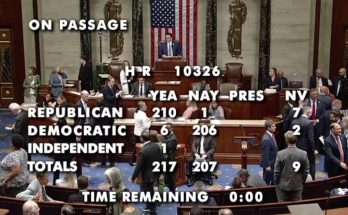
A major debate is unfolding in Washington after the U.S. House of Representatives approved legislation aimed at strengthening federal access to information held by state agencies when investigating suspected fraud involving federally funded programs.
The measure has generated strong reactions online, with some Americans expressing enthusiastic support for the effort. Others have raised questions about privacy, federal authority and the relationship between Washington and individual states.
At the center of the debate is a straightforward question: should the federal government have greater access to state-held information when taxpayer-funded programs are suspected of being affected by fraud?
Supporters of the legislation argue that the answer should be yes when federal money is involved. They contend that taxpayers deserve strong oversight and that investigators should not face unnecessary barriers when attempting to determine whether public funds have been misused.
The legislation, known as the Preventing Rip-offs and Obtaining Oversight of Funds Act, or PROOF Act, is designed to address that issue.
The House passage represents an important step, but it is also important to understand what the vote does — and does not — mean.
Passing a bill in the House does not automatically turn it into federal law. The Senate would still have to consider the legislation, and additional constitutional steps would be required before the measure could take effect as law.
That distinction has become especially important as social-media posts describe the House vote as though the new requirements are already in force nationwide.
Why supporters favor stronger oversight
The central argument behind the legislation is accountability.
Federal taxpayers provide enormous amounts of money to programs administered by state governments. Those programs can include health care, food assistance, unemployment benefits, disaster assistance and other services.
When federal money moves through state systems, supporters argue that federal investigators should have the ability to examine relevant records when there is evidence suggesting fraud.
From that perspective, the issue is not about giving Washington unlimited access to state government. It is about ensuring that investigators can follow taxpayer dollars when those dollars are potentially being stolen or improperly obtained.
Fraud can be complicated. Investigations may involve multiple agencies, contractors, providers, beneficiaries and transactions. Information that appears insignificant in one database can become important when combined with information from another system.
Supporters therefore see information-sharing as an essential tool for identifying suspicious activity.
They also argue that legitimate recipients should not have to compete with fraudulent claims for limited public resources.
If money intended for health care, food assistance or other programs is improperly diverted, taxpayers ultimately bear the cost. Stronger enforcement, supporters say, could help protect both government budgets and people who legitimately depend on public programs.
Why critics are concerned
The debate is not simply about whether fraud should be investigated.
Few people dispute the basic principle that government fraud should be investigated. The more difficult question concerns how much authority federal investigators should have when requesting information from state governments.
State agencies can possess enormous quantities of sensitive information.
Depending on the program involved, records may contain financial information, personal identifying information, eligibility details or other information protected by federal and state privacy laws.
Critics can therefore question whether expanded federal access creates risks that must be carefully controlled.
There is also a broader constitutional and political question involving federalism.
The United States has a federal system in which power is divided between the national government and the states. Many government programs operate through partnerships between Washington and state governments.
Whenever Congress proposes expanding federal authority over state-administered programs, disagreements can arise about where the appropriate boundary should be drawn.
Supporters may view stronger federal oversight as necessary accountability. State officials or opponents may view the same provisions as an expansion of Washington’s authority.
Both concerns can exist simultaneously.
Minnesota and California in the spotlight
The debate has particular significance for states such as Minnesota and California, which have been involved in recent disputes over federal oversight of government programs.
Federal officials have increased scrutiny of certain state-administered programs, particularly Medicaid, while state officials have questioned some federal requests and actions.
That broader environment helps explain why legislation concerning access to state information has attracted so much attention.
For people following the issue, however, it is important to separate different federal actions.
Not every dispute involving state records is automatically connected to the PROOF Act. Different federal agencies, statutes and investigations can involve different types of information and different legal authorities.
The House legislation is specifically concerned with information relevant to investigations or prosecutions involving fraud against covered federal programs.
That is considerably narrower than saying that federal officials can simply demand anything from a state for any reason.
The importance of the word “relevant”
One of the biggest issues in understanding the legislation is the distinction between broad access and unlimited access.
Viral posts sometimes use phrases such as “any and all information,” creating the impression that the federal government would receive unrestricted access to state databases.
The actual purpose of the measure is more specific.
The information sought would need to relate to the federal programs and investigations covered by the legislation.
That distinction does not eliminate concerns about the scope of federal authority. But it does provide important context.
When evaluating legislation, readers should look beyond headlines and social-media captions and examine what the actual statutory language says.
That is especially important when a political post uses dramatic language designed to encourage immediate reactions.
Why the issue matters to taxpayers
For ordinary Americans, the debate ultimately comes down to competing interests.
On one side is the desire to prevent fraud and protect public money.
On the other are concerns about privacy, government power and appropriate limits on federal investigations.
Both issues have practical consequences.
If investigators cannot obtain relevant information, fraudulent activity may be harder to uncover.
If information-sharing rules are too broad or poorly controlled, sensitive information could potentially be exposed or used in ways that lawmakers and the public did not intend.
That is why oversight mechanisms, legal safeguards and clear definitions matter.
The strongest public debate does not have to begin with the assumption that one side cares about taxpayers while the other does not. People can agree that fraud should be prevented while disagreeing about the proper methods for accomplishing that goal.
What happens next?
The House vote is only one stage of the legislative process.
The Senate must decide whether to consider the legislation and what changes, if any, it might make. If the Senate passes a different version, the House and Senate would need to resolve their differences.
Only after the legislative process is completed would the bill proceed to the president for consideration.
Until that happens, the House vote itself does not create a new nationwide requirement for states.
That point is worth emphasizing because social-media discussions can sometimes make legislative proposals appear more immediate than they actually are.
Americans who support the bill can follow the Senate process, while those who have concerns can examine proposed provisions and communicate their views to their elected representatives.
A larger conversation about government accountability
The controversy surrounding the PROOF Act reflects a much larger national discussion about government spending.
Americans regularly hear about billions of dollars moving through federal programs. With that money comes an expectation that government agencies will protect it from waste, abuse and fraud.
At the same time, government programs often involve real people who depend on them. Ensuring that anti-fraud measures do not unnecessarily interfere with legitimate benefits is therefore another important consideration.
The challenge for lawmakers is finding a balance between effective enforcement and appropriate protections.
That balance will continue to be debated as the legislation moves through Congress.
For people who say, “I fully support this,” the strongest argument is the principle that federal taxpayer dollars should be subject to meaningful oversight when fraud is suspected.
For those who remain cautious, the strongest questions concern privacy, federal authority and safeguards surrounding sensitive state-held information.
Ultimately, the House vote has opened another chapter in the debate over how Washington and the states should work together to protect public funds.
The legislation’s supporters see an opportunity to strengthen accountability. Its critics can continue examining whether the proposed authority is appropriately limited.
And for the public, the most important thing is understanding what Congress actually passed, what remains undecided and what consequences would follow if the measure ultimately becomes law.
The debate is therefore not simply about supporting or opposing a bill. It is about determining how government can protect taxpayer money while maintaining appropriate limits on governmental power.
That question will remain at the center of the discussion as Congress considers what comes next.