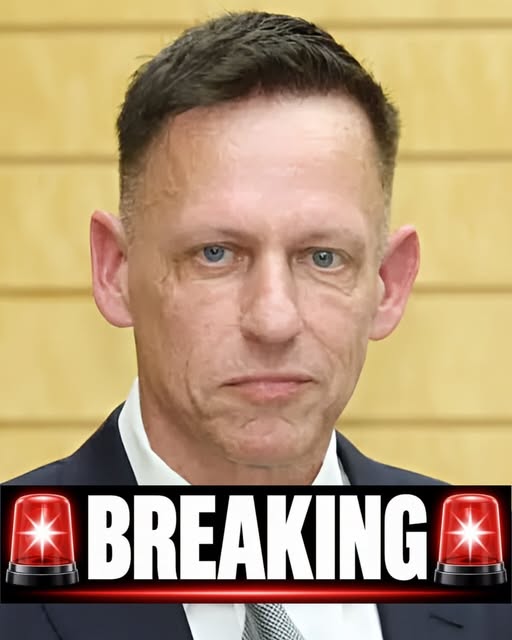
Peter Thiel has drawn fresh attention to the 2028 presidential race after discussing the possibility that Democrats could perform strongly in the next presidential election. In a recent interview with Axel Springer CEO Mathias Döpfner, Thiel said he believed there was a meaningful possibility that a Democratic socialist could win the presidency in 2028. He also described the race as an open question rather than presenting a settled outcome.
Thiel’s comments are notable because he has been closely associated with Republican politics and has publicly supported Vice President JD Vance. During the interview, he said he remained a Vance supporter but expressed concern about the difficulty facing Republican candidates in the next presidential contest. He specifically discussed both Vance and Marco Rubio in the broader conversation about the Republican field.
The billionaire investor’s remarks came while discussing the political environment that could develop after the 2026 midterm elections. Thiel suggested that the outcome of those elections could influence how both parties approach the 2028 presidential campaign. In his view, a particularly difficult midterm result for Republicans could affect how the Democratic Party approaches its own presidential nomination contest.
Importantly, Thiel did not say that a Democratic victory in 2028 was certain. His comments were framed as a discussion of possibilities and scenarios. At one point, he characterized the prospect of a Democratic socialist winning the White House as a possibility of roughly 50 percent. He separately described the eventual presidential contest as a completely open question.
That distinction matters because the 2028 election is still more than two years away. The Democratic and Republican nominees have not been selected, and the political environment can change substantially before voters choose their candidates. Presidential primaries, congressional elections, economic conditions, major events, candidate decisions, and voter preferences can all influence the eventual contest.
The 2028 election is scheduled for November 7, 2028, and it will take place without Donald Trump running for a third term if the constitutional limit remains applicable. That means both major parties face the challenge of competing in a presidential election without the traditional advantage of an incumbent presidential candidate on the ballot.
For Republicans, the succession question is already generating significant attention. Vice President JD Vance is one of the prominent figures being discussed, while other Republican officials and potential candidates could also become involved. Thiel’s own comments demonstrate that even within Republican circles, there is considerable discussion about what the party’s next presidential campaign might look like.
For Democrats, the field is similarly unsettled. No nominee has been selected, and potential contenders have not yet completed the process that will determine who eventually represents the party. The Democratic National Convention is expected to select the party’s presidential and vice-presidential nominees in 2028.
Thiel’s comments also focused on the ideological direction Democrats could take. He discussed the possibility that Democratic voters could nominate a candidate identified with democratic socialism rather than a more centrist or center-left approach. He suggested that the party’s decision could depend partly on how it performs in the 2026 midterms and how Republicans respond afterward.
His remarks have attracted attention partly because they come from someone who has played an influential role in Republican politics and technology. Thiel has previously supported conservative candidates and has been associated with Vance, making his willingness to discuss a potential Democratic victory particularly noteworthy to political observers.
However, his comments should be understood as his personal political analysis rather than an election result or an established forecast. There is currently no way to know which candidates will ultimately appear on the 2028 general-election ballot or how voters will respond to them.
The conversation also highlights the importance of the 2026 midterm elections. Those elections will determine control of the House and Senate and could influence the political environment heading into the 2028 presidential campaign. Recent reporting has already identified several competitive Senate contests that could shape congressional control.
Political observers are therefore watching the next two election cycles as connected but distinct events. The 2026 midterms will provide voters with an opportunity to evaluate the parties and candidates currently seeking congressional office. The 2028 presidential election will then involve a separate contest for the White House, with different candidates, issues, and campaign dynamics.
Thiel’s comments have also prompted renewed discussion about what Republicans need to do before 2028. His concern about the Republican field does not necessarily mean that a particular Democratic candidate will succeed. Instead, it illustrates how early conversations about the next presidential election are already taking place among major political donors, strategists, commentators, and potential candidates.
At this stage, the Democratic Party has not established a presidential nominee, and the Republican Party has not done so either. The eventual candidates will have to compete through primaries, fundraising campaigns, debates, endorsements, advertising, and the general election process.
For voters, that means many of the most important facts about the 2028 contest remain unknown. Candidate platforms will become clearer over time, and political parties will make decisions about their priorities. Public opinion may also shift as new issues emerge.
Thiel’s statement therefore provides an interesting snapshot of how one prominent political figure currently views the possibilities ahead. His comments suggest that he sees a genuine possibility of a Democratic presidential victory and believes the race could become highly competitive depending on developments during the next election cycle.
At the same time, the interview does not establish that Democrats will win, nor does it establish that Republicans will lose. The 2028 election remains unresolved, and the eventual result will depend on voters participating in a process that has not yet reached its decisive stages.
For now, Thiel’s remarks are likely to keep the conversation about 2028 active. His assessment reflects the uncertainty surrounding a presidential race that is still developing, while his comments about the possible Democratic nominee add another dimension to the discussion.
As the 2026 midterms approach and potential presidential contenders begin positioning themselves, more information will emerge about the direction of both parties. Until then, Thiel’s comments remain one prominent participant’s assessment of a highly unsettled political landscape rather than a prediction of the eventual election result.