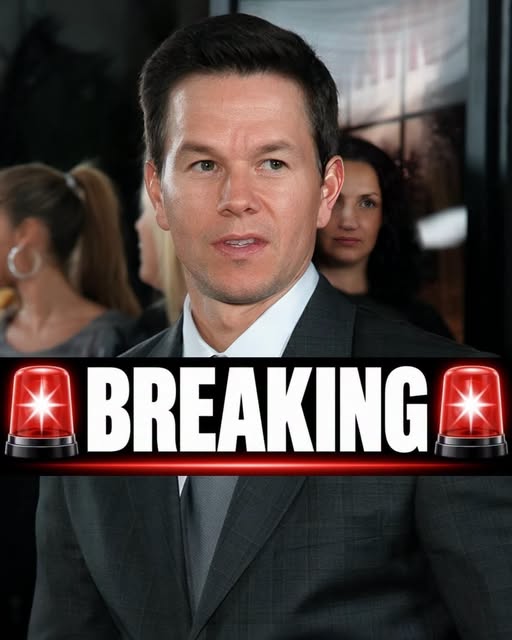
The Mark Wahlberg Quote That Went Viral — What He Actually Said
A political quote attributed to actor Mark Wahlberg has once again circulated widely online, with social-media posts claiming that the Hollywood star “called out” Democrats and told celebrities who supposedly dislike the United States to leave the country.
The post includes a dramatic quotation naming several well-known entertainers, including Alec Baldwin and Cher, and ends with the message that anyone unhappy with America should leave. Because the statement is presented as a direct quotation from Wahlberg, it has attracted significant attention and generated strong reactions online.
However, the story behind the quotation is very different from what the viral post suggests.
A fact-check published by Snopes found that the statement was not actually written or spoken by Mark Wahlberg. The quotation originated with a writer for the website America’s Freedom Fighters, who was commenting on remarks Wahlberg had made during a 2016 interview. The writer’s words were subsequently circulated online as though Wahlberg himself had said them.
That distinction is important.
Wahlberg did publicly discuss Hollywood’s involvement in politics in 2016. During an interview connected with his film “Patriots Day,” he was asked about celebrities who had spoken out against Donald Trump following the 2016 presidential election.
Wahlberg expressed the view that celebrities should be cautious about using their public platforms to lecture ordinary Americans about politics. He also argued that many people in Hollywood were disconnected from the experiences of everyday Americans.
Those remarks were real and were reported at the time. But they were not the same statement that later appeared online under his name.
According to the documented history of the rumor, the longer “leave the USA” quotation appeared later, after the original interview. An America’s Freedom Fighters article discussed Wahlberg’s comments and then included a much more aggressive passage aimed at various celebrities. Eventually, that passage began circulating as a direct Mark Wahlberg quotation.
Over time, social-media users shortened and altered the list of celebrities named in the statement, producing different versions of the same claim.
That helps explain why versions of the quote can look slightly different from one another.
Some posts name Alec Baldwin, Cher, Madonna, Jennifer Lawrence, Miley Cyrus, Mark Ruffalo, Sean Penn, Robert De Niro, Barbra Streisand, Matt Damon, Oprah Winfrey, Colin Kaepernick and others. Other versions contain fewer names or replace some of them.
The changing versions are another reason to be careful when encountering political quotations on social media.
A quotation placed beside a celebrity’s photograph can easily appear authentic, particularly when thousands of people have shared it. But popularity is not evidence that the person actually said the words.
In this case, the evidence points to a clear distinction between Wahlberg’s genuine 2016 comments and the much longer statement that was later attributed to him.
His actual comments reflected his criticism of political activism by celebrities. He said that many Hollywood figures were living in a bubble and argued that entertainers could be disconnected from the financial and everyday concerns of ordinary Americans.
Those comments themselves became part of a larger political conversation about whether entertainers should use their fame to influence public debates.
That question remains controversial.
Some people believe celebrities have every right to discuss politics because they are citizens like everyone else. Others argue that fame in entertainment does not automatically make someone an authority on government, economics, healthcare, foreign policy, or other complex issues.
Wahlberg’s 2016 comments placed him on one side of that broader debate, but the viral “leave the USA” quotation goes considerably further than what he actually said.
This distinction also illustrates how misinformation can develop.
A genuine interview can provide the foundation for a later fabricated quotation. Someone may summarize the person’s position, add commentary, place quotation marks around the new statement, and eventually publish it with the celebrity’s name attached. Once screenshots begin circulating, later users may have difficulty determining where the statement originally came from.
The passage of time makes the problem even more difficult.
A post appearing in 2026 can refer to something supposedly said “today,” even though the underlying material may actually trace back several years. In the case of this Wahlberg claim, fact-checkers traced the quotation’s history back to discussions surrounding his 2016 interview.
There is also a broader lesson for readers who encounter political content involving celebrities.
A dramatic quotation should be checked against an original interview, transcript, reputable news report, or fact-check before being treated as authentic. If the supposed statement cannot be found in reliable coverage of the person’s remarks, that is a reason for caution.
The Wahlberg story is especially revealing because the actor really did make comments about Hollywood and politics. That authentic background may have made the later fabricated quotation seem believable.
In other words, the misinformation did not appear completely out of nowhere. It was attached to a real event and a genuine opinion, then expanded into a statement that Wahlberg did not actually make.
For readers, the most useful takeaway is simple: separate the verified comments from the viral addition.
Mark Wahlberg did criticize political involvement by celebrities during a 2016 interview and expressed concern that Hollywood figures could be disconnected from ordinary Americans.
But the widely circulated statement telling people who dislike America to leave, while naming numerous Hollywood personalities, was not a genuine quotation from him.
As social media continues to move political claims rapidly from one platform to another, the ability to distinguish documented statements from fabricated ones becomes increasingly important.
A celebrity photograph, a bold headline, quotation marks, and thousands of shares can create the appearance of certainty.
But appearance is not proof.
In this case, the evidence tells a more complicated story: there was a real Mark Wahlberg interview, real criticism of Hollywood’s political involvement, and a separate piece of commentary that was later presented as though it had come directly from the actor.
That difference matters.
The viral post may continue to generate arguments between people with different political views, but the underlying facts remain the same. Wahlberg’s genuine 2016 remarks can be examined on their own terms. The much stronger “leave the USA” statement should not be presented as something he personally said.
Before sharing similar claims, checking the original source can prevent a quotation written by someone else from becoming falsely attached to a public figure.