Tom Selleck and the Viral Claim About Why He Avoids Politics
A social-media headline is circulating claiming that famous actor Tom Selleck has explained why he refuses to get involved in politics, with the post presenting a quote beginning, “Look, I don’t dabble in politics because I don’t understand why you want to…” The wording is designed to create curiosity, but the full quote and its original source are not clearly established in the reliable material available online.
That distinction matters. Selleck is a longtime public figure, and statements attributed to celebrities can spread rapidly on Facebook and other platforms without enough context to determine when, where, or even whether the person actually made the statement. A search for the specific wording associated with this viral post did not produce a reliable primary interview or official transcript confirming the complete quotation.
One transcript result that appears in searches contains a similar phrase about “dabble in politics,” but it is not a Tom Selleck interview. It is a 2026 transcript involving Chicago public-safety officials and concerns a completely different speaker and subject. That makes it unsuitable evidence for attributing the viral quotation to Selleck.
Another recent online result reproduces a quote attributed to Selleck saying, “I don’t dabble in politics because I don’t understand why you’d want to piss off half the country if your job is entertainingly reasonable.” However, that result is hosted by a podcast aggregation website rather than a clearly identified original interview, and the search material does not establish the date, interviewer, or original recording.
The distinction between an authentic quotation and a recycled social-media caption is especially important when the subject is politics. A celebrity saying that he prefers not to discuss politics is different from a celebrity making a political endorsement or criticism. Readers should therefore be cautious about interpreting the headline as a newly issued political statement unless an original source is provided.
Selleck has had a long career in entertainment, becoming especially recognized for television roles including Magnum, P.I. and Blue Bloods. His public profile has sometimes led to discussion of his personal views, but a celebrity’s political reputation should not be treated as proof that every quotation circulating online is authentic.
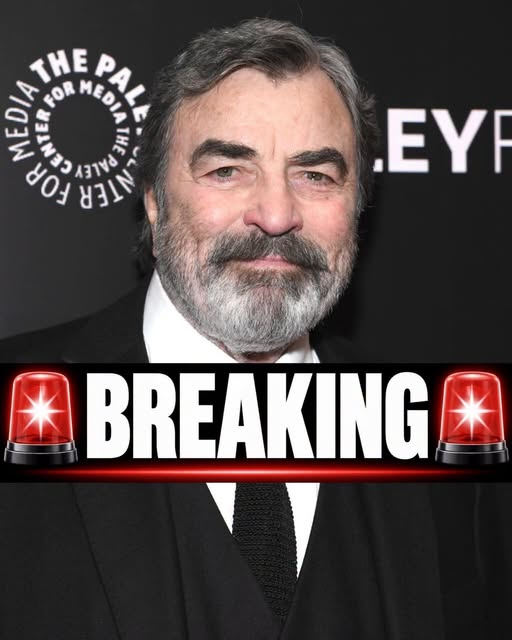
The viral headline also uses a familiar social-media formula: a dramatic “BREAKING” label, a famous name, an apparently provocative quotation, and a “See more” prompt. This format encourages readers to click before checking the underlying claim. It can be effective for generating attention, but the presentation itself does not establish that the quotation is genuine or recent.
If the statement is eventually traced to a real interview, its date and context would be important. Selleck may have been discussing the relationship between entertainment and public controversy, the risks of alienating audiences, or simply his personal preference for keeping political views private. A partial quotation can substantially change the meaning of a longer conversation.
The phrase attributed to him about not wanting to “piss off half the country” is also presented without enough surrounding context in the currently available search results. Without the original interview, it is not possible to determine precisely what question prompted the comment, what “politics” referred to, or whether the wording was transcribed accurately.
That does not mean the statement is necessarily false. It means the evidence available from the search does not yet provide a sufficiently strong primary-source basis for presenting the viral wording as a newly confirmed statement from Selleck.
For readers, the most useful approach is to look for several details before sharing the post. First, identify the publication, program, podcast, or interviewer responsible for the quote. Second, check the publication date. Third, look for the full interview rather than a short excerpt. Fourth, compare the wording with a transcript or video when possible. Finally, determine whether the story is reporting something new or recycling an older comment.
These steps are particularly useful with celebrity stories because old interviews can suddenly become viral years after they were recorded. A quotation that was once published in a magazine or spoken during a television appearance may be presented as “breaking news” even though nothing happened recently.
The headline about Selleck therefore deserves attention as a viral claim rather than as a confirmed breaking political announcement. The available search evidence does not establish a new statement by Selleck, and one apparently similar result comes from an unrelated speaker.
There is also an important difference between choosing not to participate publicly in politics and having no political beliefs. Public figures can hold private views without discussing them publicly. Likewise, avoiding political arguments in interviews does not necessarily indicate support for or opposition to a particular party, candidate, or policy.
For audiences who enjoy Selleck’s work, the broader lesson is simple: entertainment figures are often quoted outside their original context. Their names attract attention, and social-media pages can turn short statements into dramatic headlines. That makes source checking more important, not less.
Until an original interview, transcript, or recording is identified, the safest description is that a claim is circulating online that Selleck explained why he avoids political involvement. The precise wording and context should not be treated as independently verified.
The story may eventually be connected to a genuine interview, but readers should wait for that source before treating the quotation as established fact. In the meantime, the headline can be understood for what it currently is: a widely circulated claim whose full context and original sourcing remain unclear.
That distinction protects both readers and public figures from misinformation while still allowing people to discuss the underlying question: whether entertainers should publicly engage in politics or keep their professional lives separate from political debate.
For now, the most responsible takeaway is to separate the headline from the evidence. Selleck’s views, any genuine comments he has made, and the meaning of those comments should be judged from complete, attributable sources rather than from a shortened teaser designed primarily to encourage clicks, reactions, and shares online today.