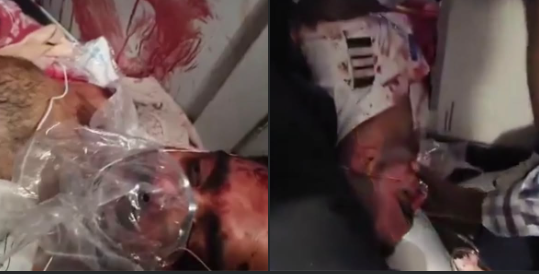
WOW: A RUSSIAN AND A UKRAINIAN SAVED THE DAY!
A remarkable headline is circulating online: “A Russian and a Ukrainian saved the day.” The phrase immediately captures attention because it places two people from nations separated by a devastating war in the same story, on the same side of an urgent moment. Yet without reliable details about the specific incident behind the viral headline, it is important not to invent names, locations, or circumstances that have not been independently confirmed.
What can be said with confidence is that stories involving Russians and Ukrainians cooperating can carry unusual emotional weight. Since Russia launched its full-scale invasion of Ukraine in February 2022, relations between the two national communities have been profoundly shaped by violence, displacement, separation, and political conflict. Millions of Ukrainians have been forced from their homes, while Russian and Ukrainian families have experienced the war in very different and sometimes deeply painful ways.
That broader reality makes any genuine act of cooperation stand out.
In emergencies, however, nationality does not necessarily determine how people respond. A fire, accident, medical crisis, natural disaster, or other dangerous situation can force strangers to make decisions within seconds. Someone may need help, another person may know what to do, and cooperation can become more important than language, nationality, or political differences.
That is one reason a headline like this can spread so quickly. Readers naturally want to know what happened.
Was someone trapped? Did two strangers work together during an emergency? Did one person protect another? Was a life saved because two people ignored the divisions that normally separate them?
Those are important questions, but they should be answered with verified reporting rather than assumptions.
There are documented examples of Ukrainians and Russians encountering one another during the war in complicated circumstances. Ukrainian medical personnel have treated wounded Russian prisoners of war, consistent with international humanitarian obligations. In one documented account, Ukrainian veterinarian and volunteer Daryna Slyvka described treating wounded Russian prisoners while also helping Ukrainian soldiers and civilians. Her stated reasoning included the possibility that living prisoners could eventually be exchanged for Ukrainians held in Russian captivity.
Other stories show cooperation in less direct ways. Civilians have helped strangers escape danger, volunteers have transported people and animals from threatened areas, and emergency workers have continued assisting people regardless of their background.
In 2026, the war remains an enormous human tragedy, and reporting about it often focuses on military operations, diplomatic negotiations, territorial disputes, and casualties. But individual stories can reveal another dimension: people still make personal choices in moments when ordinary human instincts can overcome enormous political divisions.
That does not erase the conflict or make the differences between governments disappear. It simply demonstrates that individuals are not always reducible to the governments, armies, or national identities associated with them.
A Russian citizen and a Ukrainian citizen can disagree profoundly about politics while still recognizing that another human being needs immediate help. In a crisis, that recognition can become decisive.
The wording “saved the day” is also worth treating carefully. Social-media headlines often use dramatic language to encourage clicks and shares. A short caption may leave out essential information, including when an incident happened, where it happened, who was involved, and whether the account has been independently verified.
For readers, the safest approach is to separate the emotional headline from the underlying facts.
If the reported incident involved two people who genuinely worked together to prevent harm, their actions can be appreciated without turning the event into a broader political argument. Their story would be about cooperation at the human level, while the larger Russia-Ukraine conflict remains a separate and much more complicated issue.
That distinction matters because viral posts can quickly become distorted. Names can be changed, old videos can be presented as new, and events from completely different countries can be combined into a single narrative. A powerful photograph or emotional caption is not, by itself, proof of what happened.
The strongest version of this story therefore is not simply that a Russian and a Ukrainian “saved the day.” It is that, whenever the underlying facts are confirmed, an emergency can reveal something basic about human behavior: people sometimes help because someone needs help.
That idea has appeared repeatedly throughout disasters and conflicts around the world. Neighbors rescue neighbors. Strangers carry injured people to safety. Medical workers treat patients whose political identities are completely different from their own. Drivers stop for accidents. Bystanders call emergency services. Volunteers cross dangerous areas to deliver food, medicine, or evacuation assistance.
Such actions do not require everyone involved to share the same beliefs.
For Ukrainians living through Russia’s invasion, stories of compassion can be especially complicated because the war has caused immense suffering. For Russians who oppose or simply find themselves caught up in the consequences of the conflict, personal experiences can also be complex. Human relationships frequently exist in spaces that political headlines cannot fully describe.
That is why this viral phrase deserves both curiosity and caution.
The curiosity comes from the possibility of a powerful story about two people helping one another when circumstances demanded it. The caution comes from the fact that the exact details behind a social-media headline may not yet be established.
Until the names, date, location, and circumstances are confirmed by credible reporting, readers should avoid filling in the missing pieces themselves.
Still, the central idea remains meaningful. The world has witnessed enough division to understand how quickly people can be placed into opposing categories. Stories of cooperation remind us that individuals can still respond to one another as human beings.
Whether the original incident turns out to be dramatic, ordinary, or something entirely different, the headline has sparked an important question: what happens when people stop seeing one another only through the lens of nationality and start responding to an immediate human need?
Sometimes, the answer is simple.
They help others, too.
And in the most difficult moments, that may be the part of the story worth remembering.