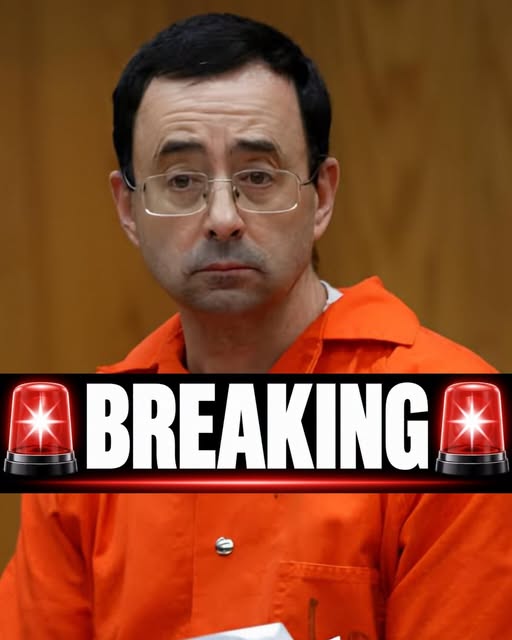
Larry Nassar Removed From Michigan Sex Offender Registry After Supreme Court Ruling
Former Michigan State University and USA Gymnastics physician Larry Nassar has been removed from Michigan’s sex offender registry, along with more than 20,000 other people, following a Michigan Supreme Court ruling issued in September 2026. The development has generated intense public reaction because Nassar remains imprisoned for decades after being convicted of sexually abusing athletes and possessing child sexual abuse material.
However, the circumstances are more complicated than viral headlines suggesting that a Democratic politician removed Nassar from the list. The change resulted from a court ruling concerning the retroactive application of Michigan’s Sex Offender Registration Act, or SORA, and it applies broadly to people whose offenses occurred before July 1, 2011.
The Michigan State Police explained that the state Supreme Court ruled on September 9, 2026, that the 2021 version of SORA could not constitutionally be applied retroactively to offenses committed before July 1, 2011. The court determined that doing so would amount to an unconstitutional ex post facto punishment. Michigan State Police subsequently removed offenders covered by the ruling from the public registry.
Nassar was among those affected because the criminal conduct underlying his Michigan convictions occurred before the statutory cutoff, even though his convictions and sentencings came years later. The Eaton County Prosecutor’s Office confirmed that his name was removed from the registry and emphasized that the relevant date is the date of the offense, not the date of conviction.
Nassar was not declared innocent, his convictions were not overturned, and his prison sentences were not erased. The Supreme Court’s decision concerned registration requirements, not whether the crimes occurred or whether Nassar remains legally convicted.
Nassar’s criminal record is extensive. In 2017, he pleaded guilty in federal court to charges involving child sexual abuse material and received a 60-year sentence. In 2018, he was sentenced in Michigan to 40 to 175 years in prison after pleading guilty to seven counts of first-degree criminal sexual conduct in Ingham County. He received another 40 to 125 years for three counts in Eaton County.
The convictions followed years of abuse allegations from athletes who said Nassar sexually assaulted them while presenting his conduct as medical treatment. More than 150 women publicly described their experiences during the legal proceedings, and the scandal became one of the most consequential abuse cases in American sports.
His abuse also resulted in major civil settlements and continuing criticism of how complaints were handled before his crimes were fully exposed.
The registry development therefore does not mean that Nassar is being released. He remains incarcerated and is serving multiple state and federal sentences. Reporting on the ruling has emphasized that the removal from Michigan’s public registry does not invalidate his convictions or shorten his prison terms.
The controversy instead centers on what the public registry is supposed to accomplish and whether older offenders can legally be subjected to registration requirements that were expanded after their crimes occurred.
Michigan State Police said the September ruling requires the permanent removal from the Michigan registry of offenders whose registration was based solely on offenses committed before July 1, 2011. The agency described the ruling as having an effect on the registry and noted that the underlying convictions remain valid and can still appear in criminal records and other official documents.
The Eaton County Prosecutor’s Office criticized the outcome. Prosecutors argued that victims and communities had expected the registry to provide information and a measure of protection. The office described the loss of those registration requirements as deeply concerning and questioned whether the legislature should address the issue instead.
Those criticisms should be distinguished from the court’s legal reasoning. The court was not deciding whether Nassar or other offenders deserved public condemnation. It was addressing whether Michigan could constitutionally impose a newer registration regime on conduct that occurred before the relevant law took effect.
The political framing surrounding the story has also caused confusion. Some social-media posts have described the development as something done by “Democrats,” but reporting does not establish that a Democratic politician ordered Nassar’s removal. Michigan Supreme Court justices are elected in statewide nonpartisan elections, and the registry change followed the court’s legal ruling and the Michigan State Police’s implementation of that ruling.
The ruling also affects thousands of people who have no connection to Nassar. More than 20,000 names were removed from Michigan’s registry, according to multiple reports. The broad scope matters because Nassar’s case is unusually notorious, but the legal question before the court involved the rights and registration requirements of a much larger group.
For survivors of Nassar’s abuse, the change may be particularly painful because the registry’s purpose is tied to public awareness. Michigan describes its public registry as a tool intended to help protect the public against future criminal sexual acts by convicted sex offenders. Seeing Nassar’s name disappear from that database can therefore create understandable concern, even though his criminal convictions remain intact.
At the same time, the legal distinction between a conviction and a registration requirement is essential. A person can remain convicted and incarcerated even when a particular post-conviction regulatory requirement is no longer legally enforceable. In Nassar’s case, the ruling did not undo the evidence, guilty pleas, sentences, or federal conviction.
The story is therefore best understood as a constitutional and legal dispute rather than a presidential or partisan decision to forgive Nassar. The Michigan Supreme Court interpreted the state’s registration laws and concluded that the newer requirements could not constitutionally be imposed retroactively on certain older offenses. Michigan State Police then implemented the ruling by removing affected individuals from the public registry.
For now, the facts are clear: Larry Nassar has been removed from Michigan’s public sex offender registry, but he has not been exonerated, pardoned, or released. He remains a convicted sex offender serving long prison sentences. The registry removal is one consequence of a Michigan Supreme Court ruling concerning retroactive registration requirements, and it affected more than 20,000 people beyond Nassar.
That distinction is crucial when evaluating the viral headline. The development is significant, but it is not accurately described as a Democrat personally taking Larry Nassar off the sex offender list. The documented chain of events runs from the Supreme Court’s September ruling to Michigan State Police implementation, with the broader legal dispute continuing to generate criticism and debate.