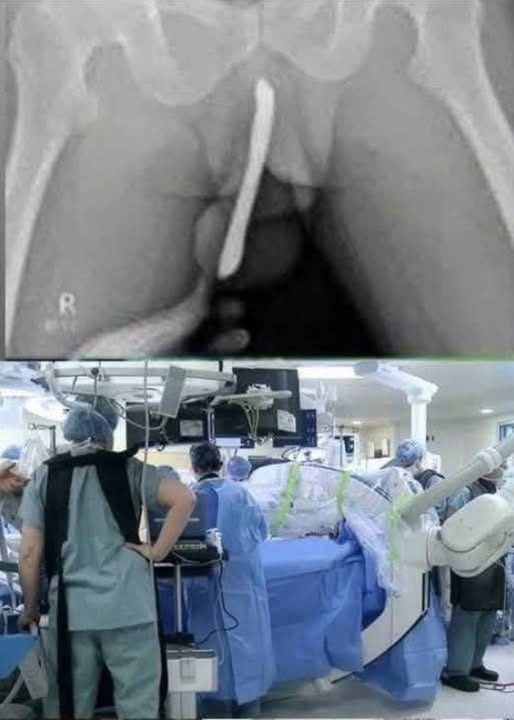
Girl Hospitalized After a Dangerous Online Challenge (Fiction)
Sixteen-year-old Emma had always been curious about the latest trends online. Like many teenagers, she spent hours scrolling through videos, watching creators perform unusual experiments, pranks, and so-called “life hacks.” Most were harmless entertainment, but every now and then, something dangerous would spread across social media before anyone realized the risks.
One weekend, Emma came across a viral challenge that claimed to demonstrate an incredible scientific trick using a common household item. Thousands of comments insisted it was perfectly safe, while flashy videos showed people laughing and encouraging others to try it.
Ignoring the small number of warnings buried beneath the popular posts, Emma decided to recreate the stunt.
At first, everything seemed normal.
She gathered the materials exactly as shown in the video and attempted the experiment in her bedroom while recording herself. Within moments, however, something went terribly wrong. The object broke unexpectedly, causing a serious injury that left her in severe pain.
Startled and frightened, Emma called out for help.
Her parents rushed upstairs and immediately realized something was wrong. Rather than trying to treat the injury themselves, they contacted emergency medical services, who advised them on what to do until an ambulance arrived.
Paramedics responded quickly.
After assessing Emma’s condition, they carefully stabilized her and transported her to the nearest hospital. During the ride, they reassured both Emma and her parents that she was in good hands.
At the emergency department, doctors performed a thorough examination.
Although the injury was painful, medical staff worked efficiently to prevent complications. Emma underwent treatment and was admitted overnight for observation.
Her parents stayed by her side throughout the evening.
They weren’t angry as much as they were relieved that the injury wasn’t even worse. Emma admitted she had trusted strangers on the internet without considering whether the videos were genuine or safe.
The following day, one of the emergency physicians spoke with Emma about online misinformation.
He explained that many viral clips are heavily edited, staged, or performed by professionals using safety equipment that viewers never see. Others are simply fake, created to attract clicks, views, and advertising revenue.
“The number of likes on a video doesn’t make it accurate,” he told her.
Those words stayed with Emma.
After being discharged from the hospital, she spent several weeks recovering at home. During that time, she researched how quickly misinformation spreads online and learned that many dangerous internet trends have resulted in injuries around the world.
She realized she wasn’t the only one who had nearly become another statistic.
Instead of feeling embarrassed forever, Emma decided to share her experience.
She created a video—not to gain attention, but to warn others.
In it, she explained exactly how easily she had been convinced by a convincing-looking clip and urged viewers to verify information before attempting anything that could be risky.
The response surprised her.
Thousands of people thanked her for speaking honestly. Parents shared the video with their children, teachers used it during digital literacy lessons, and healthcare workers praised the message about thinking critically before copying online challenges.
Emma’s school even invited a local emergency physician to discuss internet safety and injury prevention with students.
The presentation covered several important topics: evaluating online sources, recognizing misleading content, understanding peer pressure on social media, and knowing when to seek help after an accident.
Students were encouraged to ask questions and discuss situations where they had seen potentially dangerous trends online.
Many admitted they had almost participated in similar challenges themselves.
Emma realized that curiosity is natural, but good judgment is even more important.
One impulsive decision had led to an emergency room visit, worried parents, and weeks of recovery. Fortunately, she received prompt medical care and made a full recovery, but not everyone involved in dangerous internet trends is as fortunate.
Looking back, Emma hoped others could learn from her mistake without having to experience it themselves.
The experience changed how she used social media forever.
Instead of believing every sensational post she encountered, she began checking reliable sources, reading expert advice, and asking questions before accepting extraordinary claims.
She also learned that asking for help after an injury is never something to be ashamed of. Quick medical attention can make an enormous difference in recovery and reduce the risk of long-term complications.
Months later, Emma had returned to school, sports, and her normal routine.
The scar from the accident remained, serving as a quiet reminder of how easily online curiosity can become real-world danger.
Whenever friends talked about the latest viral challenge, Emma would smile and offer one simple piece of advice:
“Think first. No number of views or likes is worth risking your health.”
Her story became less about the accident itself and more about resilience, responsibility, and learning from mistakes. It reminded everyone around her that the internet can be a valuable source of information and entertainment—but only when approached with critical thinking and common sense.
In the end, Emma’s greatest achievement wasn’t going viral. It was helping others make safer choices before curiosity turned into an emergency.