The Viral $120 Million Obama Claim: What the Evidence Actually Shows
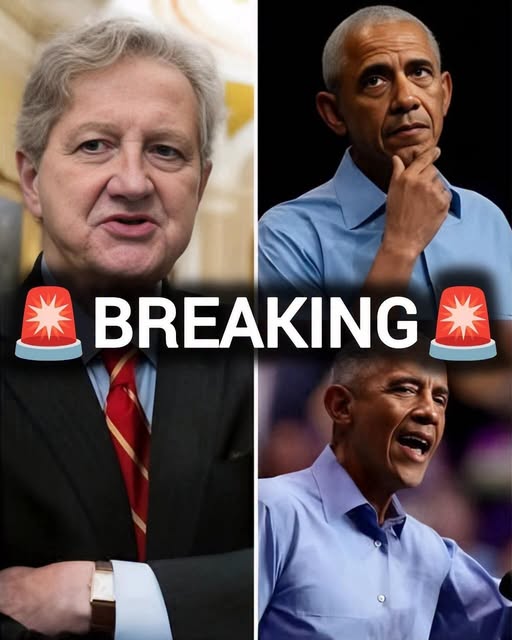
A dramatic claim circulating across social media says that U.S. Senator John Kennedy publicly demanded that former President Barack Obama return $120 million allegedly connected to ownership of “Obamacare.” The post is written in the style of breaking political news, complete with an urgent warning and a promise of more details in the comments.
But there is an important problem with the story: available evidence does not show that Kennedy made such a demand.
The $120 million allegation is part of a recurring false narrative claiming that Obama personally profited from the Affordable Care Act, commonly known as Obamacare, through royalties or some form of ownership. Fact-checkers have repeatedly examined versions of this claim and found no credible evidence that Obama receives royalties from the health-care law.
In February 2026, Lead Stories investigated a version of the story specifically claiming that Kennedy was demanding $120 million from Obama. The fact-check found that the same basic accusation had been circulated using the names of several different public figures. In other words, Kennedy was not the only person falsely portrayed as making the supposed demand.
The story appears to have originated from a network of fabricated or satirical online content rather than from an actual congressional announcement. Lead Stories found versions involving people with very different political and public profiles, including FBI Director Kash Patel, Pete Buttigieg, Madonna, Vince Gill and others. The wording was often remarkably similar, with only the person supposedly confronting Obama being changed.
That pattern is an important warning sign.
A genuine demand by a sitting U.S. senator for a former president to return $120 million would be an extraordinary political and legal development. It would normally generate coverage from major news organizations, statements from the senator’s office, and documentation explaining the legal or financial basis for the demand.
Instead, the available evidence points in the opposite direction.
Kennedy himself was later asked about the allegation after it circulated online. According to reporting cited by KESQ, Kennedy said that someone had told him a story was circulating claiming he had accused Obama of stealing $120 million. Kennedy responded that he did not make that statement and did not know its basis.
The underlying “Obamacare royalties” claim has also been examined independently.
The Affordable Care Act became law in 2010, during Obama’s presidency. Although the law is widely known as Obamacare, that nickname does not mean the former president owns the law or receives royalties from it. Fact-checkers have found no evidence of a federal royalty arrangement paying Obama for the use of his name or for legislation associated with his administration.
One earlier viral version claimed that a government efficiency initiative had stopped an annual $2.6 million payment to Obama for “Obamacare royalties.” Lead Stories traced that claim to a satirical Facebook post rather than an authentic government announcement.
The newer $120 million version appears to build on the same basic fiction, increasing the supposed amount and attaching the allegation to a different public figure.
This illustrates how misinformation can evolve online. A fabricated claim may first appear as satire, then be reposted without its original context. Later versions may change the dollar amount, the person supposedly making the accusation, or the supposed government agency involved. After enough repetitions, the story can begin to look like an established news event even though its foundation has never been verified.
The wording of these posts can also make them especially persuasive. Phrases such as “BREAKING,” “publicly demanding,” “three days to respond,” and “formal review” create the impression that a major legal proceeding is already underway. But dramatic language is not evidence.
The same problem appeared in another $120 million story examined by Lead Stories in March 2026. That version claimed that various celebrities and politicians had issued a “$120 million ultimatum” to Obama. Investigators found that nearly identical stories had been posted using multiple unrelated names. A search for credible news coverage also failed to substantiate the supposed ultimatum.
None of this means that Obama’s finances are beyond legitimate public scrutiny. Former presidents can earn money after leaving office through books, speaking engagements, business arrangements and other lawful activities. Their financial affairs can be discussed and investigated when credible evidence exists.
But a specific allegation requires specific evidence.
In this case, the central pieces of the viral story do not hold up. There is no reliable evidence that Obama received $120 million through ownership of Obamacare, and there is no credible evidence that Senator John Kennedy publicly demanded that Obama return such money. Kennedy himself denied making the statement attributed to him.
That distinction matters because political misinformation can travel much faster than corrections. A sensational headline may be shared thousands of times before anyone checks whether the supposed speaker actually made the statement.
For readers encountering this story on Facebook or elsewhere, the simplest approach is to pause before sharing it. Look for the original statement. Check whether the senator’s official website contains the announcement. Search reputable news organizations for independent coverage. Then look for fact-checking organizations that have examined the exact claim.
In this case, those steps lead to a very different picture from the one suggested by the viral headline.
The $120 million accusation may sound like a major Washington scandal, but the evidence currently available shows that it is a recycled internet claim rather than a verified demand from Senator John Kennedy.
The story is a reminder that a photograph, dramatic headline, or supposed quote is not automatically proof that an event happened. When political claims involve enormous sums of money and serious accusations against public officials, verification matters even more.
Before believing the headline, check the source. Before sharing the accusation, check the evidence. And before treating a viral post as breaking news, make sure the person supposedly making the statement actually said it.