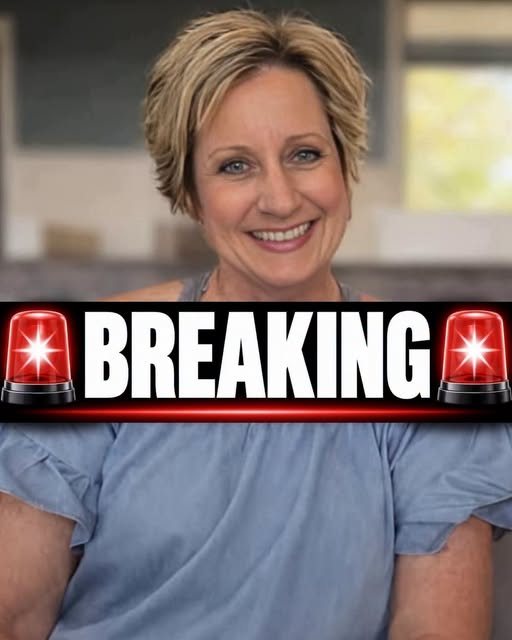
Lisa Domski’s Case Brings Religious Freedom and Workplace Vaccine Mandates Back Into Focus
For Lisa Domski, a longtime employee of Blue Cross Blue Shield of Michigan, the COVID-19 pandemic eventually turned a decades-long career into a federal lawsuit over religious freedom, workplace requirements and the limits of an employer’s vaccination policy.
Domski’s case centers on events in late 2021, when Blue Cross Blue Shield of Michigan announced that employees would have to be fully vaccinated against COVID-19 by January 4, 2022, unless they received an approved medical or religious accommodation. According to court records, Domski sought a religious accommodation but was denied. She ultimately lost her job after refusing to comply with the vaccination requirement.
Court documents say Domski worked for Blue Cross Blue Shield of Michigan from March 10, 2008, until her termination on January 5, 2022. At the time, she was working as an IT Process Specialist II. The company’s November 1, 2021 announcement required employees to be vaccinated or obtain an approved exemption.
Domski’s religious objection was based on her Catholic beliefs. In her written accommodation request, she argued that receiving the available COVID-19 vaccines conflicted with her religious convictions because the vaccines had been developed or tested using fetal cells originating from abortion. She described vaccination as a serious moral and religious conflict and said it would distance her relationship with God.
The company interviewed Domski about her beliefs before denying her request. According to the amended complaint described by the federal court, Blue Cross told her that she did not meet its criteria for an exemption based on a sincerely held religious belief, practice or observance. Domski then declined vaccination and was terminated on January 5, 2022.
On August 11, 2023, Domski filed a lawsuit in the U.S. District Court for the Eastern District of Michigan. Her complaint alleged religious discrimination under Title VII of the Civil Rights Act of 1964, including claims based on an alleged failure to accommodate her religious beliefs and alleged disparate treatment. She also brought a claim under Michigan’s Elliott-Larsen Civil Rights Act.
The lawsuit is part of a much larger group of cases arising from Blue Cross Blue Shield of Michigan’s COVID-19 vaccination policy. A federal judge noted that Domski’s case was one of approximately 200 similar cases involving the company, although the cases were not all consolidated for every purpose.
One particularly important allegation in Domski’s case concerns how the company handled religious accommodation requests. According to her amended complaint, Domski alleged that Bart Feinbaum, the company’s director of employee and labor relations, expressed skepticism about whether religious accommodation requests would be valid and directed that interviews be conducted like “mini depositions.” Those are allegations made by Domski in her lawsuit, not findings that the court had independently established as fact.
The case illustrates a difficult question that emerged during the pandemic: how should employers balance workplace vaccination requirements with employees’ religious objections?
Federal law, particularly Title VII, protects employees from discrimination because of religion and generally requires covered employers to reasonably accommodate sincerely held religious practices unless doing so would impose an undue hardship on the employer. The precise legal standards and the evidence required can be complicated, especially when employers must evaluate whether an asserted religious practice is sincerely held and whether a requested accommodation is workable.
Domski’s lawsuit therefore is not simply a dispute about vaccines. It involves questions about religious liberty, employment law, workplace safety and the responsibilities of employers when workers object to a company policy for religious reasons.
The court record also shows that the case continued through significant litigation after the initial complaint. In an October 7, 2024 order, U.S. District Judge David M. Lawson granted Blue Cross’s motion to exclude two expert witnesses proposed by Domski because their disclosures were not made within the deadlines established by the court’s scheduling order. The excluded experts were expected to address economic and psychological damages. The judge explained that Domski had not shown that the late disclosures were substantially justified or harmless.
The court’s October 2024 opinion also recorded that trial was then scheduled to begin on October 29, 2024. The litigation demonstrates how employment cases can continue long after the original workplace dispute, with the parties fighting over discovery, witnesses, expert testimony and other procedural matters before a final resolution of the underlying claims.
Domski’s story has nevertheless attracted attention because it reflects a broader conflict that affected workers across the United States. During the pandemic, many employers introduced vaccination requirements, while some employees sought exemptions based on medical conditions or religious beliefs. The resulting disputes produced lawsuits under federal and state discrimination laws.
In Domski’s case, the federal court record provides a detailed account of one employee’s attempt to obtain a religious accommodation and her subsequent legal challenge. It also shows why headlines about these cases can sometimes be misleading if they leave out the distinction between allegations, procedural rulings and final judgments.
Domski has alleged that her religious beliefs were sincerely held and that Blue Cross improperly rejected her accommodation request. The company’s position and the ultimate legal outcome must be evaluated through the court proceedings rather than through social-media descriptions alone.
What makes the case particularly significant is the collision of two major principles: an employee’s right to practice religion in the workplace and an employer’s authority to establish employment requirements. Neither principle automatically answers every dispute. The facts, the requested accommodation and the applicable legal standards matter.
The dispute also underscores why employment cases require attention to the record. Public summaries may emphasize one side’s account, while court opinions distinguish allegations from established facts and procedural decisions from final determinations.
Domski’s experience remains a notable example of the legal battles created by pandemic-era workplace mandates. Her case places a human face on a nationwide debate that involved thousands of employees, employers, religious organizations and courts.
At its center is a straightforward question with complicated legal consequences: when an employee sincerely believes that a workplace requirement conflicts with her faith, what accommodation must an employer provide?
That question continues to shape employment-law disputes even after the emergency phase of the COVID-19 pandemic has passed. Domski’s lawsuit shows how those conflicts can follow an employee from the workplace into federal court, where allegations must ultimately be tested through evidence, procedure and law.