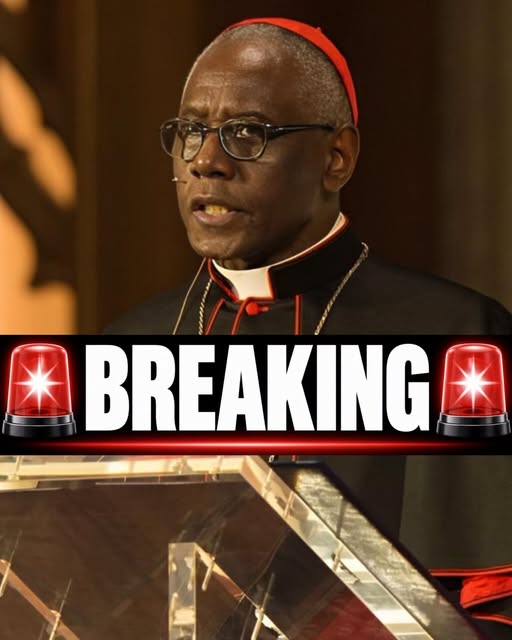
Cardinal Robert Sarah and the Bible Debate Over Mass Immigration
A statement attributed to Cardinal Robert Sarah has resurfaced online and is once again generating debate about Christianity, immigration, national borders, and the responsibilities of governments and religious leaders.
The quote reads: “Those who use the Bible to justify mass immigration are bewitched.”
The statement is not new. It dates to comments Cardinal Sarah made in 2019 during an interview with the French magazine Valeurs Actuelles. Contemporary reporting quoted Sarah as criticizing the use of Scripture to promote what he described as mass immigration. The Daily Caller reported at the time that Sarah called such an interpretation a “false exegesis” and argued that it was better to help people flourish in their own cultures than encourage large-scale migration to Europe.
The quotation has since resurfaced repeatedly on social media, particularly during periods of intense debate over immigration in Europe and the United States.
Understanding the context is important because the short sentence circulating online represents only part of Sarah’s broader argument.
Sarah, a Guinean Catholic cardinal, has long spoken about immigration, European culture, Christianity, and the future of the Catholic Church. His comments have frequently attracted attention because they differ from arguments made by Christians who emphasize biblical passages concerning hospitality, welcoming strangers, and caring for refugees.
The disagreement is partly about how those biblical teachings should be applied to modern immigration policy.
The Bible contains numerous passages encouraging believers to care for foreigners, strangers, widows, orphans, and people experiencing hardship. Supporters of more welcoming immigration policies often point to these teachings when arguing that Christians have a moral responsibility toward migrants and refugees.
Sarah’s argument is not that Christians should ignore people in need. Rather, his criticism has focused on using those biblical principles as a straightforward justification for mass migration.
In the 2019 interview, Sarah expressed concern about migrants arriving in Europe and then experiencing poverty, unemployment, and difficult living conditions. He argued that helping people develop economically and socially in their own countries could sometimes be preferable to encouraging them to leave those countries.
That distinction is central to understanding his position.
It is possible to believe that Christians should help migrants while simultaneously believing that governments have a legitimate responsibility to control borders and establish immigration rules. Likewise, someone can support stronger immigration restrictions while still believing that refugees and vulnerable people deserve compassion.
These questions involve both religious principles and public policy, and they do not always produce identical answers.
The debate also raises a larger theological question: What does the Bible actually require governments to do?
Religious texts generally address moral responsibilities differently from modern immigration laws. Biblical teachings about welcoming strangers are directed toward individuals and communities, while modern immigration systems involve governments determining who can enter a country, who can remain, how asylum claims are processed, and how citizenship is granted.
Consequently, applying biblical teachings to contemporary immigration policy requires interpretation.
Sarah’s remarks reflect one interpretation.
Other Christian leaders have emphasized different biblical principles. They may argue that Christians cannot use national borders as a reason to ignore people fleeing persecution, poverty, war, or political violence. They may point to biblical passages about hospitality and the treatment of strangers as evidence that compassion should remain central to Christian public life.
The existence of these different interpretations is one reason immigration remains a complicated subject within Christianity.
Sarah’s comments also need to be understood within his broader concerns about Europe.
He has repeatedly warned that Europe risks losing aspects of its Christian cultural identity. In previous interviews, he criticized Western societies for becoming disconnected from religious belief and traditional Christian teachings.
His concerns about immigration are therefore connected to a broader cultural argument rather than being limited to border policy.
This has made Sarah particularly influential among some conservative Catholics and Christians. His statements have been repeatedly shared by commentators who see him as a strong advocate for traditional Catholic teaching and European cultural continuity.
The quote resurfaced especially widely in 2025 during discussions surrounding the death of Pope Francis and speculation about the future direction of the Catholic Church. Multiple online commentators highlighted Sarah’s position on immigration as part of their arguments about what kind of leadership they wanted to see from the Church.
However, the social-media version of the quote can sometimes create the impression that Sarah made the statement recently.
He did not.
The underlying interview dates from 2019. A podcast episode published in September 2025 also used the quotation as part of a discussion about Sarah, demonstrating how the older statement continued to circulate online.
That distinction matters when describing the claim as “breaking news.”
It is better understood as a resurfaced statement from a previous interview rather than a newly issued declaration.
The wording itself is also striking. The term “bewitched” is intentionally strong. Sarah was accusing religious leaders of adopting what he regarded as an incorrect interpretation of Scripture when they used biblical teachings to advocate mass immigration.
Whether someone agrees with that theological interpretation is a separate question.
A reader can examine the biblical passages commonly cited in immigration debates and compare them with Sarah’s interpretation. For example, Christian discussions frequently reference the biblical command to love one’s neighbor, teachings about welcoming strangers, and passages concerning the treatment of foreigners. Others emphasize the responsibilities of governments, the importance of social order, and the ability of nations to preserve their communities and institutions.
The challenge is determining how these principles should be balanced.
There is also an important distinction between immigration generally and mass immigration. Immigration can involve individual people moving for work, education, family reunification, or safety. Refugee movements can involve people fleeing war or persecution. Mass migration can refer to much larger population movements caused by economic, political, environmental, or security conditions.
Treating all of these situations as identical can make the debate less precise.
Sarah’s comments specifically addressed what he regarded as mass immigration and the consequences he believed it could produce for both migrants and European societies.
His supporters have interpreted his position as a defense of cultural stability and a rejection of simplistic political uses of Scripture. Critics have argued that emphasizing cultural preservation can understate the moral responsibilities Christians have toward vulnerable people who have crossed borders.
Both interpretations are part of the continuing public debate surrounding his remarks.
What makes the statement particularly relevant is that immigration remains one of the most contentious political and social issues in many Western countries. Governments continue to debate border enforcement, asylum systems, deportation policies, legal immigration, refugee resettlement, citizenship, and integration.
Religious communities are participating in those conversations as well.
Some churches operate shelters, food programs, legal-aid services, and refugee assistance programs. Others emphasize the importance of lawful immigration and national sovereignty. Many Christian communities contain people who hold different views on the appropriate balance between compassion and government authority.
Sarah’s statement does not resolve those disagreements.
Instead, it provides a window into one influential Catholic leader’s approach to the question.
For people encountering the quotation online today, the most important context is therefore simple: the statement is genuine in substance and can be traced to Sarah’s 2019 interview, but it is being presented online years after the original remarks.
The larger debate remains open.
What responsibility do Christians have toward migrants? What authority should governments have over borders? How should countries respond to refugees? Can a nation maintain cultural continuity while welcoming newcomers? And how should biblical teachings about compassion and hospitality be applied to modern immigration systems?
These are difficult questions with no single interpretation shared by everyone.
Cardinal Sarah’s remarks have become part of that discussion because they challenge the assumption that biblical teachings about welcoming strangers automatically require support for large-scale immigration.
Whether readers agree with him or disagree, understanding the original context is essential before deciding what the statement means.
The viral quote may be only one sentence, but the debate behind it involves theology, morality, culture, immigration policy, and the responsibilities of both individuals and governments.