Trapped for Nearly 30 Hours: Diana Marcela Troncoso’s Miraculous Rescue After Colombia’s Earthquake
For nearly 30 hours, Diana Marcela Troncoso lay trapped beneath the ruins of a collapsed building in Cali, Colombia. Around her, concrete and debris had turned what had once been a home into a maze of destruction. Above the rubble, firefighters and rescuers worked through exhausting conditions, desperately searching for signs of life.
Then they found Diana.
She was alive.
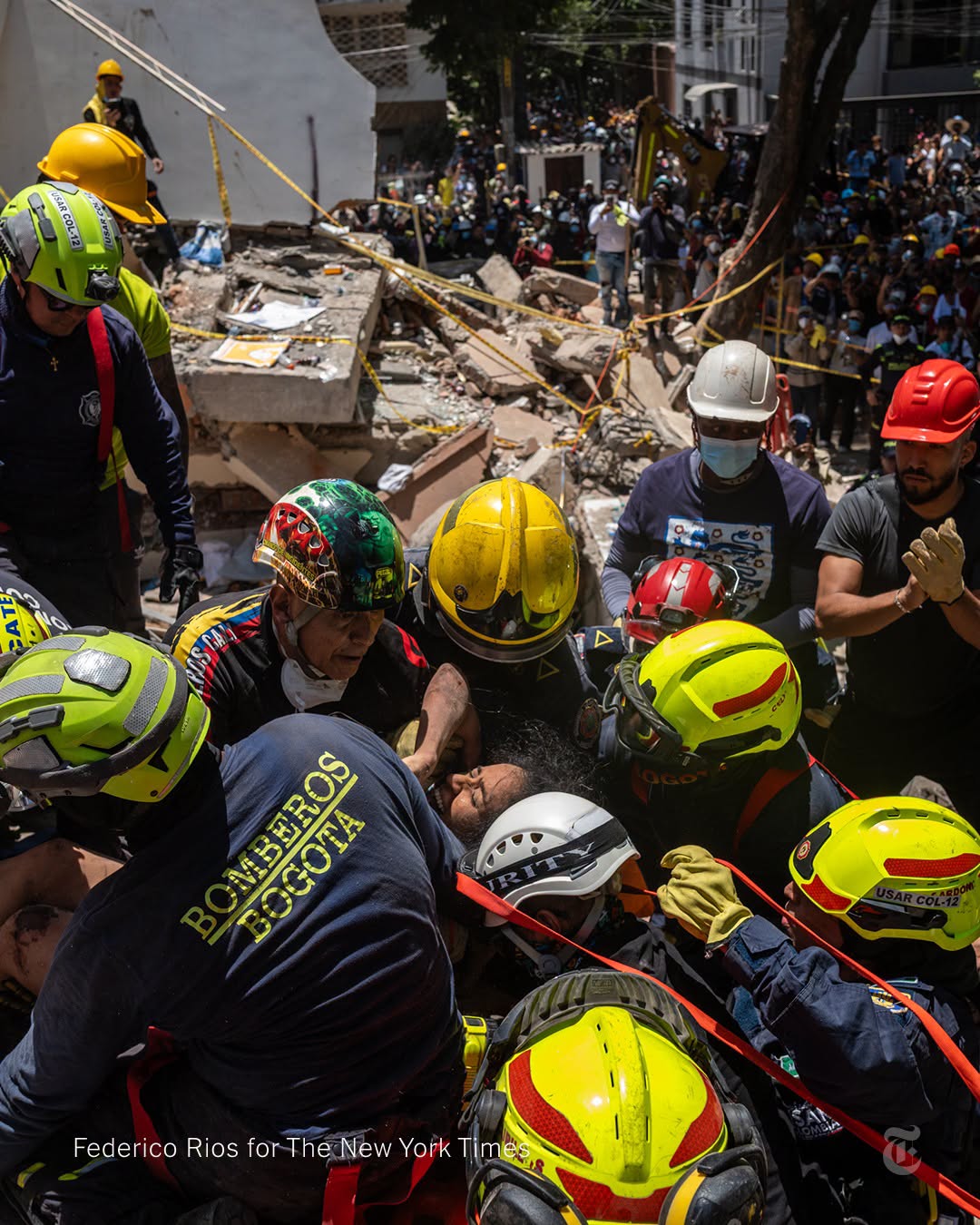
The discovery became one of the most emotional moments following Colombia’s devastating earthquake. As rescuers carefully worked to free her, Diana held tightly to the arm of a firefighter. That simple gesture became a powerful image of survival: a woman trapped beneath tons of debris, refusing to let go while rescuers fought to bring her back into the open air.
According to reports, Diana had been trapped for almost 30 hours following the 7.4-magnitude earthquake that struck Colombia on August 10, 2026. The disaster caused widespread destruction, with buildings collapsing and communities across western Colombia struggling to reach victims. At least 181 people were reported dead, while more than 1,300 were injured and more than 150 buildings had collapsed.
Against that devastating background, Diana’s survival became a moment of hope.
The rescue took place at the Torres del Limonar building in southern Cali. Firefighters from Cali and Bogotá joined forces in an extremely delicate operation. Rescuers used specialized search-and-rescue techniques, including structural shoring, cutting, penetration and canine searches, to reach her safely.
The operation could not simply be rushed.
When someone is trapped beneath a collapsed structure for many hours, rescuers have to consider every movement. Removing one piece of concrete can shift another. A seemingly small mistake can turn a rescue into another tragedy.
So the teams worked carefully.
They first established contact with Diana and assessed whether she could move her limbs. Rescuers then gave her instructions and gradually created a path through the debris. Johana Mejía, a member of the Bogotá Fire Department, later described how they had to work between concrete slabs to release Diana and bring her out safely.
Throughout the operation, medical monitoring was also essential.
A police doctor monitored Diana’s vital signs and helped ensure that she remained hydrated as the rescue continued. After so many hours beneath the rubble, her condition required constant attention. Every stage of the operation had to balance speed with caution.
Then came the moment everyone had been waiting for.
Diana was finally freed.
As rescuers carried her away from the ruins, people gathered nearby began chanting her name.
“Diana! Diana!”
The crowd applauded.
For a community surrounded by death and destruction, the sight of one survivor emerging alive from the rubble offered something desperately needed: hope.
Diana was reportedly a biomedical engineer and medical professional, someone whose work involved helping others. Her cousin Andrés Troncoso captured the extraordinary irony of the moment, saying that she works to save lives and that fortunately it was her turn to be saved.
Her rescue also demonstrated the importance of trained emergency teams during major disasters.
The earthquake placed enormous pressure on Colombia’s emergency services. In Cali, firefighters, paramedics, volunteers and other rescue workers moved from one collapsed structure to another searching for survivors. Local authorities reported that hundreds of people were believed to be trapped alive in the rubble during the early stages of the rescue effort.
The first hours after an earthquake are critical, but rescue operations can continue for much longer when there are signs that people remain alive.
Diana’s case showed why rescuers cannot simply give up when the first day passes.
Almost 30 hours after the earthquake, she was still there.
Still alive.
Still waiting.
And still capable of holding onto the person who had reached her.
Her hand gripping the firefighter’s arm became more than a physical action. It symbolized trust. Diana could not see the entire rescue team. She could not know how long the operation would take. She could not know what had happened outside the rubble.
But she knew someone had found her.
And that someone was not leaving her behind.
The emotional scene was especially powerful because of the enormous scale of the disaster around her. At least 181 people had died, thousands had been injured, and entire buildings had been reduced to piles of concrete. Families were searching for relatives. Rescue workers were working in dangerous conditions. Communities were struggling to understand the magnitude of what had happened.
Yet in the middle of all that devastation, one woman walked—or was carried—out alive.
Her rescue gave exhausted firefighters another reason to continue searching.
It also reminded the public that behind every casualty number is an individual human story.
“181 dead” is a devastating statistic, but each number represents a person with a family, friends, memories and a life that suddenly ended.
Diana’s story represents the opposite side of that statistic.
She became one of the survivors.
One of the people whose story could still continue.
The rescue also brought attention to the dedication of Colombia’s emergency workers. Firefighters worked for hours in dangerous conditions, carefully removing rubble while trying to protect both victims and themselves. Teams from different cities supported one another, demonstrating the importance of cooperation during a national emergency.
The United States also announced support for Colombia’s disaster response, including emergency assistance and a disaster response team. International organizations and other governments likewise offered help as Colombian authorities assessed the enormous damage.
But while governments discussed aid and officials assessed destruction, the rescuers at collapsed buildings remained focused on the immediate task.
Find the survivors.
Get them out.
Keep them alive.
For Diana, that mission succeeded.
The moment she emerged from the rubble was filled with emotion. People applauded, rescuers celebrated, and the crowd shouted her name. It was not simply a rescue; it was a moment of collective relief after hours of fear.
The tragedy in Colombia was far from over. Many families continued waiting for news about missing relatives. Rescue operations continued in several areas, and authorities warned that the full extent of the destruction was still being assessed. Communications problems in some affected communities made the situation even more difficult.
But Diana’s story offered a message that disaster survivors and rescue workers understand better than anyone: as long as there is life, there is hope.
Nearly 30 hours beneath the rubble could have been the end of Diana’s story.
Instead, it became a story of survival.
She held onto a firefighter’s arm.
The firefighter held onto her.
And together, surrounded by concrete, dust and darkness, they became part of one of the most unforgettable rescue moments following Colombia’s earthquake.
When Diana finally emerged, the crowd did not need a speech.
They simply called her name.
“Diana! Diana!”
And for a moment, amid a disaster that had taken so many lives, everyone celebrated the fact that one life had been saved.
Diana’s survival cannot erase the tragedy experienced by thousands of Colombian families. But it can remind people why rescue teams continue digging, why doctors continue monitoring patients, and why firefighters keep searching even when the odds seem impossibly small.
Sometimes hope arrives quietly.
Sometimes it comes in the form of a hand reaching through the rubble.
And sometimes, after almost 30 hours in darkness, it comes out carried by rescuers while an entire crowd chants your name.