Israeli Strikes Kill at Least 11 in Southern Lebanon as Tensions Escalate
At least 11 people were killed in Israeli airstrikes in southern Lebanon early Saturday, August 15, 2026, in what Lebanese authorities described as the deadliest attacks since a fragile truce between Israel and Hezbollah began in June. The Lebanese Health Ministry said the victims included three children and two women, while at least 19 other people were wounded.
The strikes hit the villages of Ansar and Deir al-Zahrani, areas in southern Lebanon that have repeatedly been affected by the continuing conflict. In Ansar, an early-morning strike hit a home and killed seven people, including three children, according to Lebanese authorities. A second strike in Deir al-Zahrani killed four people and wounded 17 others.
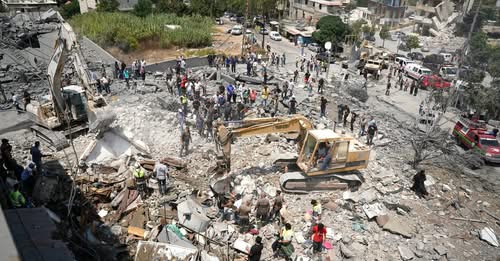
The images emerging from the affected areas showed destroyed buildings, damaged homes and rescue workers searching through rubble. Reuters footage from Deir ez-Zahrani showed civil-defense teams carrying out search-and-rescue operations after the strike.
The deaths have generated renewed concern about the future of the ceasefire and diplomatic efforts between Israel and Lebanon. The attacks came at a particularly sensitive moment, with the two countries expected to continue U.S.-mediated negotiations aimed at reducing tensions and establishing a more durable security arrangement.
Lebanese officials strongly condemned the strikes. President Joseph Aoun said the attacks sent a serious message about the negotiations and accused Israel of undermining diplomatic efforts. Prime Minister Nawaf Salam also criticized the strikes, saying that protecting Lebanese civilians and maintaining stability should remain central to the diplomatic process.
Israel, however, gave a different explanation for the military action. The Israeli military said its forces carried out the strikes in response to activity directed against Israeli troops in southern Lebanon. Israeli officials said the targets were connected to Hezbollah infrastructure and accused the group of violating the existing arrangements.
The competing accounts highlight the continuing complexity of the situation. Lebanon says civilians have been killed and that Israeli attacks are undermining efforts to stabilize the country. Israel says its military operations are intended to prevent Hezbollah from rebuilding military capabilities and threatening Israeli forces.
Hezbollah, meanwhile, threatened what it described as an “appropriate” response to the strikes. That statement has raised concerns that the latest violence could trigger another cycle of attacks and retaliation.
The latest deaths are especially significant because the strikes are being described as the deadliest since the June truce. The ceasefire had raised hopes that the intensity of the fighting could finally decline after months of devastating violence. However, incidents have continued, demonstrating how fragile the situation remains.
For families living in southern Lebanon, the situation remains deeply uncertain. Even after a ceasefire, residents in affected communities have faced the possibility of renewed strikes, damaged homes and continuing security concerns. Every new attack increases anxiety about whether another escalation could follow.
The human cost is also becoming impossible to ignore. The victims of Saturday’s strikes included children, making the incident particularly painful for communities already struggling with the consequences of conflict. Rescue teams were forced to search damaged structures while hospitals and emergency services dealt with the wounded.
The latest violence also threatens to complicate international diplomatic efforts. Lebanon and Israel have been involved in U.S.-supported negotiations intended to address security issues and reduce the possibility of renewed large-scale fighting. The strikes occurred as preparations were being made for another round of negotiations, according to reports.
Diplomatic agreements are difficult to maintain when violence continues on the ground. Each new attack can strengthen hard-line voices on both sides and make compromise more politically difficult. At the same time, the continued presence of armed groups and military forces in sensitive areas means that even a single incident can rapidly produce a wider crisis.
The international community is therefore watching the situation closely.
The immediate priority for civilians is safety. Rescue workers must locate survivors, medical teams must treat the wounded, and families must determine whether their homes and communities remain safe. Beyond the immediate emergency, however, there is a larger question: can the current diplomatic process prevent the conflict from returning to a much wider war?
Saturday’s strikes show how difficult that challenge will be.
The situation is also a reminder that casualty figures can change as rescue operations continue. Initial reports sometimes provide a lower number of deaths before people trapped beneath destroyed structures are located. In this case, reporting initially described lower casualty figures before the death toll reached at least 11.
For that reason, reports about the incident should continue to be treated as developing news. The Lebanese Health Ministry’s figures provide the basis for the reported death toll, while Israeli military statements provide Israel’s explanation for the operation.
What happens next could be more important than the immediate military exchange.
If Hezbollah responds militarily, Israel could launch further strikes. If both sides exercise restraint, diplomats may have an opportunity to continue negotiations and prevent the situation from deteriorating. The coming days could therefore determine whether Saturday’s violence remains an isolated escalation or becomes the beginning of a much broader confrontation.
For the families who lost loved ones, however, the consequences are already permanent.
Eleven people are reported dead. Among them are children who will never return home, parents whose families have been left grieving, and civilians caught in a conflict whose political and military dimensions extend far beyond their individual lives.
The destruction in Ansar and Deir al-Zahrani is therefore more than another headline in an ongoing regional crisis. It represents another painful reminder of the human consequences of war.
As rescue teams continue working through the rubble and authorities assess the damage, attention will now turn toward the diplomatic response, Hezbollah’s threatened reaction and Israel’s next move.
The hope of many Lebanese residents is that the latest deaths will not become the beginning of another devastating escalation.
For now, southern Lebanon remains tense, the ceasefire remains fragile, and the international community faces another urgent test of whether diplomacy can prevent further bloodshed.