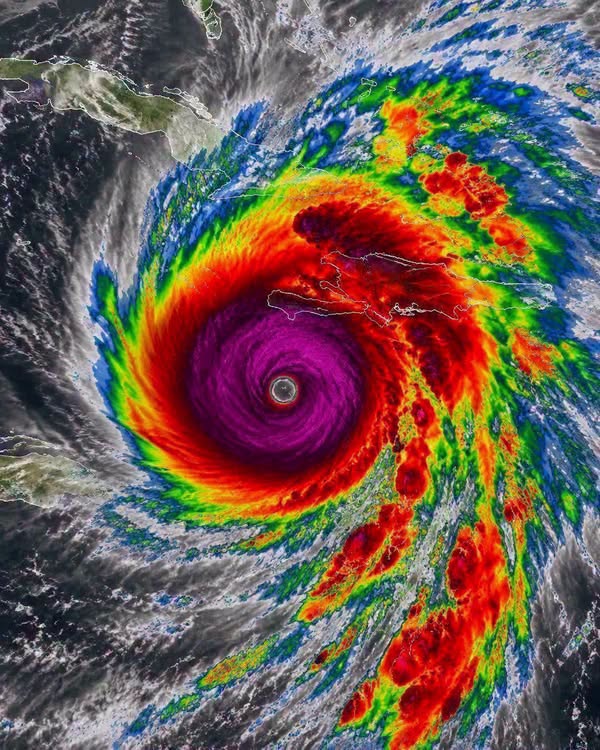
BREAKING NEWS: The Truth Behind the Viral Hurricane Melissa Category 5 Claim
A dramatic headline claiming that a “large Hurricane Melissa Category 5” is forming has been circulating online, prompting concern among readers who remember the devastating hurricane that struck the Caribbean in 2025. However, the latest available information shows that the viral claim is misleading: Hurricane Melissa was a historic Category 5 storm in October 2025, while there is no verified new Hurricane Melissa forming in September 2026.
The confusion is significant because Melissa became one of the most powerful Atlantic hurricanes ever documented. The storm rapidly intensified over the Caribbean Sea before striking Jamaica with extraordinary strength, leaving behind catastrophic damage and a long recovery effort.
According to the U.S. National Hurricane Center, Melissa reached Category 5 intensity on October 27, 2025. At that stage, maximum sustained winds reached approximately 160 mph, with additional strengthening occurring before landfall. The storm’s pressure also fell dramatically as its circulation intensified.
By October 28, Melissa was approaching western Jamaica as an extremely dangerous Category 5 hurricane. National Hurricane Center advisories reported maximum sustained winds of approximately 175 mph, with catastrophic winds, flash flooding and storm surge expected across the island.
Melissa eventually made landfall in southwestern Jamaica as an exceptionally powerful hurricane. Later assessments placed its maximum sustained winds at approximately 185 mph, making it the strongest hurricane ever recorded to make landfall in Jamaica. NASA described the storm as a historic Category 5 hurricane that caused severe damage across the island, including destruction of homes, agricultural losses, landslides, flooding and widespread disruption to power and communications.
The storm was particularly dangerous because of its combination of extraordinary wind speed, heavy rainfall and slow movement. Instead of rapidly crossing the region, Melissa lingered, allowing dangerous weather conditions to persist over affected communities.
That slow movement became one of the defining characteristics of the disaster.
Heavy rainfall contributed to flooding and landslides across parts of the Caribbean, including Haiti and the Dominican Republic. The storm later crossed Jamaica and moved toward Cuba before continuing toward the Bahamas.
For residents in vulnerable coastal and mountainous communities, the danger was not limited to hurricane-force winds. Storm surge pushed seawater toward coastal areas, while torrential rain created additional risks far from the immediate coastline.
The National Hurricane Center warned during the storm that catastrophic conditions were expected. Its advisories urged residents to follow instructions from local authorities and monitor official weather information.
Melissa’s intensity also attracted attention from meteorologists because of how quickly the hurricane strengthened. Research and subsequent analysis showed that the storm underwent exceptionally rapid intensification as it moved through very warm Caribbean waters.
Rapid intensification is especially dangerous because communities may have less time to prepare when a tropical system strengthens dramatically in a short period.
Melissa’s development therefore became an important example of why residents in hurricane-prone regions are encouraged to monitor official forecasts even when a storm initially appears less threatening.
The storm’s legacy continued long after the hurricane moved away.
The World Meteorological Organization announced in March 2026 that the name Melissa had been retired from the Atlantic hurricane naming list because of the destruction and loss of life associated with the storm. The organization selected “Molly” as the replacement name for future use.
That decision means there will not be another Atlantic hurricane officially named Melissa under the normal rotating naming system.
This fact is particularly important when evaluating the current viral headline claiming that a new Category 5 Melissa is forming.
As of September 2026, available reporting indicates that the Atlantic hurricane season has actually experienced an unusually long period without a hurricane. A recent report noted that the basin had reached a record-length hurricane dry spell for the modern satellite-era record.
That does not mean hurricanes are impossible later in the season. Hurricane season continues through November 30, and tropical weather conditions can change. But the viral statement that a new Category 5 Hurricane Melissa is currently forming does not match the verified historical record or current reporting.
For people seeing the claim on social media, the safest approach is to check the National Hurricane Center or the official meteorological service for the affected country rather than relying on sensational headlines.
Category 5 hurricanes are defined by sustained winds of at least 157 mph. They are capable of causing catastrophic damage to homes, infrastructure, power systems, communications networks and coastal communities.
However, the category number alone does not tell the entire story. Rainfall, flooding, storm surge, tornadoes, storm size, forward speed and the geography of the affected area can all influence the level of danger.
Melissa demonstrated that reality in dramatic fashion.
The hurricane’s impact was not limited to one location. Jamaica suffered catastrophic destruction, while other Caribbean nations experienced flooding, landslides, strong winds and dangerous rainfall. The storm ultimately became one of the most significant Atlantic hurricanes of the decade.
The National Hurricane Center’s later assessment documented Melissa as one of the strongest hurricanes on record in the Atlantic basin. Its minimum central pressure reached 892 millibars, placing it among the most intense Atlantic hurricanes ever measured.
The disaster also reinforced an important lesson about hurricane preparedness: viral posts should never replace official warnings.
When a genuine hurricane threatens, residents should follow evacuation orders, secure important documents, prepare emergency supplies, protect vulnerable family members and monitor official updates. People living near rivers, coastlines, steep terrain or flood-prone areas should take warnings about water and landslides particularly seriously.
For now, however, the headline claiming that a new Category 5 Hurricane Melissa is forming should not be treated as a verified September 2026 weather report.
The real Hurricane Melissa was already one of the most powerful and destructive hurricanes in recent Atlantic history. It formed in October 2025, reached Category 5 strength, devastated Jamaica and other Caribbean areas, and eventually had its name retired.
The story remains a powerful reminder of how quickly tropical weather can become dangerous—and how important it is to distinguish genuine emergency information from recycled or sensational social-media headlines.
Anyone who encounters the viral “Melissa Category 5 forming” claim should check the date of the original post and compare it with current information from recognized meteorological authorities.
In hurricane season, accurate information can be just as important as preparation itself.