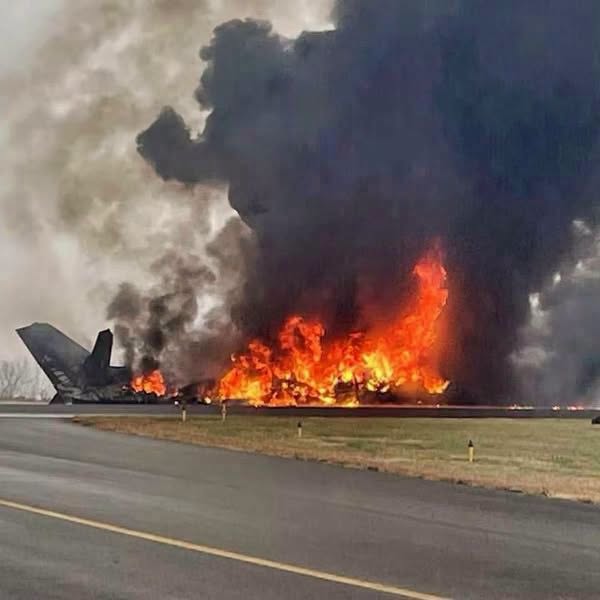
RIGHT NOW: “Plane With More Than 244 Onboard Just Crashed” — What We Know
A dramatic headline claiming that a passenger plane carrying more than 244 people has “just crashed” is circulating online, prompting concern among readers and social-media users. The wording suggests that a major aviation disaster has happened moments ago, but important details are missing from the posts spreading the claim.
As of the latest information available, the specific crash described by the viral headline has not been independently verified by major reliable news organizations or identified by a confirmed airline, flight number, route, or aviation authority.
That distinction matters.
The headline has appeared on websites publishing the claim as breaking news, but those reports provide few independently verifiable details. One version published on September 17, 2026, states that emergency services were responding to a passenger aircraft carrying more than 244 people and describes smoke and flames at the scene. However, it does not clearly identify the airline or flight involved.
Another website published a similar story and said that authorities were still working to establish the identity of the aircraft, its route, and other circumstances.
Those missing details are significant.
When a major commercial aircraft crashes, information normally begins to emerge from several independent sources. Airlines issue statements, airports identify affected flights, aviation authorities provide information, emergency services report their response, and established news organizations begin independently confirming what happened.
Until those details are available, readers should be careful about treating a dramatic social-media headline as confirmed fact.
The number “244” may also be contributing to confusion because it resembles passenger totals from previous aviation disasters.
For example, Air India Flight AI171 crashed shortly after departing Ahmedabad for London Gatwick on June 12, 2025. Initial reports gave different numbers for the people aboard the aircraft, with an Indian aviation official initially reporting 244 people while Air India later reported 242 passengers and crew.
That crash was real and devastating.
The Boeing 787-8 struck a residential area shortly after takeoff. The aircraft had been carrying passengers and crew from several countries, and the crash also caused deaths on the ground. ABC News reported that 246 people died in total, including people inside the building struck by the aircraft.
Because the number 244 has appeared in reporting about previous crashes, it is especially important not to assume that a new headline using the same number describes a new disaster.
Another possibility is that social-media pages are recycling older aviation stories and presenting them as current events.
This happens frequently online. A photograph from an old crash can be reposted with a new caption. An old article can be republished with a new date. A dramatic video can be presented without its original context. In some cases, completely fabricated stories are written around generic photographs or videos.
The result can look like breaking news even when the underlying material is old or unrelated.
For readers trying to determine whether the latest claim is genuine, several basic questions are useful.
What airline operated the flight?
What was the flight number?
Where did the aircraft depart from?
Where was it going?
Where did the crash happen?
Which aviation authority confirmed it?
Which emergency agencies are responding?
Have the airline and airport issued statements?
If a report cannot answer even the first few questions, caution is appropriate.
This is especially important when a headline uses phrases such as “RIGHT NOW,” “BREAKING NEWS,” or “just crashed.” Such language creates urgency and encourages readers to share the story before checking whether it has actually been confirmed.
Aviation emergencies are also complicated events.
Even when an aircraft accident is confirmed, early reports can contain incorrect passenger numbers, conflicting information about casualties, and uncertainty about what caused the accident.
Investigators need time to establish what happened.
A crash investigation may involve examination of wreckage, flight-data recordings, cockpit voice recordings when available, air-traffic-control communications, maintenance records, weather information, and other evidence.
That means early speculation about mechanical failure, weather, pilot error, sabotage, or other possible causes should not be presented as established fact.
The websites carrying the viral claim itself demonstrate why this caution is necessary. One version lists several possible causes—including mechanical problems, severe weather, and pilot distress—but acknowledges that there was not yet evidence establishing the cause.
That is very different from proving that any of those possibilities actually occurred.
For families of passengers, the difference between rumor and verified information is enormous.
When an aircraft is genuinely missing or involved in an accident, relatives need accurate information from airlines and authorities rather than unverified social-media posts.
A sensational headline can cause unnecessary panic, particularly when people recognize an airline, route, or passenger count and fear that someone they know might be aboard.
That is why responsible reporting during an aviation emergency focuses first on confirmed information.
There is also a broader lesson about how people consume breaking news.
The internet allows information to spread extraordinarily quickly. A person can publish a claim within seconds, and thousands of people can repeat it before journalists or authorities have had time to verify the facts.
Speed is useful, but accuracy is more important.
A story that is published ten minutes later with confirmed information is more valuable than a story published immediately with details that turn out to be false.
For now, the claim that a plane carrying more than 244 people “just crashed” should therefore be treated cautiously.
The currently circulating reports do not provide enough independently verified information to establish the identity of the aircraft, the location of the alleged crash, the number of people aboard, or the number of casualties.
That does not mean that every aviation incident reported online is false. It means that this particular claim needs stronger evidence before it should be presented as confirmed breaking news.
Readers should look for confirmation from the airline involved, the relevant aviation authority, airport officials, emergency responders, and established news organizations.
Until those sources identify the flight and independently confirm the event, the most accurate description is that an unverified crash claim is circulating online.
The temptation to share dramatic news immediately is understandable. But with tragedies involving hundreds of passengers, accuracy matters enormously.
Behind every flight number are real people: passengers traveling for vacations, business, family visits, education, work, or important personal journeys. Their families deserve facts rather than speculation.
Aviation disasters are among the most serious events that can be reported, and they deserve careful verification.
So before sharing the headline “RIGHT NOW, PLANE WITH MORE THAN 244 ONBOARD JUST CRASH,” check the source, the date, the flight number, the airline, and confirmation from recognized authorities.
A shocking headline may capture attention.
But verified information is what tells us what actually happened.