BREAKING NEWS: Reports Claim the U.S. Could Target Iran With B-2 Spirit Aircraft — What We Know
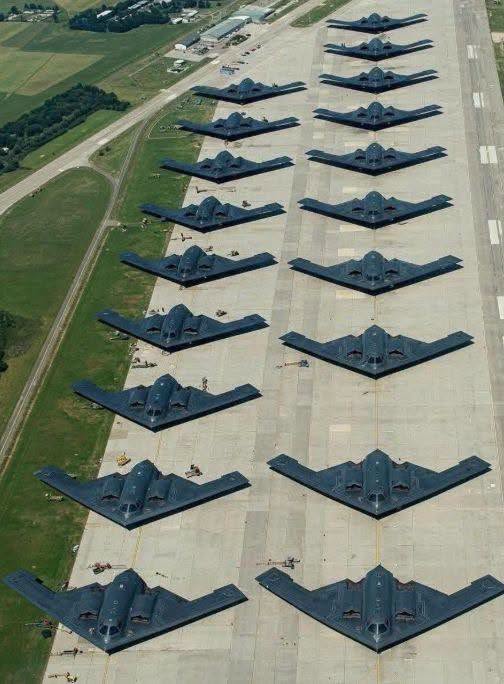
A dramatic claim is spreading rapidly today: the United States could be preparing to use B-2 Spirit stealth bombers against targets in Iran.
The allegation has immediately attracted international attention because the B-2 is not an ordinary military aircraft. It is one of the most sophisticated long-range bombers in the U.S. arsenal, specifically designed to penetrate heavily defended airspace and deliver precision weapons against strategically important targets.
However, there is an important distinction between reports and confirmation.
As of August 10, 2026, the specific claim that the United States is preparing to launch a new B-2 operation against Iran today has not been independently confirmed by the sources reviewed for this story. Recent reporting does establish that B-2 aircraft have already been involved in major U.S. operations against Iran during the current conflict.
That history is one reason today’s claim is receiving so much attention.
The B-2 Spirit has a unique role in American military planning. Its flying-wing design and stealth characteristics allow it to approach defended areas with a significantly reduced radar signature compared with conventional aircraft. Its long range also allows missions to be conducted over enormous distances without requiring the bomber to operate from a base close to the target.
That capability became internationally famous during previous U.S. operations against Iran.
In June 2025, seven B-2 bombers participated in Operation Midnight Hammer, a U.S. operation against Iranian nuclear facilities. According to U.S. military reporting, B-2 aircraft flew for many hours before reaching the target area, with the mission involving the use of GBU-57 Massive Ordnance Penetrators against hardened underground facilities.
The aircraft’s role has continued to attract attention during the 2026 conflict.
Recent reporting describes B-2 crews undertaking extraordinarily long missions, including a reported 36-hour, approximately 13,000-mile round trip connected to operations against Iran.
That makes the latest rumor particularly significant.
If additional B-2 aircraft were actually being prepared for another operation, analysts would likely examine several indicators rather than relying on a single social-media post or anonymous claim.
They would look at aircraft movements, tanker activity, military deployments, official statements, satellite imagery, airspace restrictions, and other publicly observable information.
But even those indicators can be difficult to interpret.
Military aircraft frequently move for training, maintenance, exercises, deterrence missions, or contingency planning. A bomber appearing at a particular base does not automatically mean an attack is imminent.
Likewise, unusual military activity can be deliberately designed to create uncertainty.
That is part of the strategic value of a platform like the B-2.
Its ability to operate at long range and its stealth characteristics mean that uncertainty itself can become a military tool.
For Iran, however, any credible indication of another American bombing operation would carry enormous significance.
The possibility of additional strikes could influence Iranian military planning, air-defense readiness, missile deployments, diplomatic negotiations, and decisions involving the Strait of Hormuz.
It could also affect neighboring countries.
American military installations throughout the Middle East could potentially become more important during any escalation, while governments in the Gulf would have to consider the possibility of retaliatory attacks or disruptions to regional transportation and energy infrastructure.
The consequences would extend far beyond the battlefield.
Energy markets would likely react to any major escalation involving Iran, particularly because of the importance of the Persian Gulf and the Strait of Hormuz to international energy shipments.
Financial markets would also watch closely for indications that the conflict was expanding.
And ordinary civilians would face the greatest uncertainty of all.
Whenever reports of military action spread online, families in affected areas may struggle to determine whether information is accurate, whether roads are safe, whether communications could be interrupted, or whether they should change their plans.
This is why responsible reporting matters enormously during a rapidly developing conflict.
A headline saying “BREAKING NEWS” can create the impression that an event has already been confirmed.
But there is a major difference between:
“Officials confirmed an attack is underway,”
and
“Reports claim an attack may be coming.”
Those statements are not interchangeable.
The distinction becomes even more important when the story involves military operations.
Details about a potential strike may not be publicly available until after the operation has begun—or even after it has ended.
The United States has previously conducted highly sensitive bomber missions whose details were revealed only after aircraft were already on their way or had completed their objectives. The 2025 B-2 operation against Iranian nuclear facilities demonstrated how secrecy can be central to such missions.
That history explains why people are watching today’s developments closely.
Still, the safest conclusion at this moment is that the specific claim of a new B-2 attack today should be treated as unconfirmed.
What is confirmed is that B-2 Spirit bombers have been used in U.S. operations against Iran and that the aircraft remains one of America’s most important platforms for attacking hardened or strategically significant targets.
If a new operation were officially confirmed, the implications could be enormous.
It could represent another major escalation in an already dangerous conflict.
Iran could respond militarily.
Regional forces could become involved.
Diplomatic efforts could be disrupted.
Global markets could react.
And governments around the world would immediately begin assessing whether the conflict was becoming broader and more difficult to contain.
For now, however, the most important message is simple:
A dramatic headline is not the same thing as a confirmed event.
The B-2 Spirit is real. Its previous operations against Iran are real. The military tensions surrounding Iran are real.
But the claim that the United States is preparing to conduct another B-2 strike specifically today requires confirmation before it should be presented as established fact.
As events develop, official statements and credible independent reporting will be far more valuable than viral posts or sensational captions.
In a conflict where a single military decision can affect millions of people, accuracy matters.
And sometimes the most responsible breaking-news headline is not the most dramatic one.
It is the one that clearly tells readers what is known, what is suspected, and what remains unknown.