Ukraine’s Air Defense Crisis: Zelenskyy Warns of a Critical Missile Shortage
Ukraine is facing a growing challenge in the skies as Russian ballistic-missile attacks intensify and the country struggles to secure enough interceptor missiles to protect its cities, military facilities, and critical infrastructure.
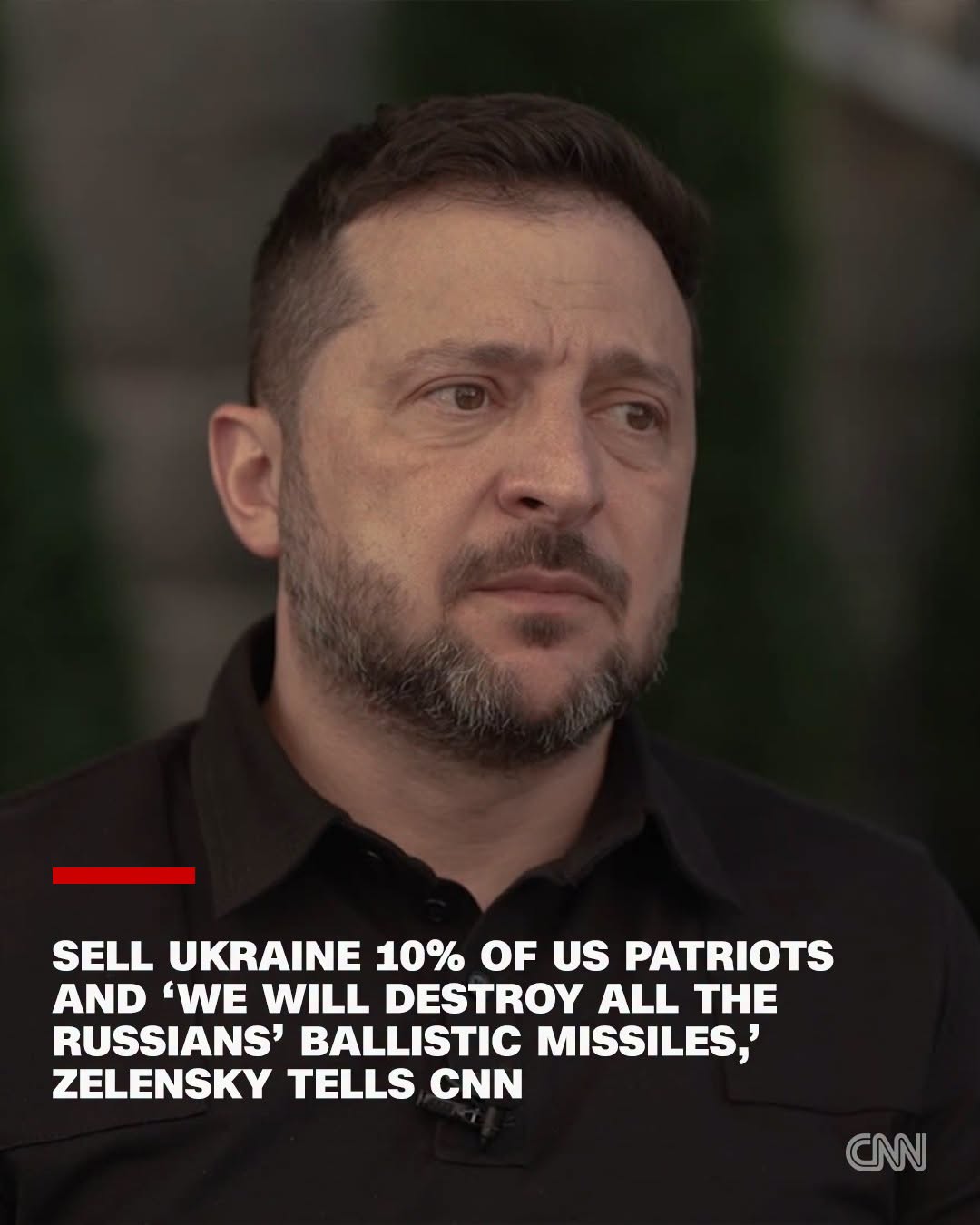
Ukrainian President Volodymyr Zelenskyy has warned that his country possesses only a small fraction of the interceptor missiles it urgently needs. In a recent CNN interview, Zelenskyy said Ukraine has only about one-tenth of the number it believes would be necessary to counter Russia’s ballistic-missile threat. He described the shortage as an urgent problem requiring constant negotiations with international partners.
The warning comes at a particularly difficult moment in the war. Russian forces have increased their use of ballistic missiles alongside drones and other weapons, placing enormous pressure on Ukraine’s air-defense network. The country’s most capable defenses include U.S.-made Patriot systems, which are designed to intercept a range of threats, including tactical ballistic missiles.
For Ukraine, the issue is not simply about having launchers. A sophisticated air-defense system is only effective if it has enough interceptor missiles available when an incoming attack begins.
Every missile fired to defend a city represents another interceptor that must eventually be replaced.
That has created a difficult calculation for Ukrainian commanders. They must determine which incoming threats can be engaged, which areas require the strongest protection, and how to preserve limited ammunition for future attacks.
Zelenskyy said his country currently has only a tiny portion of what it needs, while suggesting that access to a larger share of U.S. interceptor stocks could dramatically improve Ukraine’s ability to defend itself. Reports based on his comments say he believes five percent of U.S. stocks could help Ukraine survive the winter, while ten percent could provide enough capacity to counter Russia’s ballistic-missile attacks much more effectively.
His comments illustrate the extraordinary importance of air defense in the current phase of the war.
Ukraine’s cities have repeatedly faced waves of missiles and drones. These attacks can occur at night, forcing civilians into shelters while air-defense crews work under intense pressure to identify and intercept incoming weapons.
The consequences of even a single successful strike can be severe.
Missiles can damage apartment buildings, energy facilities, industrial sites, transportation infrastructure, and other essential services. Civilian casualties can occur when weapons reach populated areas.
Recent attacks have demonstrated the continuing danger. Associated Press reported that Russian missile and drone strikes on August 11 killed at least ten civilians in Ukraine, including workers at a steel plant and a 15-year-old boy.
The situation has also become more complicated because Russia has continued expanding its missile capabilities.
According to the Financial Times, Russia has increased ballistic-missile production and launched large numbers of such weapons, putting additional strain on Ukraine’s already limited defenses.
At the same time, the international supply of Patriot interceptors is under pressure.
The Patriot system is one of the world’s most sophisticated air-defense platforms, but its interceptors are expensive and require advanced manufacturing capabilities. Reuters reported that global demand for Patriot missiles has surged, contributing to shortages in the United States and among other countries that operate the system.
That creates a complicated problem for Ukraine’s allies.
The United States has its own defense requirements and must maintain sufficient stocks for potential conflicts elsewhere. Other countries operating Patriot systems also have to consider their national security needs.
The result is a competition for a limited resource.
Zelenskyy’s comments therefore represent more than another request for military assistance. They reveal the increasingly complicated diplomatic work required to keep Ukraine’s air-defense network operating.
He described his days as being filled with an enormous number of telephone conversations and negotiations with allies. Behind every public announcement of military assistance are often weeks or months of discussions involving governments, defense ministries, military planners, manufacturers, and diplomatic officials.
Some agreements may be publicly announced.
Others may remain confidential because revealing details about weapons deliveries can provide useful information to an adversary.
For Ukraine, however, time remains critical.
The country cannot simply wait several years for additional missile-production capacity to come online. A missile fired at Kyiv tonight cannot be stopped by an interceptor that will be manufactured years from now.
That is why Ukraine has continued asking partners for immediate deliveries while also exploring longer-term solutions.
One possibility is expanding production.
Reuters reported that Lockheed Martin, which produces the PAC-3 MSE interceptor, has received a major U.S. Army contract aimed at increasing production capacity. But expanding a sophisticated missile-production system is not something that happens overnight.
This creates a gap between immediate military needs and long-term industrial solutions.
Ukraine needs interceptors now.
Manufacturers need time to produce them.
That gap is one of the central challenges facing Western governments as they attempt to support Kyiv while maintaining their own military readiness.
There is also a strategic question surrounding how Ukraine uses its limited supply.
Not every incoming weapon can necessarily be engaged with an expensive interceptor. Air-defense planners increasingly have to consider the cost of the defensive missile, the nature of the incoming weapon, the importance of the target, and the probability of a successful interception.
The war has therefore become partly a contest of economics and industrial capacity.
Russia attempts to overwhelm Ukrainian defenses with large numbers of drones and missiles.
Ukraine and its partners must determine how to stop those attacks without exhausting their most valuable interceptors.
This is why Ukraine has also invested heavily in other forms of air defense, including electronic warfare, drones, guns, and different missile systems. A layered defense can reduce dependence on any single weapon.
But ballistic missiles remain among the hardest threats to counter.
They travel at extremely high speeds and can provide defenders with only limited reaction time. Advanced systems such as Patriot are particularly valuable because they are designed to engage ballistic threats that many other systems cannot reliably stop.
The shortage therefore has consequences far beyond military statistics.
It affects civilians who sleep in cities under threat.
It affects businesses attempting to keep operating.
It affects hospitals and emergency services.
It affects energy infrastructure and the ability of the country to prepare for another difficult winter.
And it affects Ukraine’s broader strategy for continuing the war.
Zelenskyy’s appeal to the United States and other allies is ultimately a request for time—time to protect civilians, time to maintain critical infrastructure, and time to prevent Russia’s missile campaign from causing even greater damage.
The coming months could therefore be crucial.
Ukraine’s ability to secure additional interceptor missiles, increase domestic production, strengthen European support, and develop alternative defensive technologies may determine how effectively it can withstand Russia’s continuing aerial attacks.
For Zelenskyy, the diplomatic effort appears relentless.
Every phone call represents another attempt to find a solution.
Every agreement can mean additional protection for a city.
Every interceptor can mean the difference between an incoming missile being destroyed in the sky or reaching its target.
The numbers may sound like statistics, but behind them are real people living under the threat of nightly attacks.
Ukraine’s air-defense shortage is therefore not simply a story about missiles.
It is a story about endurance, diplomacy, manufacturing, military strategy, and the enormous human cost of a war that continues to evolve.
As Russian ballistic attacks intensify, the question facing Ukraine and its allies is increasingly direct: Can enough defensive weapons arrive quickly enough to protect the people and infrastructure that remain on the front line of this conflict?
For now, Zelenskyy’s message is clear: Ukraine urgently needs more interceptors, and the search for them has become one of the most important diplomatic battles of the war.