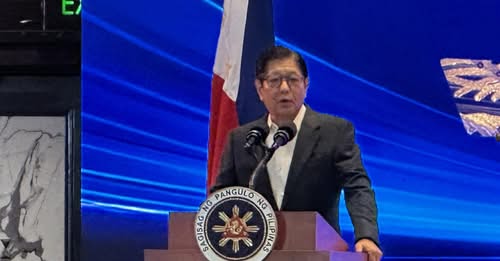
Marcos Renews Vow to Defend Press Freedom in the Philippines
President Ferdinand Marcos Jr. has renewed his commitment to protecting press freedom in the Philippines, emphasizing the important role journalists and news organizations play in a democratic society. His statement comes amid continuing discussions about the safety of journalists, access to information, responsible reporting, and the relationship between government institutions and the media.
Press freedom remains one of the most important foundations of democracy. In a country where citizens have the right to express opinions, criticize government policies, and participate in public debate, journalists serve an essential role by investigating issues and informing the public.
For many Filipinos, the media is one of the primary ways they learn about decisions made by government officials, developments in their communities, economic changes, public safety concerns, and major national events. A free press can help citizens understand what is happening around them and make informed decisions.
Marcos’ renewed vow therefore carries significance beyond a simple political statement. It raises broader questions about how the government can protect journalists while also maintaining standards of accuracy, accountability, and responsible reporting.
The relationship between political leaders and journalists has never been completely simple. Governments often face criticism from the press, while journalists are expected to investigate and question those in power. That tension can be healthy in a democracy when both sides respect constitutional rights and democratic institutions.
A strong press does not exist simply to praise government officials. Its responsibility is to inform the public, investigate matters of public interest, and hold powerful institutions accountable when necessary.
At the same time, journalism carries responsibilities of its own. Reporters are expected to verify information, distinguish facts from opinions, protect sources when appropriate, and correct mistakes. Freedom of the press is strongest when it is accompanied by professional standards.
The Philippines has a long and complicated history involving press freedom. Journalists have played important roles during periods of political change, including times when freedom of expression faced serious restrictions. Because of that history, discussions about media independence remain particularly important.
The Constitution of the Philippines recognizes freedom of speech and freedom of the press. These protections reflect the principle that citizens should be able to discuss public affairs without unnecessary government interference.
But constitutional protection alone does not automatically guarantee a healthy media environment. Journalists can face threats from many sources, including political pressure, harassment, online abuse, financial difficulties, and physical danger. News organizations may also struggle with the changing economics of journalism.
Digital technology has transformed the media landscape even further.
Today, information can reach millions of people within minutes. Social-media platforms allow journalists to publish stories quickly, but they also allow misinformation and manipulated content to spread rapidly. A false claim can circulate widely before a correction reaches the same audience.
This creates a difficult challenge for modern journalism.
News organizations must compete for attention in an environment where sensational headlines often receive more clicks than careful reporting. Readers may encounter genuine journalism alongside rumors, propaganda, satire, manipulated videos, and fabricated stories without immediately knowing which is reliable.
Press freedom therefore requires not only the freedom to publish but also a strong culture of media literacy.
Citizens need to learn how to evaluate information. They should consider who published a story, whether multiple credible sources confirm it, whether evidence is provided, and whether the headline accurately reflects the article.
Journalists also need to recognize the power they possess. A report can affect reputations, businesses, elections, public confidence, and even people’s safety. Accuracy matters because mistakes can have serious consequences.
For government officials, supporting press freedom can mean accepting difficult questions. A healthy democracy cannot depend on journalists asking only comfortable questions.
When reporters investigate government spending, public contracts, corruption allegations, policy failures, or controversial decisions, officials may find the questions uncomfortable. However, discomfort is not necessarily a reason to restrict reporting.
In fact, difficult questions can strengthen public institutions by encouraging transparency.
A government that welcomes legitimate scrutiny can demonstrate confidence in its decisions. Conversely, attempts to silence criticism can create suspicion and reduce public trust.
This does not mean every accusation published by the media is automatically true. Journalists can make mistakes, and news organizations can face legitimate criticism. The appropriate response should generally involve evidence, corrections, legal remedies where appropriate, and professional accountability rather than unnecessary suppression of legitimate reporting.
The principle is balance.
Journalists should be free to investigate and report. Government officials should be able to respond to inaccurate claims. Citizens should have access to competing viewpoints. Courts and independent institutions should remain available when disputes arise.
Press freedom is ultimately about protecting the public’s ability to know what is happening.
The issue also extends beyond major national newspapers and television networks. Local journalists often play an especially important role because they cover communities that larger organizations cannot monitor closely.
A local reporter may be the person documenting problems with roads, schools, hospitals, public services, environmental issues, or local government decisions. Without local journalism, many of these issues could remain invisible.
Protecting journalists therefore means considering their safety and working conditions as well as their formal legal rights.
The digital age has introduced another concern: online harassment.
Reporters, particularly those covering controversial political issues, can face coordinated attacks on social media. Threats and intimidation can discourage journalists from investigating important stories. When reporters begin avoiding certain subjects because they fear retaliation, society loses an important source of information.
This is why statements supporting press freedom need to be matched by practical protections.
The public should also recognize that press freedom benefits people across the political spectrum. A free press is not supposed to belong to one political party or ideological group.
Today, a journalist may investigate a government official whom one group dislikes. Tomorrow, another journalist may investigate an issue supported by that same group. The principle remains the same: journalists should have the ability to report matters of public interest without intimidation.
Ultimately, the health of Philippine democracy depends on many institutions working together. Government, courts, lawmakers, journalists, civil-society organizations, and ordinary citizens all have responsibilities.
Marcos’ renewed vow to defend press freedom provides an opportunity to emphasize that democratic rights must be protected through both words and actions.
The strongest commitment to press freedom is demonstrated when journalists can ask difficult questions, investigate powerful people, publish uncomfortable facts, and report on controversial issues without fear of retaliation.
At the same time, responsible journalism should remain committed to accuracy, fairness, evidence, and accountability.
The goal should not be a media environment where everyone agrees. Democracy requires disagreement.
The goal should be a society where people are free to debate those disagreements openly, where facts can be investigated, where mistakes can be corrected, and where citizens can make decisions based on reliable information.
A free press is not simply a privilege for journalists. It is a public safeguard.
When journalists are able to work independently and citizens are able to access diverse information, society has a better chance of identifying problems, questioning authority, and demanding accountability.
That is why protecting press freedom remains an important democratic responsibility in the Philippines.
The promise to defend it will ultimately be measured not only by speeches or statements, but by what happens when journalism becomes difficult, controversial, or inconvenient.
A truly free press is most valuable when it tells the public something powerful people would rather not hear—and democracy is strongest when those voices can still be heard.