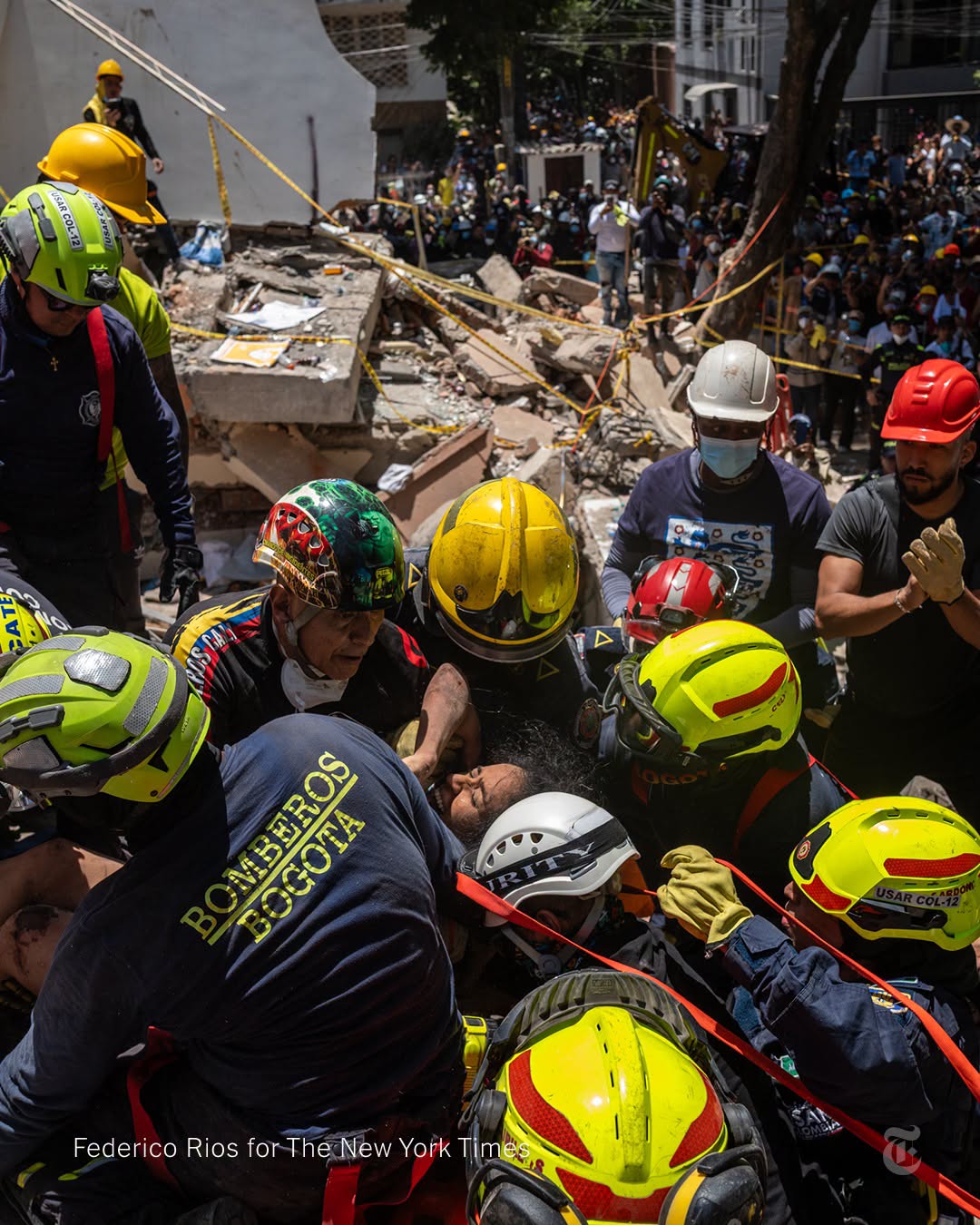
On August 10, 2026, a powerful 7.4-magnitude earthquake struck western Colombia, leaving behind collapsed buildings, damaged roads, frightened families, and a desperate search for survivors. In the middle of the devastation, one rescue became a powerful symbol of hope: the survival of Diana Marcela Troncoso.
Troncoso, a 31-year-old biomedical professional, had been trapped beneath the ruins of a collapsed building in Cali. For almost 30 hours, she remained surrounded by concrete and debris while rescue workers fought their way toward her. Her survival became one of the most emotional moments of a disaster that had already claimed at least 181 lives and injured thousands.
The earthquake struck with enormous force, devastating communities across western Colombia. Buildings collapsed, roads buckled, and rescue teams were forced to work through unstable piles of concrete in extreme conditions. Thousands of people were reported missing as emergency workers raced against time to locate anyone who might still be alive.
In Cali, rescuers encountered one of their most difficult challenges at the remains of a collapsed building. Somewhere beneath the wreckage was Diana.
She had survived the initial destruction, but surviving the earthquake was only the beginning.
For nearly 30 hours, she remained trapped.
The rescue required extraordinary patience. Firefighters could not simply remove large pieces of rubble without understanding what was underneath. A careless movement could cause additional debris to fall and potentially turn a rescue into a tragedy.
Instead, specialized rescue teams worked methodically.
Firefighters from Cali and Bogotá participated in the operation, using search dogs, structural stabilization, cutting equipment, and careful removal of debris. The Bogotá firefighters’ specialized USAR team played an important role in the operation.
At some point, rescuers established contact with Diana.
That moment changed everything.
Instead of searching blindly through an enormous pile of concrete, rescuers knew there was a living person beneath them. They could communicate with her and determine whether she could move her limbs. Every question, every movement, and every piece of debris had to be considered carefully.
According to reports from the rescue operation, firefighters gave Diana instructions and worked progressively to free her from between concrete slabs. The operation involved shoring, cutting, penetrating the debris, and carefully removing material around her.
For Diana, the rescuers were more than emergency workers.
They were her connection to the outside world.
Reports described her gripping the arm of a firefighter as if it were a lifeline. She was exhausted, injured, and in pain, but she was alive. The image of her holding onto the rescuer captured something that words could barely express: after nearly 30 hours beneath the rubble, another human being had finally reached her.
Then came the moment everyone had been waiting for.
Diana was freed.
Rescue workers placed her onto a stretcher. She was covered in dust and had visible scrapes, her eyes closed as she was carried away from the wreckage. But she had survived.
People nearby erupted into applause.
Then they began chanting her name.
“Diana! Diana!”
The chant transformed the scene.
For a few moments, the disaster was no longer only about collapsed buildings and rising casualty numbers. It was about one person coming back into the light.
Rescuers carried Diana down the mountain of debris while people applauded and cheered. The emotion was unmistakable. Families watching the rescue knew that somewhere beneath another pile of rubble could be their own missing relative.
Every successful rescue meant another reason not to give up.
Diana’s cousin, Andrés Troncoso, expressed the significance of the moment afterward. He explained that Diana worked to save lives herself—and now, fortunately, it was her turn to be saved.
That detail made her survival even more poignant.
Someone who dedicated her professional life to helping others had suddenly become the person everyone was desperately trying to help.
The earthquake had produced enormous suffering. At the time of the initial reports, Colombian authorities said at least 181 people had died and more than 2,500 had been injured. More than 1,000 homes had been destroyed or badly damaged, while hundreds of buildings were affected. The number of missing people was uncertain, with official figures and civilian databases producing dramatically different estimates.
Cali was among the cities severely affected.
The city, Colombia’s third-largest, had been preparing for celebrations surrounding its annual Petronio Álvarez festival when the earthquake struck. Instead of music and celebration, residents found themselves facing destruction and uncertainty. At least dozens of structures collapsed, and rescue teams from other parts of the country arrived to assist local firefighters.
Against that backdrop, Diana’s rescue carried enormous emotional weight.
It demonstrated why rescuers continued working even when the situation seemed hopeless.
The first hours after a major earthquake are critical, but people can sometimes survive far longer than expected when conditions beneath the rubble provide protection, air, or access to limited water. Rescue specialists therefore continued searching while there were still reasonable possibilities of finding survivors.
Every sound mattered.
Every movement mattered.
Every reported sign of life mattered.
Rescuers had to balance urgency with caution. Moving too quickly could destabilize the remaining structure. Moving too slowly could cost a survivor precious time.
Diana’s rescue showed what happens when determination, specialized training, teamwork, and a little bit of fortune come together.
Her survival was not simply the result of luck.
It was also the result of firefighters refusing to stop searching.
The operation required firefighters from different cities to work together. Search dogs helped locate possible survivors. Specialized teams stabilized dangerous structures and created pathways through the wreckage. Rescuers communicated with Diana and carefully extracted her from between slabs of concrete.
When she finally emerged, the applause was about more than one woman.
It was a tribute to everyone who had spent hours digging.
It was encouragement for the families still waiting.
And it was a reminder that even during the darkest disaster, hope can survive.
The scene also revealed something powerful about disaster response: rescuers are often working while their own communities are suffering. Firefighters entering collapsed buildings do so knowing that aftershocks, unstable structures, dust, falling debris, and other dangers could threaten them as well.
Yet they continue.
For Diana, one of the most important sounds after nearly 30 hours trapped was not the machinery or the breaking concrete.
It was the sound of people calling her name.
“Diana! Diana!”
Those words represented the moment she was no longer alone.
They represented the moment the outside world finally reached her.
And they represented something Colombia desperately needed at that time: hope.
The earthquake would continue to leave scars long after the rescue teams left the rubble. Families would face the painful task of rebuilding homes, communities, businesses, and lives. Many people would continue searching for missing relatives. Emergency workers would keep working through dangerous ruins, hoping to find more survivors.
But Diana Troncoso’s story would remain one of the defining rescue stories of the disaster.
She entered the rubble as one of thousands of people caught in an unimaginable catastrophe.
She emerged as a symbol.
A symbol of survival.
A symbol of perseverance.
A symbol of what can happen when rescuers refuse to give up.
And perhaps most importantly, her story reminded a grieving country that even when everything seems lost, there can still be someone alive beneath the ruins waiting for a hand to reach them.
After almost 30 hours in darkness, Diana finally saw the outside world again.
The crowd applauded.
Her rescuers carried her to safety.
And Colombia, surrounded by tragedy, had one precious reason to cheer.