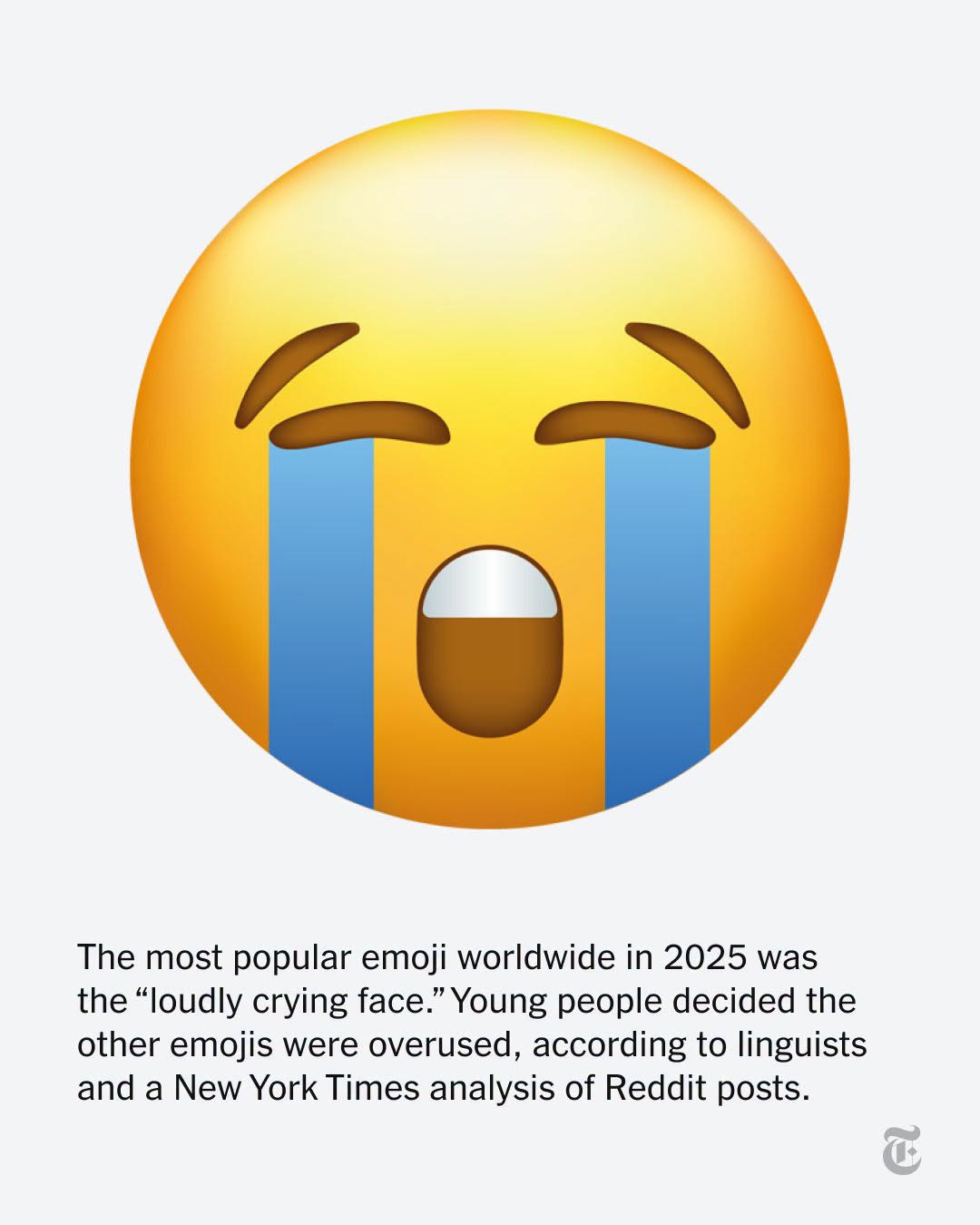
Emoji may look like tiny pictures on a phone screen, but they have become one of the most important forms of digital communication in the modern world. A single smiling face, heart, laugh, or gesture can replace an entire sentence, soften a message, or completely change the meaning of a conversation. In 2025, that global fascination with emojis continued—and new usage data from Google offered an interesting look at which symbols people around the world were using most.
The results also revealed something bigger than a simple popularity contest.
They showed how different generations communicate.
For younger users, emojis can carry irony, sarcasm, affection, embarrassment, excitement, or even rejection. For older users, the same symbol may have a much more literal meaning. As a result, an emoji that seems perfectly friendly to one generation can sometimes leave another generation wondering what exactly the sender intended.
That is one reason the annual emoji rankings attract so much attention.
People want to know which tiny symbol dominates conversations around the world.
According to Google’s 2025 usage data, one familiar emoji once again stood at the center of global communication, beating out other hugely popular symbols for the top position. While hearts, laughing faces, thumbs-up gestures, and crying faces remain deeply embedded in online conversations, the winning emoji demonstrates just how universal certain emotional expressions have become.
The popularity of emojis is hardly surprising.
Digital communication has transformed the way people express themselves. Text messages and social-media posts do not include facial expressions, body language, or tone of voice. A short sentence can therefore be interpreted in several different ways.
Consider the simple message:
“Okay.”
Depending on the situation, it could mean agreement, disappointment, irritation, resignation, or genuine acceptance.
Add a smiling emoji, and suddenly the message feels different.
Add a heart, and the emotional meaning changes again.
This is why emojis have become so useful. They act almost like emotional punctuation.
They help people communicate what words sometimes fail to convey.
But emoji culture is also changing rapidly.
One of the most interesting developments in recent years has been the difference between how younger and older people use emojis.
For many younger users, emojis are not always used literally. A symbol can be deliberately chosen because it feels exaggerated, ironic, outdated, or funny. The meaning can depend heavily on context.
An older user might send a particular emoji because they genuinely mean the emotion represented by the picture.
A younger user might send exactly the same emoji as a joke.
That creates an entirely new layer of digital language.
Some emojis have even developed meanings that are very different from their original designs.
The skull emoji, for example, can be used to communicate that something is extremely funny—essentially meaning “I’m dead” from laughter. The crying face can sometimes communicate overwhelming laughter rather than sadness. A pleading face may be used sincerely, jokingly, or dramatically depending on the conversation.
The result is a kind of evolving visual vocabulary.
Every generation learns the language slightly differently.
The oldest widely used emojis were designed primarily as simple emotional symbols. Over time, however, the emoji ecosystem expanded dramatically. People gained access to animals, foods, objects, professions, gestures, flags, facial expressions, and increasingly specific representations of everyday life.
The emoji keyboard became almost a miniature dictionary.
And today, people can communicate entire emotional reactions with combinations of symbols.
For example, someone might respond to an unexpected situation with several emojis rather than a sentence. Another person may use a heart to show appreciation, laughter to acknowledge a joke, or a particular gesture to express encouragement.
The simplicity is part of the appeal.
Emojis are fast.
They are visual.
And they cross language barriers.
Someone who does not speak English can still understand the basic emotional meaning of a smiling face or a heart.
That international quality helps explain why Google’s global usage data is so fascinating.
The world’s languages are extraordinarily diverse, but digital symbols provide a kind of shared vocabulary.
At the same time, the rankings remind us that online communication is not static.
Emoji preferences change.
New emojis become popular.
Old emojis fall out of fashion.
Some symbols become associated with particular age groups or internet communities.
And certain emojis acquire completely new meanings.
Generational differences have become especially noticeable on social media.
Younger users often favor combinations of emojis that communicate exaggeration or irony. Rather than simply saying that something is funny, they may use several symbols together to create a dramatic reaction.
Older users may prefer emojis that correspond more directly to the words they are trying to express.
Neither approach is necessarily wrong.
They are simply different forms of digital language.
The confusion happens when people assume that everyone interprets the symbols in exactly the same way.
That assumption can lead to awkward conversations.
A parent may send an emoji to a teenager believing it communicates friendliness, only to discover that the teenager interprets it completely differently.
Friends can experience the same thing.
Coworkers can experience it too.
Even romantic partners can misunderstand each other through emoji choices.
The problem is not the emoji itself.
The problem is context.
An emoji does not have one permanent meaning. Its meaning can change according to the words surrounding it, the relationship between the people communicating, and the cultural environment in which it is used.
That makes the global emoji rankings more than a fun piece of internet trivia.
They offer a glimpse into how humanity communicates in the digital age.
Every day, billions of messages travel across smartphones and computers. Many of those messages contain emojis. Each tiny symbol becomes part of conversations between friends, families, coworkers, strangers, fans, customers, and communities.
And behind the statistics are real human emotions.
People use emojis when they are happy.
They use them when they are sad.
They use them when they are excited, embarrassed, angry, grateful, confused, amused, or simply trying to make a message feel less cold.
A carefully chosen emoji can transform the tone of an otherwise ordinary sentence.
That is the real power of these tiny symbols.
They may occupy only a small space on a screen, but they can carry enormous emotional meaning.
The 2025 Google data therefore gives us an entertaining snapshot of global digital culture. The most popular emoji may change from year to year, but the larger trend is clear: emojis are no longer a novelty.
They are part of the language of everyday life.
And the generational differences make the subject even more fascinating.
Today’s teenagers and young adults are creating new meanings for symbols that previous generations considered straightforward. Tomorrow’s users will probably do the same with the emojis they inherit.
A symbol that seems ordinary today could eventually become nostalgic.
Another could suddenly become fashionable again.
And a new emoji that barely attracts attention now could become one of the world’s most recognizable digital symbols a few years from now.
That is what makes emoji culture so interesting.
It is constantly evolving.
The keyboard may contain hundreds of symbols, but people continually find new ways to use them.
So when you check where your favorite emoji ranked in 2025, remember that the number tells only part of the story.
The more interesting question is why people chose it.
What emotion did it represent?
What generation used it most?
Did people use it literally, ironically, or both?
And how might its meaning change in the future?
In the end, emojis are much more than colorful pictures.
They are a reflection of how people communicate, how generations differ, and how language itself continues to evolve.
The world’s most popular emoji in 2025 may have won the numbers game, but every emoji tells a different story.
And somewhere right now, millions of people are using those tiny symbols to say something words alone cannot quite express.