West Midlands Wildfires: Firefighters Battle a Second Day of Devastating Blazes
Firefighters across the West Midlands are facing another exhausting day on the front lines as crews continue battling multiple wildfires that swept across the region during an intense spell of extreme heat.
The fires began during one of the hottest periods of the year, with temperatures reaching 38.1°C in parts of England. Dry vegetation and exceptionally hot conditions created an environment in which flames could spread rapidly, leaving emergency services facing several serious incidents at the same time.
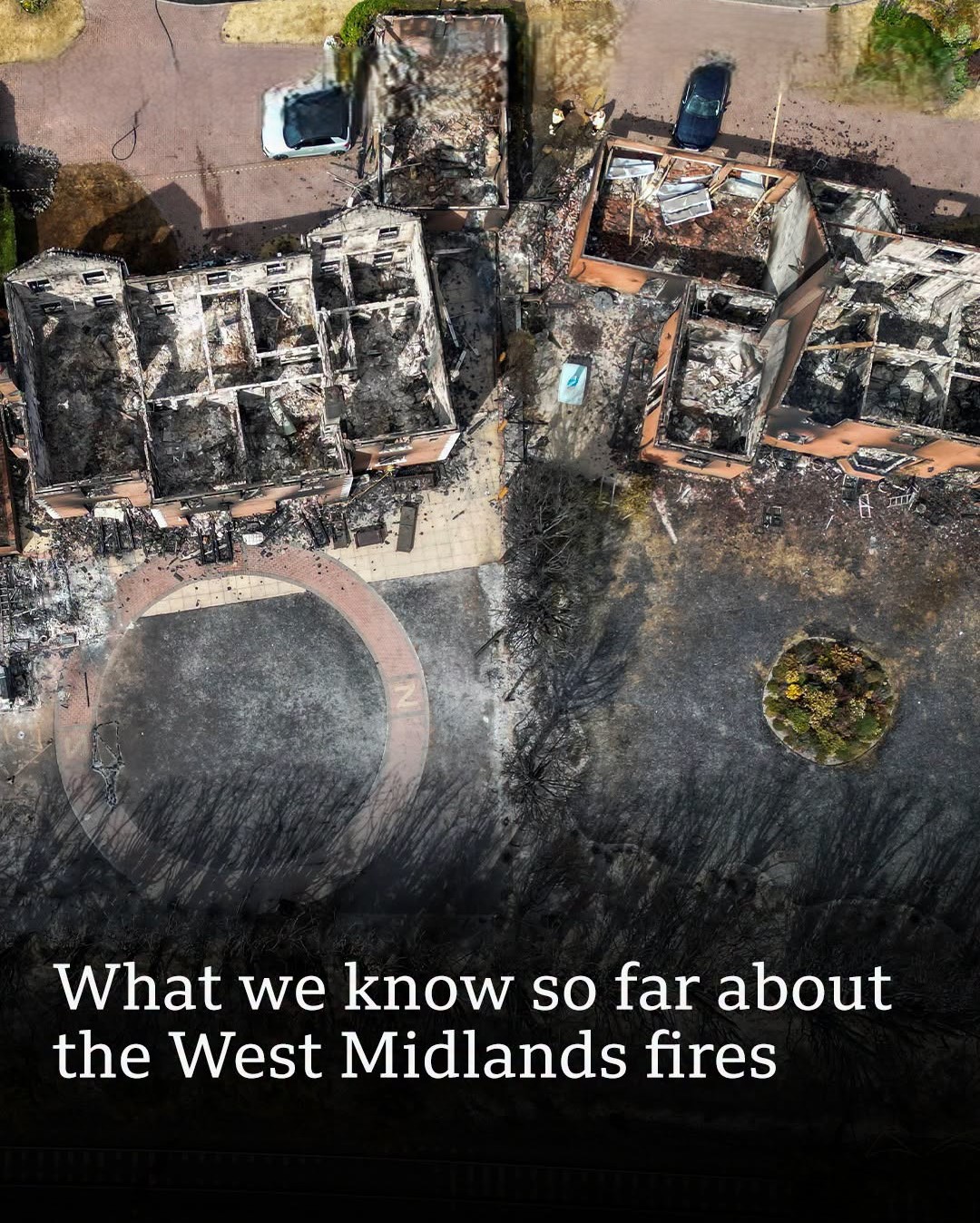
The situation has been particularly serious around Stourbridge, where a large grass fire spread quickly and affected nearby homes. Fire crews deployed dozens of firefighters and numerous fire engines as they worked to prevent the flames from reaching additional properties.
The scale of the Stourbridge blaze has been devastating for residents. Reports indicate that 19 homes were destroyed and another 18 were damaged, while dozens of people required medical treatment. Six firefighters were also taken to hospital during the wider wildfire emergency.
For families living near the affected areas, the fires turned an ordinary summer day into a frightening evacuation.
Residents were forced to leave their homes as smoke filled the area and flames moved rapidly through dry vegetation. Some people had only minutes to gather essential belongings before emergency crews advised them to get out.
The speed of the fires has been one of the most frightening aspects of the emergency.
Grass and woodland can become extremely dry during prolonged periods of hot weather. Once ignited, flames can move quickly, particularly when winds are present. What begins as a small patch of burning grass can develop into a major wildfire capable of threatening homes, roads, power supplies and transport infrastructure.
That is precisely what firefighters have been confronting across the region.
Stourbridge was not the only location affected. Fires were also reported in areas including Stoke-on-Trent, Warstock and Cannock Chase, creating a complex challenge for emergency services.
The simultaneous incidents placed enormous pressure on fire crews.
Instead of concentrating resources on one major emergency, firefighters had to respond to multiple locations, assess changing conditions and determine where crews were needed most urgently.
For those on the ground, the work is physically demanding even under normal circumstances. During an extreme heatwave, firefighting becomes considerably more difficult.
Firefighters must wear heavy protective equipment while working close to intense flames. They are exposed to smoke, radiant heat and rapidly changing conditions. Even when crews successfully contain a fire, hotspots can remain underground or within vegetation, meaning firefighters may need to return repeatedly to prevent the blaze from reigniting.
This explains why the emergency has continued into a second day.
A fire that appears to be under control from a distance may still contain dangerous pockets of heat. A change in wind direction can also cause flames to spread unexpectedly.
The West Midlands emergency has therefore become a test of endurance as well as firefighting skill.
The public has also been warned to take the wildfire danger seriously.
Authorities have urged people to avoid activities capable of starting fires, including barbecues, campfires and fireworks. The warnings came as the UK experienced an exceptionally high level of wildfire activity.
Millions of people across England and Wales received an emergency alert warning of a serious national wildfire risk. The government also temporarily banned the sale of disposable barbecues in response to the escalating danger.
The warning reflects how unusual the current conditions have become.
Wildfires are not traditionally associated with Britain in the same way they are with Mediterranean countries, but increasingly hot and dry summers are changing the risk landscape.
Experts have warned that prolonged periods of extreme heat and drought can leave vegetation dangerously vulnerable to ignition.
This year’s numbers illustrate the scale of the problem. Wildfire incidents in England and Wales have already surpassed the previous annual record of 1,017, according to recent reporting.
The figures have intensified debate about whether Britain is adequately prepared for a future in which extreme heat becomes more frequent.
For residents who have lost their homes, however, the issue is much more immediate.
A house can contain decades of memories: photographs, documents, furniture, children’s possessions and objects that cannot be replaced with money.
Watching a home burn is therefore more than a property loss.
It is the destruction of part of someone’s history.
The aftermath can be just as difficult as the evacuation itself. Families who have escaped safely may still face questions about temporary accommodation, insurance, rebuilding and returning to a neighborhood that has been transformed.
Communities have responded with support.
During disasters, neighbors often become the first source of assistance. People offer spare rooms, food, clothing and transportation. Local organizations and emergency services help establish places where evacuated residents can find information and shelter.
The response demonstrates an important reality about emergencies: firefighters may be the people battling the flames, but entire communities become part of the recovery.
The current crisis has also prompted broader questions about climate resilience.
Extreme heat does not only increase wildfire risk. It can place pressure on hospitals, water supplies, transportation systems and emergency services.
The UK has already experienced record-breaking temperatures and drought conditions this year, creating a combination of risks that emergency planners must increasingly consider together.
The West Midlands fires demonstrate how quickly those risks can converge.
A heatwave creates dry vegetation.
Dry vegetation creates wildfire conditions.
Wildfires threaten homes.
Evacuations disrupt communities.
And multiple simultaneous incidents put additional pressure on emergency services.
The chain can develop remarkably quickly.
That is why prevention is so important.
A small spark can become a major emergency when conditions are exceptionally dry. Something as simple as a discarded cigarette, a barbecue, machinery, glass, fireworks or another ignition source can potentially start a fire under the right conditions.
Authorities therefore continue to emphasize that the public has a crucial role to play.
People should avoid starting fires in high-risk areas, follow official warnings and report genuine emergencies immediately.
For firefighters, meanwhile, the work continues.
Crews remain focused on extinguishing remaining hotspots, protecting homes and preventing further spread. Their priority is not simply to put out visible flames but to make sure the fire cannot return.
The bravery of firefighters has been particularly evident during this crisis. Several have required medical attention, highlighting the physical dangers involved in tackling these rapidly moving fires.
Yet they continue returning to the fire ground.
They work through smoke.
They work under intense heat.
And they continue protecting communities while facing the same extreme temperatures affecting everyone else.
For residents watching from a safe distance, the sight of fire engines moving through smoke-filled streets is a powerful reminder of the seriousness of the situation.
The West Midlands has endured a frightening few days.
Homes have been destroyed.
Families have been displaced.
People have been injured.
And firefighters have faced exhausting conditions while tackling multiple blazes.
But the story is also one of resilience.
Emergency workers continue their efforts. Communities are supporting displaced residents. Authorities are warning the public about the continuing danger.
And as temperatures begin to change, attention will gradually turn from fighting the flames to understanding how such a devastating series of fires developed—and how communities can be better prepared when the next extreme heatwave arrives.
For now, the message remains clear: the wildfire emergency is not something to take lightly.
The flames may eventually disappear, but for the people whose homes and communities have been affected, the consequences will remain long after the smoke clears.