UK Government Issues Nationwide Wildfire Warning as Fire Risk Reaches Critical Level
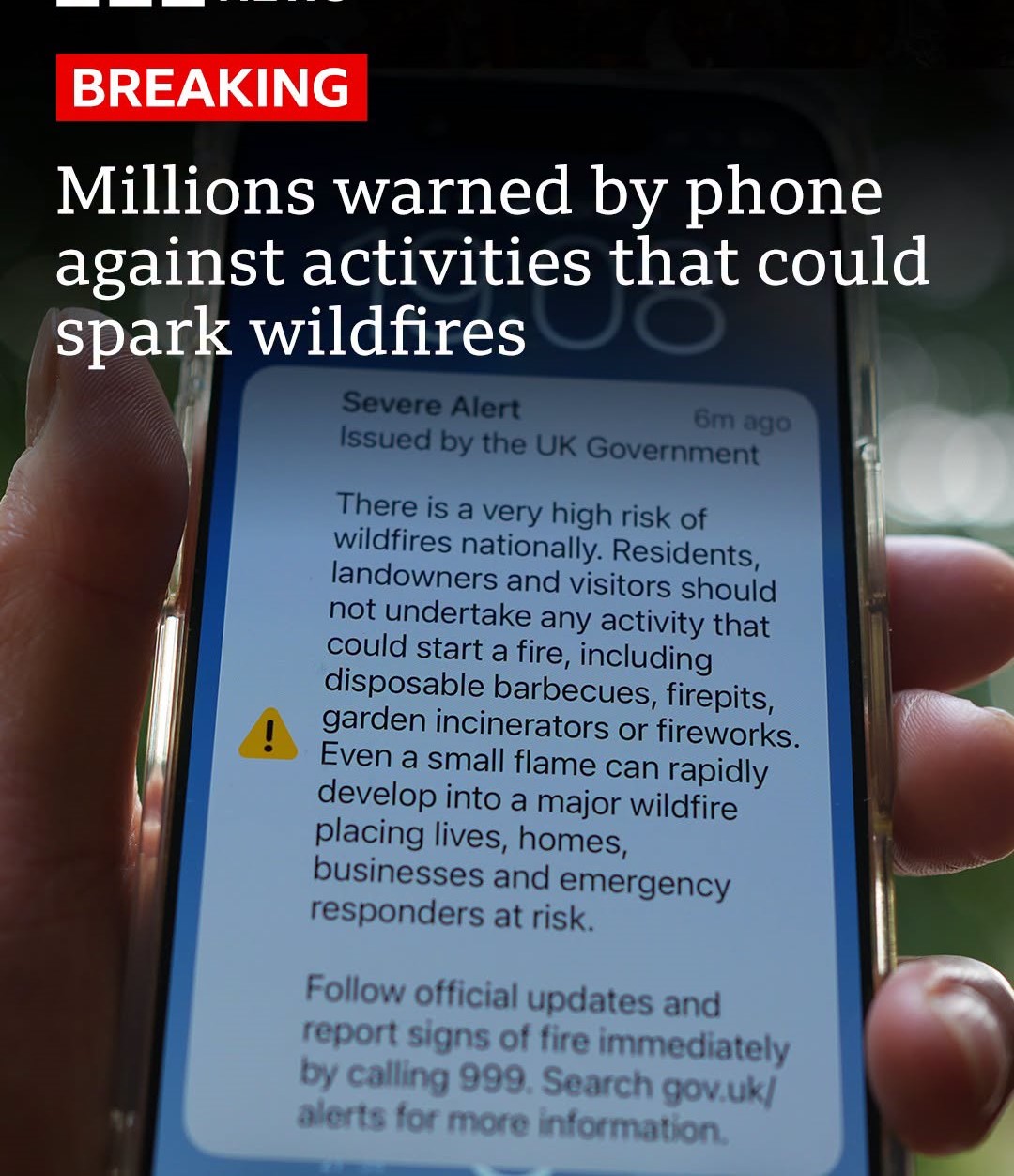
Millions of people across England and Wales received an emergency alert from the UK government after authorities warned that the country was facing a very high risk of wildfires nationally.
The warning was issued on Friday evening, August 14, as firefighters continued battling multiple blazes during a period of extreme heat and exceptionally dry conditions. The official government alert specifically urged residents, landowners and visitors not to undertake activities that could start a fire.
The message was unusually direct.
Authorities warned that even a small flame could rapidly develop into a major wildfire, putting lives, homes, businesses and emergency responders at risk. People were specifically advised to avoid disposable barbecues, firepits, garden incinerators and fireworks.
The emergency warning reflected the seriousness of the situation facing communities across England and Wales.
For many people, the alert was startling because emergency messages of this scale are relatively unusual. Phones sounded and vibrated as the warning was delivered across affected areas, interrupting ordinary activities and reminding millions of residents that the wildfire threat was not limited to a single community.
The alert came as firefighters were already working around the clock to control dangerous fires.
One of the most serious incidents occurred in Stourbridge in the West Midlands, where a large wildfire destroyed 19 homes. The destruction demonstrated how quickly dry vegetation can turn a small fire into a major emergency when weather conditions are favorable for rapid spread.
For families affected by the Stourbridge fire, the warning was more than a message on a phone.
It was a reminder of what could happen when flames move toward residential areas.
Homes that had stood for years were destroyed within hours. Residents were forced to leave, firefighters were injured, and entire communities were left dealing with the aftermath.
The government therefore wanted the public to understand that preventing new fires was just as important as extinguishing existing ones.
Firefighters can fight only a limited number of major incidents at once. When several fires occur simultaneously, emergency services can quickly become stretched.
That is why authorities have emphasized prevention.
A discarded cigarette can ignite dry grass.
A barbecue can produce sparks.
A firepit can remain hot long after people believe it has been extinguished.
Fireworks can send burning material into vegetation.
Under normal conditions, some of these activities may seem relatively harmless. During an extreme period of heat and drought, however, the same activities can have dramatically different consequences.
The government warning specifically asked people to avoid anything that could create an ignition source.
It also instructed people to follow official updates and report signs of fire immediately by calling 999. The alert was sent by the UK government at 7:01 p.m. on August 14 and applied to England and Wales.
The timing of the warning reflected the rapidly developing wildfire emergency.
Temperatures had risen to exceptionally high levels, while weeks of dry weather had left vegetation vulnerable. Reports indicated that large parts of England were experiencing drought conditions, increasing concern that fires could spread quickly.
Prime Minister Andy Burnham described Britain as a “tinderbox” and urged people to take the situation seriously. The government also announced additional measures designed to reduce the risk of further fires.
Among those measures was a temporary ban on disposable barbecues.
Authorities also called for greater public caution around outdoor fires and activities that could create sparks.
The emergency response extended beyond firefighters. Military personnel were deployed to support emergency services in major incident areas, while the government said additional aerial firefighting capacity would be commissioned.
The involvement of the military illustrates the scale of the challenge.
Wildfires are traditionally associated with countries that experience long, hot summers, but Britain is increasingly having to confront similar risks during periods of extreme weather.
Dry grasslands, forests, parks and moorland can become highly combustible when rainfall is limited and temperatures remain elevated.
Once a fire begins, wind can make the situation even more dangerous.
Flames can move from one area of vegetation to another, while embers may travel ahead of the main fire and create new ignition points.
For firefighters, this means that controlling a wildfire is not simply a matter of extinguishing the largest visible flames. Crews must also search for hotspots, protect buildings, monitor changing winds and prevent the fire from restarting.
The physical demands are enormous.
Firefighters work in heavy protective equipment while surrounded by smoke and intense heat. During a heatwave, the conditions become even more challenging.
Several firefighters have required medical treatment during the recent wildfire emergencies, demonstrating the risks faced by emergency crews.
Yet the work continues.
The national warning also highlighted the importance of public behavior.
Authorities are not asking people to panic. They are asking them to be careful.
There is a major difference.
People can help reduce pressure on emergency services by avoiding activities that could start fires, especially in dry countryside and open spaces.
That means thinking carefully before lighting a barbecue, burning garden waste, using fireworks or starting any outdoor fire.
It also means taking warnings seriously when emergency services issue them.
The emergency alert system exists for situations where authorities believe there is an immediate threat to public safety. Receiving such a warning can be unsettling, but the purpose is to give people information that could help protect lives and property.
In this case, the message was particularly important because wildfire conditions can change quickly.
A quiet afternoon can become dangerous within minutes.
A small fire in grass can spread toward a road.
A field can ignite near homes.
Smoke can reduce visibility.
And emergency crews may suddenly have to respond to multiple incidents at once.
The situation also raises broader questions about Britain’s preparedness for extreme weather.
If heatwaves become more frequent and dry periods last longer, wildfire planning may need to become a more permanent part of emergency preparedness.
Fire services may need additional equipment, training and personnel.
Communities may need better evacuation plans.
Landowners may need stronger fire-prevention measures.
And the public may need greater awareness of wildfire risks.
For now, however, the immediate priority remains preventing more fires.
The government’s warning could not have been clearer: the wildfire risk is extremely high, and everyone has a role to play in reducing it.
The devastation already seen in parts of the West Midlands shows what is at stake.
For residents who lost their homes, the emergency is personal.
For firefighters, it is a battle that continues long after the first flames appear.
And for millions of people who received the alert, it was a reminder that extreme weather can transform familiar surroundings into dangerous environments surprisingly quickly.
As firefighters continue working and authorities monitor conditions, the public is being asked to remain vigilant.
The message is simple: don’t create unnecessary sparks, follow official guidance, and report genuine fires immediately.
A single careless flame can become a disaster.
At a time when Britain is already experiencing an extraordinary wildfire emergency, preventing that first spark may be one of the most important things ordinary people can do.