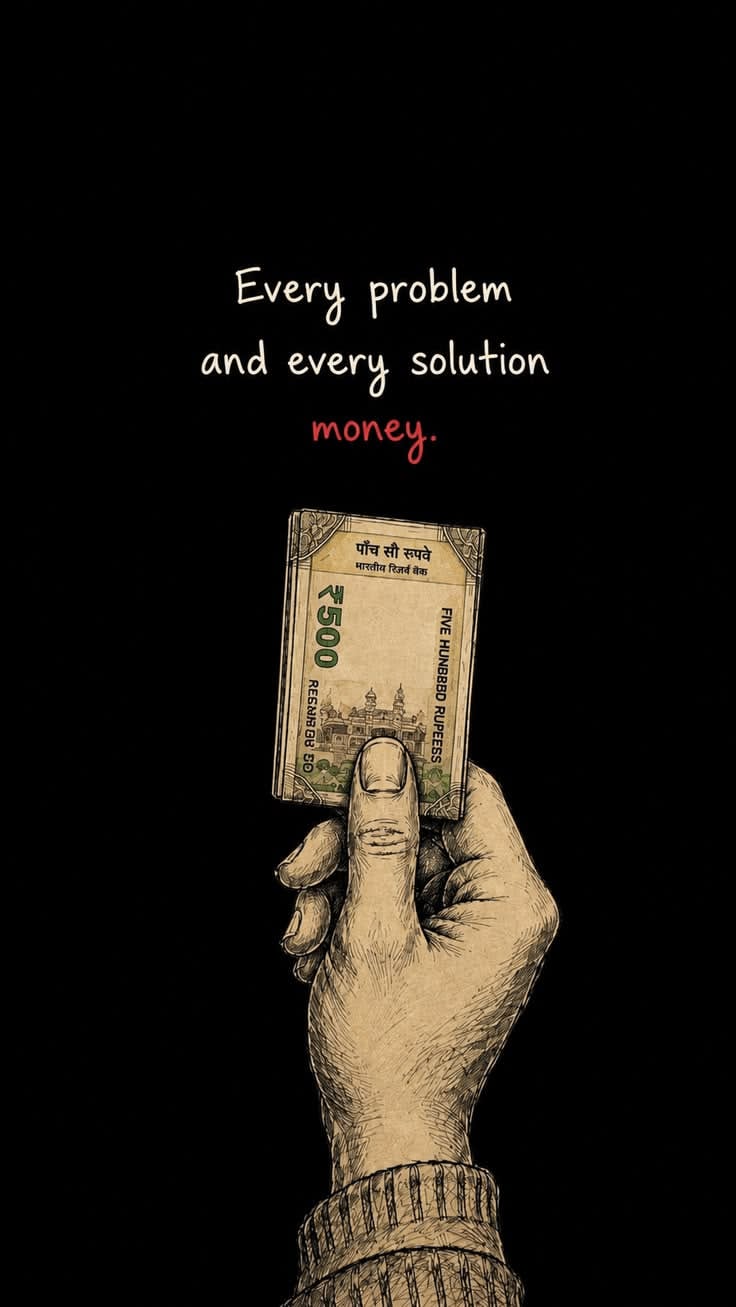
Every Problem and Every Solution Is About Money… See More
Money is one of the most powerful forces in modern life. It can create opportunities, solve practical problems, provide security, and give people more choices. But it can also create stress, fear, arguments, and pressure when it is misunderstood or poorly managed.
That is why so many people eventually realize something important: many of life’s problems have a financial dimension, and many solutions require understanding how money works.
But money itself is rarely the entire answer.
The real power comes from learning how to manage it.
A person can earn a large income and still live in constant stress. Another person can earn less but manage their resources carefully, avoid unnecessary debt, build savings, and live with greater stability.
The difference is not always how much money someone makes.
Sometimes it is how they think about money.
Money is a tool.
If you control the tool, it can help you build.
If the tool controls you, it can become a source of pressure.
Think about everyday life.
Housing costs money.
Food costs money.
Transportation costs money.
Education costs money.
Starting a business requires money.
Taking care of a family requires money.
Preparing for emergencies requires money.
Even opportunities that could improve your life can sometimes require an initial investment.
This is why financial knowledge matters.
You do not have to become obsessed with money.
You need to understand it.
Learn where your money goes.
Know what you earn.
Know what you spend.
Understand your debts.
Build an emergency fund when possible.
Set financial goals.
Avoid spending simply to impress people.
These simple habits can change your relationship with money.
One of the biggest financial problems is not always a lack of income. Sometimes it is a lack of planning.
Someone can receive a paycheck and immediately spend everything.
Then an unexpected bill arrives.
Suddenly there is panic.
The problem was not necessarily the unexpected bill.
The problem was having no preparation for it.
Planning does not eliminate every problem, but it can make problems easier to handle.
That is why saving matters.
Even small amounts can create a habit of preparation.
You may not become financially secure overnight, but every amount you save can represent a small step toward greater stability.
Do not underestimate small progress.
A small amount saved consistently can become something meaningful over time.
The same principle applies to investing in yourself.
Your skills can become an asset.
Your knowledge can become an asset.
Your experience can become an asset.
Learning how to communicate, solve problems, use technology, manage projects, sell, create, or lead can increase your opportunities.
Sometimes the best financial investment is not something you buy.
It is something you learn.
Your ability to earn can be one of your greatest financial assets.
This is why you should never stop learning.
The world changes.
Industries change.
Technology changes.
Opportunities change.
If you keep developing yourself, you give yourself a better chance of adapting.
But remember that making more money is only one part of financial success.
Keeping more of what you earn matters too.
If your income increases but your spending increases at the same speed, you may still feel financially trapped.
This is sometimes called lifestyle inflation.
You earn more, so you spend more.
You upgrade everything.
A larger home.
A more expensive car.
More subscriptions.
More luxury purchases.
More unnecessary expenses.
Eventually, the higher income does not create the freedom you expected.
Instead, it creates higher expectations.
That is why discipline matters.
Do not allow every increase in income to become an increase in spending.
Give your money a purpose.
Some can go toward necessities.
Some toward savings.
Some toward investments, depending on your situation and risk tolerance.
And some can be used to enjoy life.
Money is not meant to be worshiped.
It is meant to be managed.
You should enjoy the life you are building while also preparing for tomorrow.
Another important lesson is that financial problems can affect relationships.
Couples argue about spending.
Families struggle with debt.
Friends can become jealous.
Business partnerships can fall apart over money.
People can make decisions based on financial pressure rather than long-term thinking.
That is why honest communication matters.
Money should not become a subject that everyone avoids.
Talk about goals.
Talk about responsibilities.
Talk about expectations.
Talk about spending.
Talk about saving.
When people understand the financial reality of a situation, they can make better decisions.
Money can also create opportunities.
Imagine having enough savings to survive several months without income.
That financial cushion can give you time to search for the right opportunity rather than accepting the first option out of desperation.
Imagine being able to pay for education or training that improves your skills.
Imagine having enough capital to start a small business carefully.
Imagine being able to help your family during an emergency.
Money can create choices.
And choices can create freedom.
But there is another side.
Money cannot solve everything.
It cannot automatically create happiness.
It cannot guarantee genuine friendships.
It cannot buy back lost time.
It cannot repair every broken relationship.
It cannot replace good health, meaningful relationships, or peace of mind.
A wealthy person can still feel lonely.
A financially successful person can still feel empty.
So do not make the mistake of believing that money is the only measurement of success.
Build wealth, but also build character.
Build income, but also build relationships.
Build a career, but also build a life.
Money should support your life—not become your entire identity.
One of the smartest things you can do is separate your needs from your wants.
A need is something necessary for your basic life and responsibilities.
A want is something you desire but can live without.
The difference matters.
You do not have to eliminate every want.
You simply need to understand your priorities.
Before buying something, ask yourself:
Do I need this?
Can I afford it without creating financial stress?
Will I still value it later?
Am I buying it because I genuinely want it, or because I want other people to notice me?
Those questions can prevent many unnecessary financial decisions.
Social pressure can be expensive.
People sometimes buy things they cannot comfortably afford because they want to appear successful.
But looking wealthy and becoming financially secure are two very different things.
Real financial progress may look boring.
It may look like paying down debt.
Building savings.
Learning a skill.
Starting a small investment plan.
Avoiding unnecessary purchases.
Working on a business.
Building an emergency fund.
Nobody may applaud you for those things.
Do them anyway.
Your future does not need applause.
It needs preparation.
Every financial decision is a vote for the future you want.
Spend carefully.
Save consistently.
Learn continuously.
Work intelligently.
Avoid unnecessary debt when possible.
Do not gamble your future on shortcuts.
There is no guaranteed formula for becoming wealthy quickly.
Be skeptical of anyone promising easy money with no risk.
Real financial progress usually requires patience, discipline, knowledge, and time.
Do not let desperation make you vulnerable to unrealistic promises.
The goal is not to become rich overnight.
The goal is to become financially stronger over time.
One decision at a time.
One habit at a time.
One lesson at a time.
Eventually, those small decisions can create a completely different financial life.
So when you face a money problem, do not panic.
Stop.
Look at the numbers.
Identify the real problem.
Create a plan.
Take action.
If your expenses are too high, examine them.
If your income is too low, look for ways to develop your skills or pursue additional opportunities.
If debt is overwhelming, understand exactly what you owe and create a realistic repayment strategy.
If you have no savings, start with what you can.
If you lack financial knowledge, learn.
You do not need to solve your entire financial life in one day.
You need to take the next intelligent step.
Money problems can feel overwhelming when you look at everything at once.
Break them down.
One bill.
One habit.
One goal.
One improvement.
Then another.
That is how progress happens.
Remember, money is neither your enemy nor your savior.
It is a tool.
Use it wisely.
Respect it.
Understand it.
Do not let it control your emotions or define your worth.
Build financial discipline because discipline gives your money direction.
Build financial knowledge because knowledge helps you make better choices.
Build your income because greater earning power can create more opportunities.
Build your savings because preparation creates resilience.
And build your character because money without character can create problems of its own.
Every problem may not be about money, and money may not solve every problem. But understanding money can give you more options when life becomes difficult.
So learn the game.
Control your spending.
Increase your skills.
Protect your future.
Build patiently.
And remember:
Money is not the destination. Financial freedom is having the ability to make better choices with the life you have.
Your future self will thank you for every smart financial decision you make today.