The Strait of Hormuz Crisis: Why the World Is Watching the Talks With Iran… See More
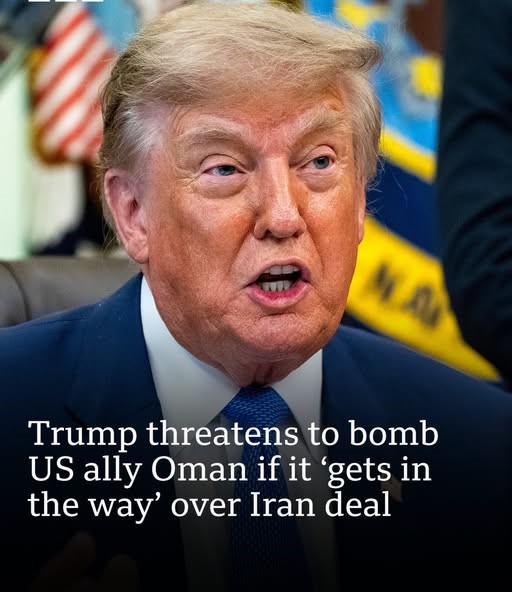
The Strait of Hormuz has become one of the most important pressure points in the world as the United States, Oman, and Iran remain involved in separate diplomatic efforts aimed at restoring commercial shipping through the strategic waterway.
The strait is far more than a narrow passage between Iran and Oman. It is one of the world’s most important energy routes, connecting the Persian Gulf with the Gulf of Oman and the wider Arabian Sea. Large quantities of oil and liquefied natural gas normally pass through the waterway, meaning any prolonged disruption can quickly affect energy markets, transportation costs, and consumers around the world.
Recent negotiations have therefore attracted enormous international attention.
According to recent reports, Oman has been holding discussions with Iran about establishing a secure route for commercial vessels, while the United States has been pursuing its own negotiations with Tehran. Reuters reported that progress between Iran and Oman had been made and that a U.S. official expected an agreement to restore commercial shipping.
But hopes for a quick breakthrough have weakened.
The diplomatic situation has become increasingly complicated, with disagreements over who controls access through the strait, the status of U.S. restrictions on Iranian ports, and broader questions surrounding the conflict between Washington and Tehran.
Iran has maintained that it has a right to manage navigation through the waterway, while the United States has rejected Tehran’s interpretation of the previous agreement. Reuters reported that the disagreement over Hormuz became one of the central issues in the collapse of the June memorandum of understanding.
Oman occupies a particularly important position in this crisis.
The country borders the Strait of Hormuz and has historically maintained communication channels with Iran and Western countries. Because of those relationships, Oman has often been able to act as an intermediary when direct communication between the United States and Iran becomes difficult.
That role has become even more important during the current crisis.
Iran and Oman have reportedly made progress toward defining a route that commercial vessels could use to move through the strait. Earlier reports said the two countries had agreed on coordinates for a proposed route, while more recent reports indicate that Tehran and Muscat have continued working on the details.
For shipping companies, however, an agreement on paper is only the beginning.
Vessel operators need confidence that ships can travel safely. They need predictable routes, reliable navigation information, insurance coverage, port access, and assurances that commercial vessels will not become caught in military confrontations.
Without those guarantees, many companies may continue avoiding the area even if officials announce an agreement.
That is why reopening the Strait of Hormuz is not simply a matter of declaring the waterway open.
Trust is essential.
The current crisis has already affected energy markets. Reuters reported on August 18 that oil prices had risen for a third consecutive session as hopes for a U.S.-Iran peace agreement weakened. Brent crude rose to around $91.76 a barrel, while U.S. West Texas Intermediate crude reached about $85.55.
Higher oil prices can eventually affect people far away from the Middle East.
When crude oil becomes more expensive, transportation companies may face higher costs. Airlines, manufacturers, shipping companies, farmers, and other businesses can also feel the impact. Those costs can eventually reach consumers through higher prices for fuel and other goods.
That explains why governments around the world are watching the Strait of Hormuz so closely.
The waterway is strategically important because of the volume of energy that normally moves through it. A prolonged disruption can create uncertainty throughout the global economy.
For Iran, control over the strait is also connected to its broader bargaining position.
Tehran has demanded changes in U.S. policy, including the lifting of restrictions and other concessions. Washington, meanwhile, has demanded that Iran meet its own conditions before the United States changes its pressure campaign.
This creates a difficult diplomatic equation.
Each side wants something from the other.
Each side believes the other should make the first major concession.
And the Strait of Hormuz has become one of the most visible symbols of that disagreement.
The situation became even more tense as the deadline connected to the June memorandum expired. Reuters reported that the agreement had established a 60-day framework for broader negotiations involving Iran’s nuclear program and sanctions, but the arrangement unraveled over disagreements that included control of the strait.
Despite the setbacks, diplomacy has not completely disappeared.
Oman’s continued discussions with Iran demonstrate that there is still an effort to find a practical arrangement for commercial navigation. A U.S. official previously said Washington would lift its blockade of Iranian ports once a deal restored commercial shipping without impediments.
That creates a possible path toward de-escalation.
If Iran and Oman can establish a workable shipping arrangement, and if the United States accepts the resulting system, commercial traffic could gradually return.
But the broader political conflict would still remain.
A temporary agreement on shipping would not automatically resolve disagreements over Iran’s nuclear program, sanctions, military activity, or regional security.
It could, however, provide something extremely valuable: time.
Diplomatic agreements often begin with limited practical steps. Establishing a secure shipping route could reduce economic pressure, lower the immediate risk to commercial vessels, and create an environment in which larger negotiations become possible.
That is one reason the current talks matter so much.
The alternative is continued uncertainty.
If ships remain unable or unwilling to pass normally through the strait, energy markets could remain volatile. If military tensions increase, the risks to commercial vessels could become even greater.
Recent reports have already described attacks and threats involving shipping in the region. Reuters reported that Iran had threatened to escalate its posture in the strait if diplomacy failed.
This makes the diplomatic window extremely important.
Every day without a stable agreement can increase economic pressure and raise the possibility of further escalation.
For ordinary people, the Strait of Hormuz may seem like a distant geopolitical issue. But its importance can be felt through something as simple as the price displayed at a fuel station.
A disruption in a major energy corridor can influence the price of crude oil, which can influence transportation costs, which can influence the price of goods.
The effects can travel thousands of miles.
That is why countries that are not directly involved in the conflict are also watching the negotiations carefully.
China, India, Japan, South Korea, European countries, and many other economies depend heavily on stable global energy markets. Any major disruption to one of the world’s most important energy routes can create problems far beyond the Middle East.
The situation also demonstrates the importance of diplomacy during international crises.
Military power can influence events, but negotiations are often necessary to create lasting arrangements that allow commercial activity to resume.
Oman’s role is particularly significant because it has relationships with both sides and has experience serving as a diplomatic channel.
The coming days could therefore be critical.
If Tehran and Muscat finalize an arrangement and Washington accepts it, commercial shipping could begin moving toward a more stable future.
If negotiations collapse, however, the consequences could be much broader.
Oil prices could remain under pressure. Shipping companies could continue avoiding the region. Governments could face increased economic costs. And the risk of a wider confrontation could rise.
For now, the Strait of Hormuz remains a powerful reminder of how closely international security and the global economy are connected.
A narrow waterway can influence the price of energy across continents.
A diplomatic disagreement between governments can affect businesses thousands of miles away.
And a successful negotiation could potentially calm markets and reduce risks far beyond the immediate region.
The world is therefore watching the talks with Tehran closely.
The goal is not simply to reopen a stretch of water.
The larger objective is to create enough stability and trust for commercial vessels to travel safely, energy markets to settle, and diplomacy to continue.
Whether that can happen will depend on decisions made in Washington, Tehran, and Muscat.
For now, negotiations remain fragile, and the stakes remain enormous.
The Strait of Hormuz may be geographically small, but its importance to the global economy is anything but small.