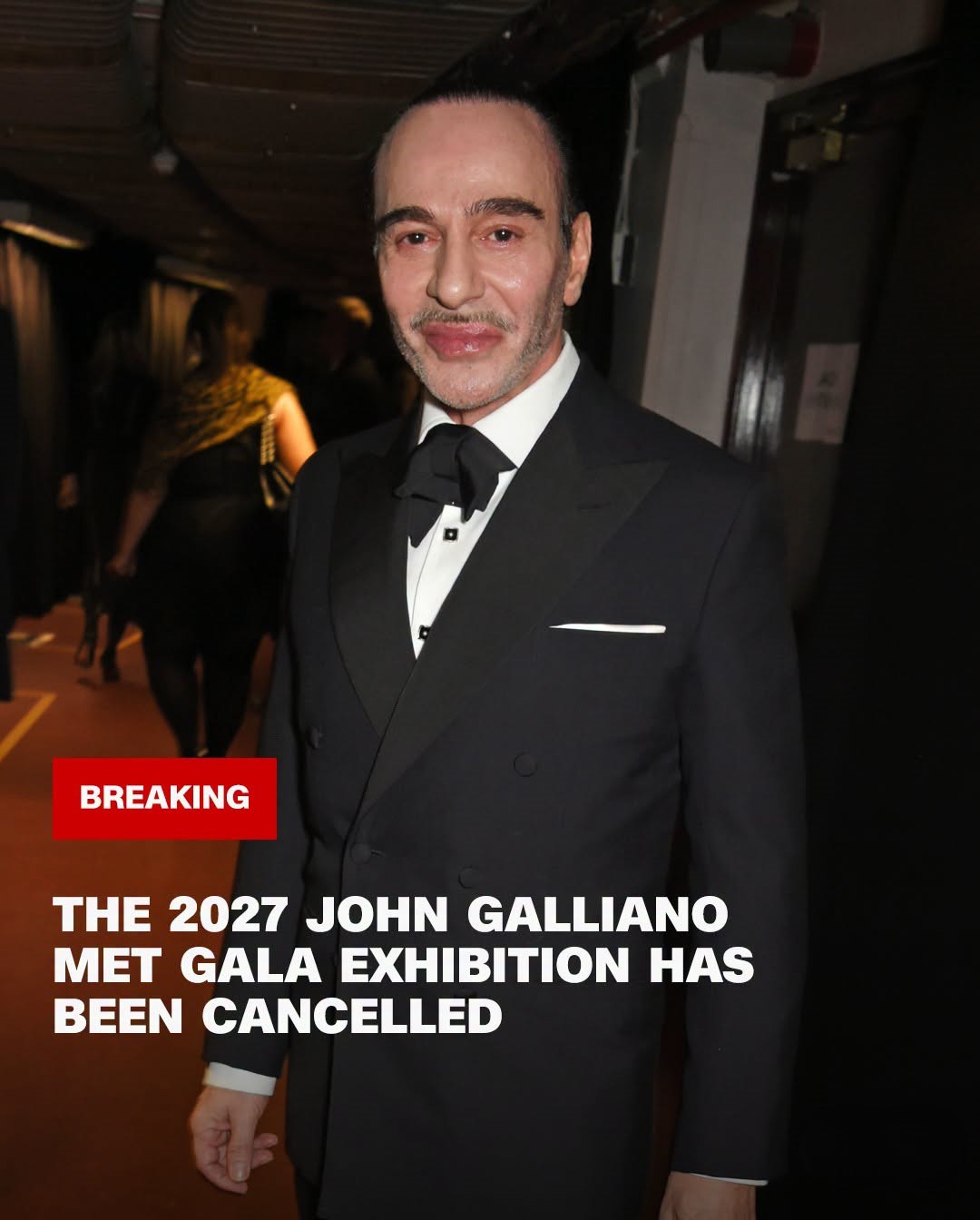
John Galliano Will No Longer Be the Subject of the Met Gala Exhibit After Outcry Over His Past Antisemitic Remarks… See more
The fashion world has been thrown into another major controversy after John Galliano was removed as the subject of an exhibition connected to the Met Gala, following renewed scrutiny of antisemitic remarks he made more than a decade ago.
The decision has reignited a long-running debate about the relationship between artistic achievement, accountability and a person’s past behavior. Galliano is widely regarded as one of the most influential and imaginative designers of his generation, but his career has also been permanently marked by the controversy surrounding comments he made in Paris in 2011.
The latest development demonstrates how difficult it can be for major cultural institutions to celebrate a creative figure whose legacy includes both extraordinary accomplishments and deeply troubling conduct.
A Celebrated Designer With a Complicated Legacy
Galliano became one of fashion’s most recognizable names through his theatrical approach to design.
His collections were famous for elaborate storytelling, dramatic silhouettes and extraordinary craftsmanship. During his career, he worked at major fashion houses and became particularly associated with Christian Dior, where his imaginative runway presentations attracted enormous international attention.
For many fashion enthusiasts, Galliano represented creativity without boundaries.
His designs frequently drew inspiration from history, art and different cultures. His ability to transform a runway show into a theatrical experience helped establish him as one of the industry’s most important designers.
But his career changed dramatically in 2011.
The 2011 Incident
In February 2011, Galliano was filmed making antisemitic and racist remarks at a Paris café.
The video circulated widely, triggering international outrage.
Galliano later apologized for his behavior and acknowledged that his comments were unacceptable. The incident nevertheless had immediate professional consequences.
Christian Dior dismissed him from his position as creative director, and his reputation suffered an extraordinary collapse.
In 2011, a French court found Galliano guilty of making public racist and antisemitic insults and imposed a suspended fine.
The controversy became one of the most serious scandals in modern fashion.
For critics, the incident demonstrated that creative talent could never excuse hateful language.
For supporters, the question became whether someone who had publicly apologized and undergone rehabilitation should eventually be allowed to rebuild a professional life.
Why the Exhibition Became Controversial
The planned exhibition placed Galliano’s work within a broader celebration of fashion history.
That created a difficult question.
Can an institution celebrate someone’s artistic contribution without appearing to celebrate the person themselves?
Museums and cultural organizations regularly face this dilemma.
Artists, designers, musicians, writers and filmmakers often have complicated personal histories. Some have behaved badly, expressed offensive views or become involved in serious controversies.
When their work is displayed decades later, institutions must decide whether the cultural importance of that work can be separated from the creator’s conduct.
In Galliano’s case, the controversy was particularly sensitive because the remarks involved antisemitism.
Jewish organizations and critics argued that featuring Galliano prominently risked minimizing or overlooking the seriousness of what he said.
Others questioned whether removing him from the exhibition amounted to erasing an important part of fashion history.
The Power of Public Pressure
The controversy surrounding the exhibition illustrates the growing influence of public response over major cultural institutions.
In the age of social media, museums and fashion organizations can face intense scrutiny almost immediately.
A decision that might once have generated relatively little attention can now become the subject of an international debate.
Critics can organize online.
Jewish advocacy groups can publicly express their concerns.
Fashion professionals can comment.
Members of the public can challenge institutions directly.
That pressure can force organizations to reconsider decisions that previously seemed settled.
The Galliano controversy is therefore about more than one designer.
It raises questions about how institutions should respond when the person they want to honor has a deeply controversial past.
Can Art Be Separated From the Artist?
This is perhaps the most difficult question raised by the situation.
Some people argue that creative work should be evaluated independently from its creator.
Under that view, Galliano’s influence on fashion remains historically important regardless of his personal behavior.
His designs changed the industry. His runway presentations influenced generations of designers. His technical skill and creative imagination remain part of fashion history.
Removing his work from an exhibition does not change those facts.
But critics argue that there is a significant difference between studying someone’s work and celebrating them.
A museum can acknowledge Galliano’s influence without presenting him as an uncomplicated cultural hero.
That distinction is at the center of the debate.
Galliano’s Attempt at a Comeback
After the 2011 scandal, Galliano spent years rebuilding his career.
He entered treatment and publicly discussed his struggle with addiction and the personal problems that contributed to his behavior.
Eventually, he returned to the fashion industry.
His appointment as creative director of Maison Margiela became one of the most closely watched comebacks in fashion.
The return was controversial, but his work at Margiela received substantial critical attention.
Some fashion professionals argued that his later career demonstrated genuine change.
Others remained uncomfortable with giving him prominent positions because of the severity of his previous remarks.
That division has never completely disappeared.
Why the Met Gala Connection Matters
The Met Gala is one of the most influential events in the fashion calendar.
Held annually in New York, the event attracts designers, celebrities, artists and cultural figures from around the world.
Its connection to the Metropolitan Museum of Art’s Costume Institute gives fashion an unusually prominent place in cultural conversation.
An exhibition associated with the event therefore carries enormous symbolic significance.
Being selected as the subject of such an exhibition can represent recognition at the highest level of the fashion world.
Consequently, removing Galliano from that role is a significant decision.
It sends a message about the standards institutions believe should govern public recognition.
A Broader Conversation About Accountability
The controversy also reflects a larger cultural conversation about accountability.
In previous generations, public figures could sometimes survive scandals with relatively little long-term impact.
Today, audiences increasingly expect institutions to explain why they honor controversial figures.
That doesn’t necessarily mean that people can never change.
In fact, Galliano’s story raises the opposite question:
What does genuine accountability look like?
Is an apology enough?
Does rehabilitation matter?
Can a person demonstrate meaningful change over many years?
And if they do, should their past permanently prevent them from receiving professional recognition?
There are no simple answers.
The Difference Between Forgiveness and Recognition
Forgiveness and public recognition are not necessarily the same thing.
A person can apologize, change their behavior and be forgiven by some people while institutions still decide that certain honors are inappropriate.
At the same time, acknowledging someone’s past mistakes does not necessarily require denying their artistic contributions.
That distinction could become increasingly important as museums and cultural organizations navigate complicated legacies.
The question isn’t simply whether Galliano deserves forgiveness.
It is whether a major public exhibition should place his name and career at its center.
What the Decision Means for Fashion
The fashion industry has always been fascinated by transformation.
Designers constantly reinvent old ideas.
Styles return.
Careers evolve.
Reputations rise and fall.
Galliano’s story contains all of those elements.
His rise was extraordinary.
His downfall was dramatic.
His comeback was unexpected.
And now, his removal from the planned exhibition demonstrates that the past can continue to influence the present.
For the fashion industry, it is a reminder that artistic influence does not exist in isolation from social responsibility.
A Debate That Is Far From Over
The decision will likely continue to generate debate.
Some will believe the exhibition made the right choice by responding to concerns about antisemitism.
Others will argue that removing Galliano prevents audiences from confronting the complicated history of fashion honestly.
Still others may believe there is a middle ground: acknowledging his work while ensuring that his past behavior is neither ignored nor excused.
Whatever position people take, one thing is clear.
John Galliano’s legacy is no longer simply a story about extraordinary fashion.
It is also a story about responsibility, consequences, rehabilitation and the difficult question of whether artistic greatness can ever be completely separated from personal conduct.
The fashion world may continue to admire his technical achievements.
But the controversy surrounding his past ensures that any discussion of his career will also involve the words he used and the harm those words caused.
And perhaps that is the most important lesson.
History does not always offer simple heroes or villains.
Sometimes it gives us complicated people whose achievements and failures must be examined together.
The challenge for museums, designers and audiences is deciding how to tell those stories honestly — without celebrating harmful behavior and without pretending that important chapters of cultural history never happened.
For Galliano, the latest controversy is another reminder that even after years of professional recovery, the consequences of a moment from the past can remain powerful.
And for the fashion industry, it is another difficult conversation about where creativity ends and accountability begins.
See more 👇