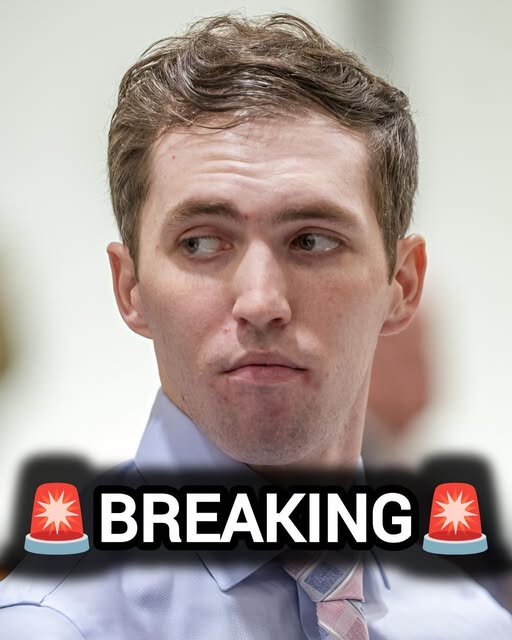
Tyler Robinson Ordered to Stand Trial in Charlie Kirk Killing as Death Penalty Remains Possible
A major development has arrived in the case surrounding the killing of conservative political activist Charlie Kirk. On September 1, 2026, Utah Judge Tony Graf ruled that Tyler Robinson, the 23-year-old man accused of fatally shooting Kirk, must stand trial on aggravated murder and six additional charges. Prosecutors have said they intend to seek the death penalty if Robinson is convicted.
The ruling represents an important step in a case that has attracted national attention since Kirk was killed at an outdoor event at Utah Valley University in Orem, Utah, on September 10, 2025. However, the decision should not be confused with a conviction. Robinson has pleaded not guilty, and prosecutors will still have to prove their allegations beyond a reasonable doubt at trial.
The judge’s decision came after a lengthy preliminary hearing in which prosecutors presented evidence they said connected Robinson to the shooting. The defense challenged that evidence, questioned the reliability of forensic findings, and argued that prosecutors had not established the legal circumstances necessary to justify a capital murder case.
At the center of the prosecution’s case is the allegation that Robinson positioned himself on a rooftop and fired a rifle toward the area where Kirk was speaking. Prosecutors say the shooting occurred in front of a large crowd and that Robinson’s actions placed other people at the event in serious danger.
That allegation is particularly important because prosecutors are using the alleged risk to bystanders as an aggravating circumstance supporting the aggravated-murder charge. Under Utah law, aggravated murder can make a defendant eligible for the death penalty when specific legal requirements are met.
During the preliminary proceedings, prosecutors pointed to several categories of evidence. They discussed surveillance video, forensic evidence, DNA allegedly recovered from the rifle, messages attributed to Robinson, and other material they say supports their version of events.
The prosecution has also alleged that the killing was politically motivated. Prosecutors argued that Robinson disagreed with Kirk’s political positions and that those disagreements played a role in the shooting. They have pointed to communications they say reveal Robinson’s feelings and intentions before and after the attack.
The defense has disputed that interpretation. Robinson’s attorneys have questioned whether prosecutors can establish a clear political motive and have challenged the strength of the forensic evidence. They have also emphasized that only one shot was fired and that Kirk was the only person killed.
That distinction could become important at trial. The prosecution will have to convince a jury that the evidence meets the much higher standard required for a criminal conviction. A preliminary hearing uses a substantially lower threshold. Judge Graf’s ruling means he found sufficient probable cause for the charges to proceed, not that Robinson was proven guilty.
The court proceedings have also highlighted the emotional impact of the case. Kirk’s widow, Erika Kirk, and members of his family have attended hearings. Supporters and members of Kirk’s organization have closely followed the legal process, while Robinson’s defense team has worked to protect his constitutional rights.
Kirk was a nationally recognized conservative activist and co-founder of Turning Point USA. His death became a major political story, with supporters describing him as an influential voice who helped mobilize young conservative voters. His killing also intensified a broader national debate about political violence and security at public events.
For Kirk’s family, however, the case is not simply a political story. It is a personal loss involving a husband, father, son, and friend. The family has repeatedly emphasized its desire for justice while watching the legal process unfold.
The judge’s ruling means the case now moves toward trial. Before that happens, attorneys are expected to address additional pretrial issues, including evidence, courtroom procedures, jury selection, and other legal questions. A later hearing is scheduled for October 23, when the court is expected to continue preparations for the next stage.
The death penalty issue will remain one of the most significant elements of the case. Prosecutors have made clear that they intend to pursue capital punishment if Robinson is convicted of aggravated murder. That does not guarantee a death sentence. A conviction and sentencing would involve separate legal stages, and the defense would have opportunities to challenge the prosecution’s arguments.
The possibility of capital punishment also makes jury selection especially important. Potential jurors may have strong opinions about Kirk, Robinson, political violence, or the death penalty itself. Attorneys on both sides will have to determine whether prospective jurors can evaluate the evidence fairly and follow the court’s instructions.
The prosecution’s evidence will receive intense scrutiny during a trial. Video footage may become important in establishing movements before and after the shooting. Forensic evidence may be examined by experts from both sides. Messages attributed to Robinson could also become a major part of arguments about intent and motive.
The defense, meanwhile, is expected to challenge the prosecution’s interpretation of those materials. Defense attorneys may argue that individual pieces of evidence are being presented without sufficient context or that investigators failed to eliminate alternative explanations. Their broader objective will be to create reasonable doubt.
Reasonable doubt is a crucial concept in the American criminal justice system. Prosecutors carry the burden of proving guilt, and a defendant does not have to prove innocence. If jurors have a reasonable doubt about an essential element of the charges, they are required to acquit.
That principle makes the upcoming trial fundamentally different from the preliminary hearing that has just concluded.
At the preliminary stage, the question was whether enough evidence existed for the case to continue. Judge Graf answered yes. At trial, the question will be whether prosecutors can prove their case beyond a reasonable doubt. That decision will belong to a jury.
The case also demonstrates how quickly public discussion can move ahead of the courtroom. Since Kirk’s death, social media has produced countless claims, theories, accusations, and arguments. Some may eventually prove relevant, while others may have little connection to admissible evidence.
For that reason, the formal proceedings matter. Evidence introduced in court can be challenged, witnesses can be questioned, experts can be cross-examined, and judges can rule on whether particular material is legally admissible. Those safeguards exist precisely because high-profile cases can generate enormous public pressure.
Robinson’s future will now depend on the next stages of that process. If prosecutors obtain a conviction on aggravated murder and successfully establish the circumstances required for capital punishment, Robinson could face the possibility of a death sentence. Other potential penalties are also available under Utah law, depending on the final charges and outcome.
If the defense succeeds in creating reasonable doubt, however, the result could be an acquittal on some or all charges. The preliminary ruling does not determine that outcome.
For Kirk’s supporters, the decision to send the case to trial may feel like a significant step toward accountability. For Robinson’s supporters and defense team, it marks the beginning of the stage where prosecutors must prove every element of their case before a jury.
The contrast illustrates why the language surrounding criminal proceedings matters. Robinson is accused of killing Kirk, but he remains legally presumed innocent unless convicted. Saying that he has been ordered to stand trial is accurate. Saying that the judge has found him guilty would not be.
The next phase is likely to receive even greater attention. Courtroom evidence may provide new details about the prosecution’s theory, while defense arguments may offer a competing explanation of what happened and why. Both sides will have opportunities to present witnesses and challenge the opposing case.
The trial will also force difficult questions about political violence in America. Kirk’s killing occurred at a public political event, making security and free expression central concerns. Political gatherings depend on people being able to speak, disagree, protest, and participate without fear of deadly violence.
Whatever the eventual verdict, the case has already had a lasting impact on Kirk’s family, his organization, and the broader political community. The legal process now has the responsibility of separating emotion and speculation from evidence that can withstand courtroom scrutiny.
For now, the most important fact is straightforward: Judge Tony Graf has ruled that Tyler Robinson will stand trial on aggravated murder and six other charges connected to Charlie Kirk’s death. Prosecutors intend to seek the death penalty, but no sentence has been imposed because there has been no conviction.
The coming months will determine how the evidence is presented, how the defense responds, and whether the prosecution can meet its demanding burden of proof. Until then, the case remains unfinished.
A judge has opened the door to a trial, not closed the book with a verdict. The final chapter will be written only after the evidence has been heard, challenged, and considered through the American justice system. For everyone watching, the coming trial will be a test not only of the evidence, but also of the justice system’s ability to deliver a fair and lawful judgment under pressure.