Newark Mayor Ras Baraka Arrested at ICE Facility — The Confrontation That Sparked a National Debate
The arrest of Newark Mayor Ras Baraka at an immigration detention facility in New Jersey became one of the most dramatic confrontations between a local elected official and federal immigration authorities in recent years.
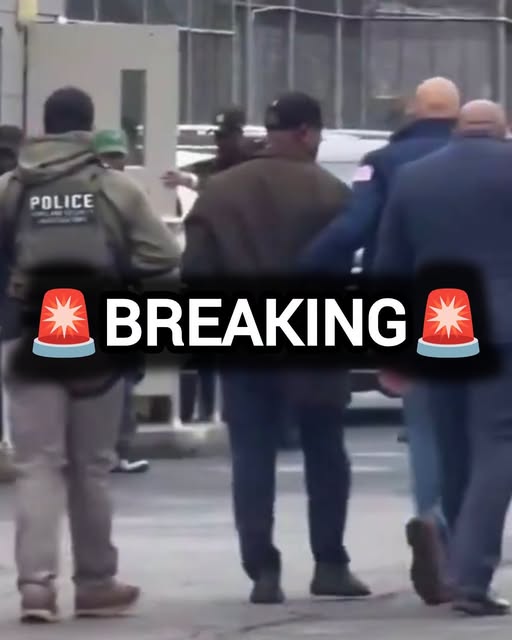
On May 9, 2025, Baraka was taken into custody after entering the secured area of Delaney Hall, an immigration detention facility in Newark, during a visit involving members of Congress and demonstrators. Federal authorities accused him of trespassing after repeatedly warning him to leave the property.
The incident immediately generated national attention because Baraka was not simply a protester. He was the mayor of Newark, one of New Jersey’s largest cities, and a prominent Democratic politician who had been outspoken about immigration enforcement and the treatment of immigrant communities.
The confrontation also unfolded at a politically sensitive moment, as federal immigration authorities faced growing criticism from local officials and immigrant-rights advocates over detention and deportation operations.
According to federal prosecutors, Baraka entered a secured portion of the facility after being warned that he was not authorized to remain there. The Department of Justice later said that federal officers instructed him several times to leave.
Baraka was ultimately arrested and charged with trespassing.
The arrest itself was relatively brief. He appeared before a federal magistrate judge that evening and was released without bond. No plea was entered during that initial appearance, and he spent approximately five hours in custody.
But the political consequences lasted far longer.
Baraka and his supporters disputed the federal government’s characterization of what happened. They argued that he had been attempting to conduct oversight and advocate for Newark residents, rather than deliberately interfere with federal law enforcement.
The incident became especially contentious because members of Congress were also present at the facility.
Three Democratic representatives—LaMonica McIver, Bonnie Watson Coleman and Rob Menendez—had gone to Delaney Hall as part of an effort to inspect the facility and raise concerns about immigration detention. Their presence coincided with a protest outside the building.
The situation escalated when federal authorities moved to arrest Baraka.
The members of Congress later described the arrest as unnecessary and accused federal officers of using excessive force and intimidation. Federal authorities offered a sharply different account and alleged that members of the congressional delegation interfered with officers.
That disagreement eventually produced additional criminal charges.
The controversy therefore became larger than the mayor’s arrest itself. It evolved into a dispute over the boundaries between federal immigration authority, congressional oversight, local government power and the rights of elected officials to protest.
At the center of the controversy was Delaney Hall.
The facility had become a major flashpoint in Newark. Immigration detention is controlled by federal authorities, but local officials argued that the facility’s presence and operations had consequences for the surrounding community.
Baraka had repeatedly criticized federal immigration enforcement practices. Newark’s government subsequently adopted measures restricting ICE activities on city property and requiring city employees to report observations of alleged unconstitutional immigration enforcement.
The mayor’s position was clear: Newark had an obligation to protect its immigrant residents and challenge actions he believed threatened the community.
Federal officials viewed the situation differently.
ICE is a federal agency with authority to enforce federal immigration laws, including the detention and removal of people subject to immigration proceedings. Federal officials have maintained that local governments cannot obstruct lawful federal operations.
That fundamental disagreement helped turn the Delaney Hall confrontation into a symbol of a much larger national argument.
What authority should cities have when they disagree with federal immigration policy?
How far can elected officials go when attempting to observe or challenge federal enforcement?
When does protest become unlawful interference?
And what rights should members of Congress have when conducting oversight?
Those questions did not disappear after Baraka was released.
The mayor continued to speak publicly about the incident and filed a lawsuit against federal officials. He maintained that his actions at Delaney Hall were connected to his responsibilities as Newark’s mayor and his concerns about the facility.
The federal government, meanwhile, continued pursuing legal action against other people connected to the confrontation.
Congresswoman LaMonica McIver became particularly central to the dispute. Federal prosecutors accused her of forcibly impeding and interfering with federal officers during the incident.
McIver denied wrongdoing and maintained that she was performing congressional oversight duties.
Her case demonstrated how quickly the events outside Delaney Hall had expanded beyond a single trespassing charge.
In June 2025, the U.S. Attorney’s Office announced an indictment charging McIver with three federal offenses. Prosecutors alleged that she interfered with federal officers attempting to arrest an individual outside the detention facility.
The legal battle continued into 2026.
A federal appeals court later rejected McIver’s effort to have the criminal charges dismissed, leaving significant portions of the case intact. She continued to argue that the prosecution was politically motivated and that her constitutional protections as a member of Congress should shield her conduct.
Meanwhile, Baraka’s own trespassing case took a different path.
Prosecutors eventually dropped the charge against him.
That development became important because the original arrest had been portrayed by both sides as evidence of a much larger political conflict.
For critics of the federal government, Baraka’s arrest demonstrated what they considered an aggressive approach toward local officials who challenged immigration enforcement.
For federal authorities and their supporters, the incident demonstrated that elected officials are not automatically exempt from restrictions governing secure federal facilities.
The debate was therefore not simply about Baraka.
It was about the limits of political power.
The arrest also occurred while Baraka was pursuing a broader political future. At the time, he was among the candidates seeking the Democratic nomination for governor of New Jersey.
That made the incident even more politically significant.
His confrontation with federal immigration authorities strengthened his image among supporters who viewed him as a forceful advocate for immigrant communities. At the same time, opponents argued that elected officials should not cross security boundaries or interfere with federal officers.
The competing interpretations reflected the deep polarization surrounding immigration in the United States.
For immigrant-rights advocates, detention centers have become symbols of an immigration system they believe separates families and fails to provide adequate protections for vulnerable people.
For immigration-enforcement supporters, detention facilities are an essential component of enforcing federal law and carrying out deportation orders.
Local officials often find themselves caught between those positions.
Mayors are responsible for public safety and community relations, while federal agencies control immigration enforcement.
When those responsibilities collide, confrontations can become almost inevitable.
Newark became one of the clearest examples.
Baraka’s later statements about Delaney Hall emphasized his continuing opposition to what he described as abusive federal immigration practices. Newark officials continued challenging federal immigration policies through political and legal channels.
The mayor’s office also took formal steps to restrict ICE activity involving city-owned property.
In February 2026, Baraka signed an executive order restricting ICE agents from using city-owned property, facilities or resources for unconstitutional civil immigration enforcement actions. The order also instructed city employees to report observations of alleged unconstitutional conduct by federal immigration agents.
The continuing dispute showed that the confrontation at Delaney Hall had not ended when Baraka walked out of federal custody.
Instead, it became part of a broader struggle between Newark and the federal government over immigration policy.
The controversy also illustrates why headlines surrounding arrests can be misleading.
Being arrested does not mean a person has been convicted of a crime.
Being charged does not establish guilt.
And when charges are later dismissed, the legal outcome can be very different from the impression created by an initial headline.
In Baraka’s case, the dramatic image of a sitting mayor being taken into custody spread quickly. But the subsequent legal developments were more complicated.
His trespassing charge was dropped.
The allegations against him therefore did not result in a conviction.
That distinction is essential when discussing the case.
The incident nevertheless remains politically significant because it demonstrated how quickly disagreements over immigration enforcement can escalate.
It also raised questions about the relationship between local leaders and federal agencies.
Newark officials argued that federal immigration operations can have profound consequences for residents and communities, giving local leaders a legitimate reason to monitor and criticize them.
Federal authorities countered that immigration enforcement is a federal responsibility and that officers must be able to carry out their duties without obstruction.
Both arguments continue to shape the national debate.
Today, the Delaney Hall confrontation is remembered not simply because a mayor was arrested, but because it exposed a deeper conflict over federal authority, local government, immigration policy and political protest.
Baraka’s arrest became a powerful political image.
To some, it represented an elected official standing up to a federal government whose immigration policies he opposed.
To others, it represented a mayor crossing a legal boundary at a secure federal facility.
The truth of what happened must ultimately be understood through court records, official statements and evidence rather than social-media headlines.
What is certain is that the arrest occurred in May 2025, not as a new September 2026 event. Baraka was charged with trespassing, released the same evening, and the charge was later dropped.
Yet the larger conflict remains alive.
Immigration enforcement continues to be one of America’s most divisive political issues. Federal authorities continue to conduct operations, while cities and states continue debating how much cooperation they should provide.
Newark’s experience demonstrates just how complicated that conflict can become.
A mayor can oppose federal policy.
Federal officers can enforce federal law.
Congress members can seek oversight.
Protesters can demand change.
But when those roles collide at the gates of a secure federal facility, the consequences can be immediate and dramatic.
For Ras Baraka, the arrest became one of the defining moments of his political career.
For Newark, it became another chapter in its long-running effort to defend its approach to immigrant communities.
And for the country, the confrontation offered a glimpse of the difficult legal and political questions that arise when local leaders and federal immigration authorities find themselves on opposite sides of a national debate.
The headlines may have lasted for days, but the questions raised by the incident will likely last much longer.