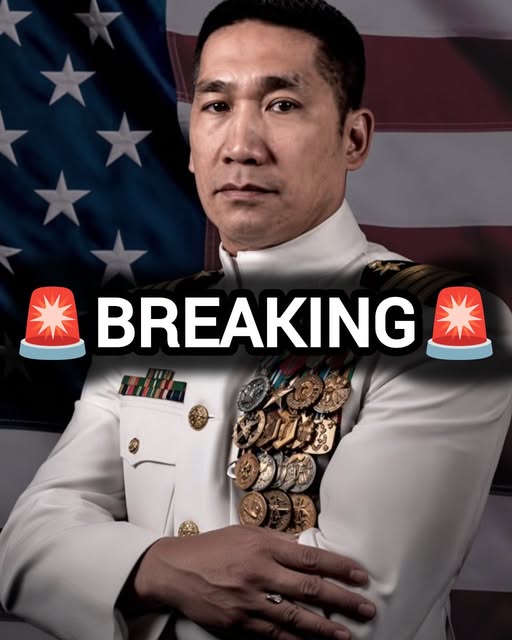
🚨 BREAKING: President Trump Nominates Hung Cao to Become the Next Secretary of the Navy — See More
President Donald Trump has made a major move involving the leadership of the U.S. Navy, announcing that he intends to nominate Acting Navy Secretary Hung Cao to become the permanent Secretary of the Navy.
The announcement, made Tuesday, September 1, puts Cao at the center of an important transition at the Department of the Navy and begins what could become a closely watched Senate confirmation process.
Trump praised Cao in announcing the nomination, describing him as a “true WARRIOR” and calling on the Senate to confirm him quickly. The president highlighted Cao’s recent work leading the Navy and Marine Corps and expressed confidence that he could continue advancing the administration’s priorities.
For Cao, the nomination represents a remarkable rise.
He has already been serving as acting Navy secretary since April, after John Phelan left the position. Before taking the acting role, Cao served as undersecretary of the Navy, giving him experience inside the department before assuming its top civilian leadership position.
But Cao’s background is different from that of many civilian political appointees.
He spent approximately 25 years in the Navy and retired as a captain. His military career included work as an explosive ordnance disposal and diving officer, as well as assignments connected to special operations forces and deployments including Iraq and Afghanistan.
That military experience is likely to be one of the central arguments made by supporters of his nomination.
The Secretary of the Navy is the Navy’s senior civilian official. The position involves responsibility for overseeing the Department of the Navy, including the Navy and Marine Corps, and working with military leadership on issues such as training, equipment, readiness and modernization. The secretary does not personally command combat operations; those responsibilities belong to the military chain of command.
Cao has already emphasized several priorities during his time as acting secretary.
One of the biggest is shipbuilding.
The United States Navy faces the enormous challenge of maintaining a modern fleet while competing with major military powers and dealing with the costs and complexity of building new ships. Cao has emphasized increasing ship production and improving the Navy’s ability to deliver the vessels and equipment needed for future operations.
For the Trump administration, that issue is especially important.
The president has repeatedly emphasized strengthening American military capabilities and expanding the country’s shipbuilding capacity. A permanent Navy secretary will therefore play an important role in translating those goals into actual programs, budgets and production decisions.
But Cao’s nomination comes at a complicated moment.
The Pentagon has experienced significant leadership changes, and the nomination follows the recent resignation of Army Secretary Dan Driscoll. That means Cao’s potential confirmation is happening against the backdrop of broader questions about stability and leadership inside the Defense Department.
There are also concerns surrounding the demands being placed on Navy personnel.
The U.S. military has been involved in extended operations, and some lawmakers have raised questions about the effect of prolonged deployments on sailors and military families. Reports concerning the USS Abraham Lincoln, including concerns about lengthy time at sea and crew conditions, have added additional pressure to the Navy’s leadership.
That means the next permanent Navy secretary could face a difficult balancing act.
The Navy needs new ships.
It needs trained personnel.
It needs to maintain existing vessels and aircraft.
It needs to prepare for future conflicts.
And it must also take care of the sailors and Marines who carry out its missions.
Cao’s supporters argue that his decades of military experience give him a valuable understanding of these challenges.
His critics, however, may focus on his political history and some of his policy positions.
Before joining the Department of the Navy, Cao became involved in Republican politics in Virginia. He ran unsuccessfully for the U.S. House in 2022 and later challenged Democratic Sen. Tim Kaine in the 2024 Senate election. Trump supported Cao during his political campaigns.
His political background could therefore become part of the Senate confirmation debate.
Supporters may argue that his experience in uniform and inside the Navy makes him especially qualified.
Opponents may ask whether his political views could influence how he manages the department.
Those questions are likely to become more important if the Senate begins formal consideration of his nomination.
For now, however, Cao remains acting secretary.
A presidential nomination does not automatically make him the permanent secretary. The Senate must consider and confirm the nomination before he can formally assume the position on a permanent basis.
Cao responded positively to the announcement.
He described the nomination as an honor and emphasized his commitment to leading the Navy and Marine Corps. His public comments have also stressed shipbuilding, homeland defense and ensuring that the service has the equipment necessary to accomplish its missions.
The confirmation process could therefore become an important test of the administration’s defense agenda.
It will also give senators an opportunity to question Cao about the future of the Navy.
They could ask about shipbuilding.
They could ask about military readiness.
They could ask about sailor welfare.
They could ask about the Navy’s budget.
They could ask about future threats.
And they could ask how Cao intends to balance the administration’s ambitions with the practical limitations facing the service.
For ordinary Americans, the appointment may seem like an internal Washington story.
But the Navy’s decisions have consequences far beyond Washington.
The United States maintains one of the world’s largest and most technologically advanced naval forces. Its ships, submarines, aircraft and Marines operate around the globe, protecting sea lanes, supporting allies and responding to crises.
The person responsible for leading the department’s civilian side therefore occupies an extremely consequential position.
If confirmed, Cao would inherit a Navy facing major strategic questions.
How quickly can the fleet grow?
How much should the United States invest in new ships?
How should existing vessels be maintained?
How can the service recruit and retain enough sailors?
How should the Navy prepare for rapidly changing technology?
And how can military personnel remain ready without being pushed beyond sustainable limits?
Those questions will not have simple answers.
They will require cooperation between civilian leaders, admirals, Congress, industry and the thousands of sailors and Marines who ultimately carry out the Navy’s mission.
Cao’s nomination therefore represents more than simply replacing an acting official.
It could mark the beginning of a new chapter for the Department of the Navy.
Trump has made clear that he wants Cao confirmed quickly. Whether the Senate agrees remains to be seen.
One thing is already clear: Hung Cao’s journey from Navy officer to acting secretary and now presidential nominee has attracted national attention.
His military record will be closely examined.
His political history will be debated.
His leadership decisions as acting secretary will receive greater scrutiny.
And his vision for America’s Navy will likely become a central part of the confirmation process.
For Cao, the next step is no longer simply serving temporarily.
It is making his case to the United States Senate — and ultimately to the American public.
If confirmed, he would take permanent responsibility for helping guide one of America’s most important military institutions through a period of intense strategic competition, technological change and operational pressure.
And that is why this nomination matters.
It isn’t simply about one person receiving a new title.
It is about who will help determine the future direction of the Navy and Marine Corps.
What do you think about President Trump’s choice?
👍 Support Hung Cao
🇺🇸 Strong military experience
🤔 Wait for the Senate confirmation process
👎 Oppose the nomination
Whatever your opinion, one thing is certain: the debate over the future of America’s Navy has just entered a new chapter.
See more… 👇