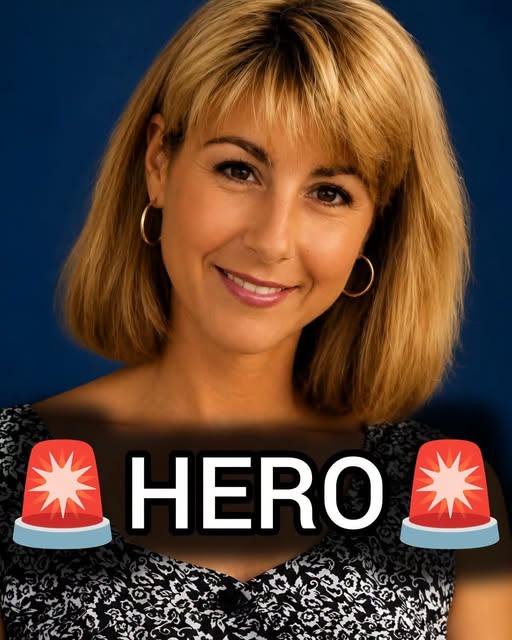
HERO: Madeline Amy Sweeney Knew the Plane Had Been Hijacked. Instead of Panicking, She Started Gathering Information
On the morning of September 11, 2001, American Airlines Flight 11 departed Boston’s Logan International Airport bound for Los Angeles. It was supposed to be an ordinary cross-country flight. Passengers settled into their seats, flight attendants prepared for the journey, and the aircraft climbed into the morning sky.
Among the crew members was flight attendant Madeline Amy Sweeney.
What happened during the next few minutes would become part of one of the darkest chapters in American history. But amid the chaos and terror aboard Flight 11, Sweeney demonstrated remarkable composure.
She did not simply panic.
She paid attention.
And she began gathering information.
When Flight 11 was hijacked, the people aboard the aircraft had almost no way of knowing exactly what was happening or what would happen next. Communication with the outside world was extremely limited. Yet Sweeney managed to provide crucial information about the hijacking to people on the ground.
Her actions have since become an enduring example of courage under unimaginable circumstances.
Sweeney was born in Massachusetts and had worked as a flight attendant for American Airlines. Colleagues and people who knew her remembered her as warm, capable and professional.
On September 11, she was working aboard Flight 11.
After the hijacking began, Sweeney communicated with American Airlines personnel on the ground. One of the most important conversations was with Michael Woodward, an American Airlines flight service manager.
During their communication, Sweeney described what she could observe inside the aircraft.
She provided information about the hijackers, including physical descriptions and details about their actions. She also helped identify the apparent weapons involved.
Her ability to observe and communicate details was extraordinary considering the circumstances.
She was not sitting safely in an office.
She was inside a hijacked airplane.
Every second carried uncertainty.
Yet instead of allowing fear to completely overwhelm her, she focused on what she could do.
That distinction matters.
Courage is often imagined as fearlessness, but genuine courage does not necessarily mean feeling no fear. It can mean recognizing danger and still taking useful action.
Sweeney was facing a terrifying situation, but she concentrated on gathering information that could potentially help authorities understand what was happening.
Her communication became part of the information used to identify the hijackers.
She reportedly described one of the men as appearing Middle Eastern and provided details about his clothing and physical appearance. She also communicated information about other hijackers and the weapons she believed they possessed.
The information was passed along to authorities.
At the time, nobody knew how significant those details would become.
The attacks that morning involved four commercial airplanes. Flight 11 was the first aircraft hijacked. It ultimately crashed into the North Tower of the World Trade Center in New York City.
All passengers and crew members aboard Flight 11 were killed.
Sweeney was among them.
She was 35 years old.
Her final actions, however, were not forgotten.
In the aftermath of the attacks, investigators worked to reconstruct what happened aboard the aircraft. Communications from passengers and crew members became critically important pieces of evidence.
Sweeney’s information helped provide a picture of the hijacking from inside the plane.
Her story is especially powerful because it illustrates the importance of ordinary people performing extraordinary acts during moments of crisis.
She was not a soldier.
She was not a police officer.
She was not trained to confront terrorists.
She was a flight attendant doing her job when an unimaginable emergency unfolded.
Her response was to observe, communicate and help.
There is something deeply human about that decision.
When people are frightened, the natural reaction can be to focus entirely on survival. Sweeney certainly had every reason to be afraid. Yet she also understood that information could matter.
Names matter.
Descriptions matter.
Locations matter.
Details about weapons matter.
Anything that could help people on the ground understand the situation could potentially save lives.
That is what makes her actions so significant.
Her story also reminds us that history is often built from small moments. Major historical events are frequently remembered through photographs, speeches, political decisions and dramatic images.
But behind those large events are individual people.
Passengers.
Flight attendants.
First responders.
Office workers.
Parents.
Children.
Each person experienced the tragedy from a different perspective.
Sweeney’s perspective was from inside one of the hijacked airplanes.
Her communication with people on the ground created a direct connection between the aircraft and the outside world at a moment when information was desperately needed.
The details she provided were later used in efforts to understand the attack and identify those responsible.
In the years since September 11, Sweeney has been remembered in Massachusetts and by American Airlines. Her name is included among the many victims whose lives were lost that day.
Memorials across the country have preserved the names of those killed, ensuring that they are remembered as individuals rather than simply as statistics.
That distinction is important.
Sweeney was more than a name associated with Flight 11.
She was a daughter.
A friend.
A colleague.
A professional who spent her career helping passengers travel safely.
She had a life outside the tragedy.
She had relationships, memories and plans for the future.
September 11 ended that future, but it did not erase the person she had been.
When people describe Sweeney as a hero, it is not because she somehow stopped the hijacking. She could not.
Her heroism was demonstrated in the choices she made within circumstances she could not control.
She remained observant.
She communicated.
She provided information.
She tried to help.
Those actions may sound simple when written on a page, but they become profoundly different when we remember the circumstances surrounding them.
She knew the plane had been hijacked.
She understood that something terribly wrong was happening.
And rather than allowing the situation to silence her, she used her remaining ability to communicate to provide information to those outside the aircraft.
Her story also carries a lesson for generations who did not experience September 11 firsthand.
Many young people today know the date primarily through history books, documentaries and memorials. They may recognize the images of the World Trade Center towers or know the basic timeline of the attacks.
But individual stories help transform history from an abstract event into something human.
Sweeney’s story is one of those stories.
It reminds us that courage can appear quietly.
It does not always involve dramatic speeches or physical strength.
Sometimes courage is simply staying focused when everything around you is falling apart.
Sometimes it is remembering important details.
Sometimes it is making one phone call.
Sometimes it is telling someone what you see.
And sometimes, when there is very little that can be done, it is doing the one thing that might help others understand what is happening.
Madeline Amy Sweeney did that on September 11, 2001.
Her life was tragically cut short, but the information she provided became part of the historical record of that terrible morning.
More than two decades later, her story continues to remind us of the courage displayed by ordinary people during extraordinary circumstances.
She could not control what was happening aboard Flight 11.
But she could control how she responded.
And in those final moments, she chose to help.
That is why her name deserves to be remembered—not only as a victim of September 11, but as a woman whose calmness, awareness and courage helped reveal what was happening inside a hijacked airplane.
Her story is a reminder that even in the darkest moments, acts of courage can survive.
And sometimes, the smallest act of bravery can leave an enormous mark on history.