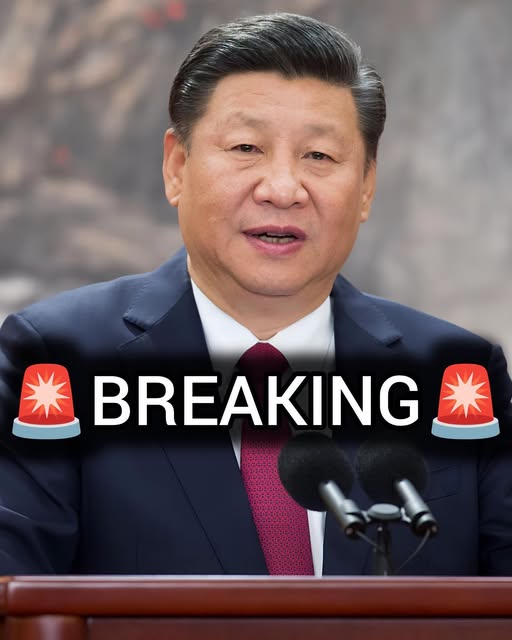
BREAKING: China’s Mosque Crackdown Sparks Outrage as Viral Claims Spread…See More
A dramatic claim circulating online says that China is closing mosques and converting them into barns for raising chickens as part of a campaign against radicalism. The same posts go even further, claiming that China officially considers Islam a “mental illness.”
Those statements are extraordinarily serious—but they need to be separated from what can actually be documented.
China has, in fact, pursued an extensive campaign to bring Islamic religious practice under tighter government control. Reports from journalists and human-rights organizations have documented mosques being closed, demolished, altered, or converted for secular purposes in several parts of the country.
But there is no credible evidence establishing that China has officially classified Islam itself as a mental illness.
That distinction is important because viral headlines can combine a genuine human-rights controversy with unsupported details, creating a story that sounds convincing while making claims that cannot be independently confirmed.
China’s campaign is often described as the “Sinicization” of religion. Under this approach, religious groups are expected to adapt their practices and institutions to Chinese cultural and political requirements.
For Muslims, this has included changes to mosque architecture and restrictions on religious expression.
A 2023 investigation by the Financial Times documented widespread changes to mosques, reporting that thousands had been altered or destroyed as authorities sought to reduce visible Islamic architectural and cultural features.
Reuters previously reported that mosques in Xinjiang had been surrounded by walls, stripped of prominent Islamic architectural features, or otherwise modified. The Chinese government has defended its policies as measures intended to promote stability and combat extremism, while critics have described them as a broader assault on religious and cultural identity.
The controversy is especially significant because China’s Muslim population is large and diverse.
Muslim communities include Uyghurs, Hui, Kazakhs, Kyrgyz and other ethnic groups. Their religious traditions have existed in China for centuries.
For many communities, a mosque is much more than a building.
It is a place for prayer, education, community gatherings and religious celebrations. Closing or transforming such a building can therefore have consequences far beyond architecture.
Reports have described a variety of government actions.
Some mosques have reportedly been demolished entirely. Others have had domes, minarets, Arabic inscriptions and other Islamic features removed. In some cases, multiple mosques have reportedly been consolidated into fewer facilities.
Human Rights Watch has described this as part of a broader campaign in which authorities have closed, demolished or converted mosques outside Xinjiang as well as in the region.
The Chinese government, however, presents the situation differently.
Beijing has repeatedly rejected accusations that it is attempting to eliminate Islam. Chinese authorities have described policies in Xinjiang as necessary for fighting terrorism, separatism and religious extremism, while emphasizing what they call religious freedom within the framework of Chinese law.
That disagreement lies at the heart of the controversy.
Supporters of China’s policies argue that governments have a responsibility to prevent violent extremism and protect public security.
Critics respond that combating terrorism does not require suppressing an entire religion or removing ordinary expressions of religious identity.
That distinction becomes particularly important when discussing the viral claim about Islam being a “mental illness.”
Islam is a major world religion practiced by roughly two billion people globally. Calling an entire religion a mental illness is not an established description of Chinese law or official policy.
The claim appears to be an exaggeration or distortion rather than a verified government classification.
The chicken-barn allegation should also be treated cautiously.
There have been reports of former religious sites being repurposed for secular uses, but the specific claim that China is broadly turning closed mosques into chicken barns as an official national policy is not established by the reliable sources reviewed for this story.
That does not make the documented mosque closures insignificant.
Quite the opposite.
The evidence of mosque closures and architectural changes is substantial enough that the underlying issue deserves serious attention without embellishment.
In some communities, the disappearance of religious buildings has reportedly created a profound sense of loss.
Imagine living in a town where a mosque has stood for generations.
Children grow up seeing its dome or minaret. Families meet there during religious holidays. Elderly residents remember relatives who worshipped there decades earlier.
Then, one day, the building changes.
The dome disappears.
The Arabic writing is removed.
The building is closed.
Or the structure itself is demolished.
For people whose cultural identity is closely connected to that place, the physical transformation can feel like something much larger is being erased.
This is why China’s religious policies have attracted international criticism.
The debate is not simply about architecture.
It is about how far a government should be able to go in regulating religious expression.
China says religious organizations must operate within national laws and that religious practice must be compatible with Chinese society.
Critics argue that the policy goes much further, particularly in regions where Muslim ethnic minorities have historically faced extensive state controls.
The situation in Xinjiang has generated especially intense international concern.
The United Nations has previously raised serious allegations concerning human-rights violations in the region, while Chinese authorities have rejected many of those accusations.
The debate continues.
And social media has added another layer of confusion.
A photograph of a demolished mosque can be real while the caption attached to it is misleading.
A video showing a building being used for another purpose can be genuine while the claim that it represents a nationwide government program is unsupported.
This is why dramatic posts should always be checked before being shared.
The truth is already powerful.
China has undertaken a significant campaign to regulate and reshape religious institutions, including mosques. Multiple credible investigations have documented mosque closures, demolitions, architectural changes and conversions for secular use.
But claims that China officially considers Islam a mental illness or has launched a nationwide program to turn mosques into chicken barns require evidence that has not been established.
The bigger story, therefore, is not whether the most sensational version of the viral post is true.
The bigger story is the documented struggle over religious expression in China.
For Chinese Muslims, the consequences are personal.
For international observers, the issue raises difficult questions about religious freedom, cultural identity, national security and government power.
And for everyone watching the story online, there is another lesson:
A shocking headline does not automatically make every detail inside it true.
The reality can be complicated, disturbing and important without being exaggerated.
China’s mosque policies deserve scrutiny. Muslim communities deserve accurate reporting. And readers deserve to know where documented evidence ends and viral speculation begins.
As more information emerges, the world will continue watching how China’s religious policies develop—and how Muslim communities respond to a rapidly changing religious landscape.
The story is far from over.