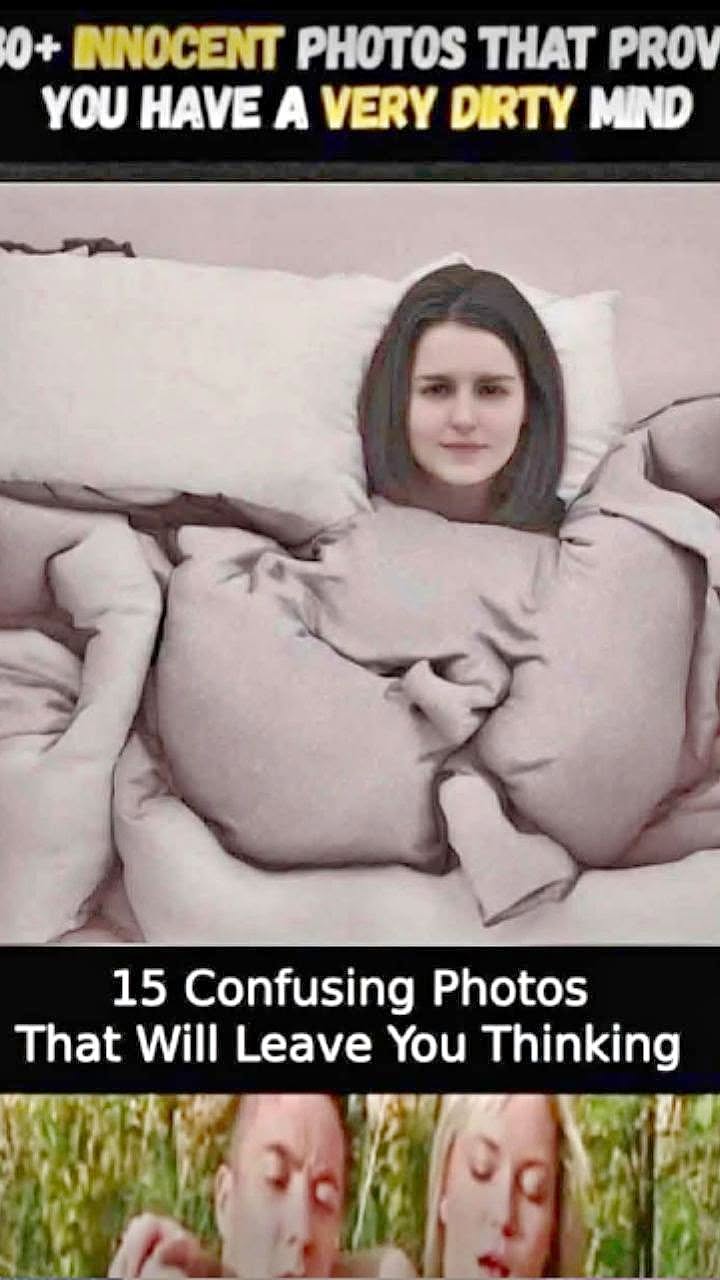
Tricky Pics That Need a Double Take: Bizarre Photos from Confusing Perspectives
Some photographs capture beautiful moments.
Others capture history.
And then there are photographs that seem to completely confuse the human brain.
At first glance, everything looks impossible.
A person appears to have an unusually long arm. Someone seems to be floating in midair. An animal looks as though it has somehow grown an extra pair of legs. A building appears to bend at an impossible angle.
But look again.
And again.
Suddenly, the mystery begins to make sense.
These are the photographs that require a double take.
They aren’t necessarily edited or manipulated. Often, the explanation is surprisingly simple: timing, perspective, shadows, reflections, unusual camera angles, or objects lining up perfectly at exactly the right moment.
That’s what makes them so fascinating.
When Perspective Tricks the Brain
Human vision is remarkably sophisticated, but it isn’t perfect.
Our brains constantly interpret the information coming from our eyes. We don’t simply see individual objects—we automatically try to understand how those objects relate to one another.
When a photograph catches an unusual arrangement, our brains can briefly interpret it incorrectly.
That’s when an ordinary scene can become extraordinary.
A person standing behind another person might appear to have someone else’s arm.
A dog positioned perfectly behind a chair might appear to have an unusual body shape.
A distant object can look enormous when placed beside something closer to the camera.
The photograph freezes the moment before our brains have enough information to correct the mistake.
The Perfectly Timed Photograph
Timing is another major ingredient.
Imagine someone jumping into the air while a photographer presses the shutter at precisely the right instant.
The result might make the person appear to be flying.
A bird passing directly behind someone’s head could create the appearance of an unusual hairstyle.
A basketball photographed at the perfect moment might appear to be resting on someone’s head.
None of these things are necessarily tricks.
They are simply moments that happened to be captured at exactly the right fraction of a second.
And because photographs freeze time, they can make temporary situations look permanent.
Shadows That Create Illusions
Shadows can be just as confusing.
A shadow may appear to belong to one object when it actually belongs to another.
The angle of sunlight can stretch shadows across the ground, making people or objects appear dramatically larger than they really are.
Sometimes a person standing near a wall can appear to have an unusually long silhouette.
At first glance, the image looks mysterious.
Then you notice the direction of the light.
Suddenly, everything becomes obvious.
This is one reason photographers often pay close attention to shadows.
They can completely change the way a scene is perceived.
Reflections Add Another Layer
Mirrors, windows, puddles, polished surfaces, and even sunglasses can produce confusing images.
A reflection can make it appear as though there is another person standing nearby.
A building reflected in water may look like an extension of the real structure.
A person photographed beside a reflective window can seem to have a mysterious double.
The brain expects reflections to behave in predictable ways, so when the angle is unusual, the result can become surprisingly difficult to understand.
That’s why reflection photographs often make excellent double-take pictures.
Animals Are Masters of Confusion
Animals frequently appear in these photographs because they move unpredictably.
A dog might stand directly behind someone, making its body appear connected to the person’s legs.
A cat might position itself in exactly the wrong—or right—place, creating the illusion of an entirely different creature.
Birds can be particularly entertaining.
Because they move quickly, photographers can capture them in unusual positions that are difficult to understand when frozen in a single frame.
One photograph may make a bird appear enormous.
Another may make it look like it’s sitting on someone’s shoulder when it was actually several meters away.
The camera doesn’t explain what happened.
It simply captures the moment.
Buildings Can Look Impossible Too
Architecture provides another fascinating source of visual confusion.
Certain buildings contain unusual angles, curved walls, reflective glass, or overlapping structures.
When photographed from the right position, straight lines can appear curved.
A staircase can appear to lead nowhere.
A rooftop can seem to float above the ground.
Two buildings can appear connected when they are actually separated by considerable distance.
Photography can compress three-dimensional space into a two-dimensional image, and that transformation sometimes creates spectacular illusions.
The Importance of Camera Angle
Changing the camera position by only a few centimeters can completely alter an image.
Photographers understand this instinctively.
Move left.
Move right.
Lower the camera.
Raise it.
Step backward.
Each change affects the relationship between objects in the frame.
That’s why an ordinary scene can become bizarre when photographed from an unusual angle.
A small object close to the camera can appear gigantic.
A large object farther away can appear tiny.
Two unrelated objects can appear connected.
The photograph isn’t lying.
It’s simply showing the world from a perspective our brains don’t normally experience.
Why We Look Twice
There is something satisfying about solving a visual puzzle.
When we first see a confusing photograph, our brain creates an explanation.
Then we notice something doesn’t make sense.
We look again.
Maybe we zoom in.
Maybe we examine the background.
Then suddenly we see the missing piece.
That moment of understanding creates a tiny feeling of discovery.
It’s similar to solving a puzzle.
The photograph challenges us, and our brain wants to find the answer.
The Internet Made These Images Even More Popular
Before social media, unusual photographs might have been shared with friends or printed in magazines.
Today, one confusing photograph can travel around the world in minutes.
People share it with captions such as:
“Look closely!”
“Can you figure this out?”
“You’ll need to look twice.”
The comments then become part of the entertainment.
One person notices the trick immediately.
Another spends several minutes trying to understand it.
Someone else points out the crucial detail that everyone missed.
The photograph becomes a collective puzzle.
Not Everything Is Photoshop
Because digital editing has become so common, people sometimes assume every bizarre photograph must have been manipulated.
But reality can produce surprisingly strange images without any editing.
The world contains countless combinations of timing, light, perspective, movement, and coincidence.
Sometimes a photographer simply gets incredibly lucky.
The result may look too strange to be real precisely because reality happened to arrange itself in an unusual way.
The Beauty of a Second Look
Perhaps the biggest lesson from these photographs is that first impressions aren’t always reliable.
What appears obvious at first may turn out to be completely different after closer inspection.
That’s true not only in photography but in everyday life.
We see something.
We form an opinion.
Then we discover another detail.
Our understanding changes.
A second look can reveal information that the first glance missed.
And that’s exactly what makes tricky photographs so entertaining.
They remind us that our eyes can see something while our brains tell an entirely different story.
The Best Photographs Make You Stop
In a world filled with millions of images, the photographs that make people stop scrolling have something special.
They create curiosity.
They create confusion.
And most importantly, they create a reason to look again.
Maybe the explanation is a clever camera angle.
Maybe it’s an unusual shadow.
Maybe it’s a reflection.
Maybe it’s perfect timing.
Or perhaps it’s simply an extraordinary coincidence that lasted for less than a second.
Whatever the explanation, these images demonstrate just how easily perspective can fool us.
So the next time you see a photograph that looks completely impossible, don’t immediately assume it’s fake.
Take a breath.
Look at the edges of the picture.
Study the background.
Follow the shadows.
Check the reflections.
Look at where objects overlap.
And then take one more look.
Because sometimes the strangest photographs aren’t created by special effects.
They’re created by ordinary reality caught at an extraordinary moment.
And that’s why these tricky pictures remain so addictive.
The first glance gives you a mystery.
The second glance gives you a clue.
And the third might finally reveal the truth.