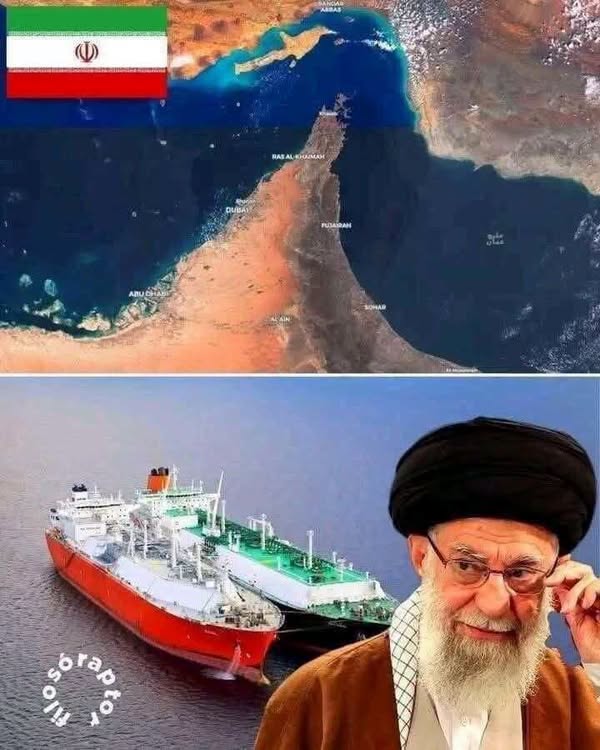
Iranian Parliament Approves Plan to Restrict Access to the Strait of Hormuz
Tensions surrounding one of the world’s most important shipping routes have intensified after Iran’s parliament approved a measure aimed at restricting access to the Strait of Hormuz for countries and entities considered hostile to Tehran.
The decision has drawn international attention because the Strait of Hormuz is a critical passage for global energy supplies. Any prolonged disruption could have consequences far beyond the Persian Gulf, potentially affecting oil prices, shipping costs, insurance markets and consumers around the world.
According to reporting published this week, Iran’s Parliament National Security and Foreign Policy Commission approved an article in a broader strategic plan concerning the security and management of the Strait of Hormuz. The measure would prohibit countries, companies and individuals identified as imposing unilateral sanctions or taking hostile actions against Iran from using the waterway. Vessels and cargoes connected to those entities could also face restrictions.
The development comes amid an already dangerous period of confrontation in the region.
The Strait of Hormuz has long been regarded as one of the world’s most strategically important maritime chokepoints. Before the latest hostilities, roughly one-fifth of global oil supplies passed through the area, making any threat to normal shipping a major concern for energy markets.
For Iran, the waterway has also become an important element of its response to international pressure.
Iranian officials have repeatedly argued that the country’s security interests must be protected in and around the strait. Parliament has been working on legislation intended to strengthen Tehran’s authority over maritime traffic, with Iranian lawmakers previously discussing a broader law under which Iran would seek greater control over the entire waterway.
The latest parliamentary action does not simply mean that every ship in the Strait of Hormuz has suddenly been banned.
Instead, the measure focuses on countries and entities that Iranian authorities determine have imposed sanctions or taken hostile measures against Tehran. Under the reported plan, Iranian military and security authorities would play roles in determining which actions and entities qualify for restrictions.
That distinction is important because headlines describing the development as an outright closure can give the impression that all international shipping has been completely stopped by a single parliamentary decision.
The reality is more complicated.
Iran has already imposed significant restrictions on maritime traffic during the current crisis, and officials have warned that the strait could face additional controls if military pressure against Iran continues.
Earlier, in June 2025, Iran’s parliament approved a measure calling for the Strait of Hormuz to be closed following U.S. strikes on Iranian nuclear facilities. However, the final decision at that time rested with Iran’s Supreme National Security Council.
The distinction between parliamentary approval and actual implementation is therefore crucial.
A parliamentary vote can establish a legal or political framework, but implementation may depend on other Iranian authorities, military decisions and developments on the ground.
The latest move nevertheless sends a powerful political message.
Iran is signaling that it regards control over maritime access as an important part of its national security strategy. It is also making clear that sanctions and military actions against Tehran could have consequences for access to a waterway that is vital to international trade.
The international community is watching closely because even a partial restriction could create uncertainty for shipping companies.
When maritime risks increase, vessels can face higher insurance premiums, longer routes and additional security requirements. Companies may decide to delay voyages or seek alternative routes, increasing transportation costs.
The effects can eventually reach ordinary consumers.
Higher shipping expenses can contribute to higher prices for fuel and other goods. Energy markets are particularly sensitive because the Gulf remains central to global oil exports.
Recent developments have already contributed to concerns about energy supplies. Reuters reported this week that Gulf oil exports remain significantly below prewar levels, with disruptions around the Strait of Hormuz continuing to affect the movement of crude.
The situation has also become more complicated because of developments elsewhere in the region.
Iran-aligned Houthi forces have increased pressure around the Bab el-Mandeb Strait, another strategic maritime passage connecting the Red Sea with the Gulf of Aden. A separate attack on Saudi Arabia’s East-West oil pipeline has further highlighted the vulnerability of regional energy infrastructure.
That means international concerns are no longer focused on one waterway alone.
From the Persian Gulf to the Red Sea, several major transportation corridors are facing heightened security risks.
For governments, the immediate challenge is preventing a wider escalation.
Diplomatic efforts are continuing. Iran is expected to participate in planned discussions with Gulf states in Oman concerning the future of the Strait of Hormuz, although Iranian officials have reportedly warned that the meeting is unlikely to produce a signed agreement immediately.
The talks could become particularly important because the strait affects not only Iran and its neighbors but also major economies across Asia, Europe and North America.
Countries that depend heavily on imported energy have a direct interest in keeping the waterway open and predictable.
At the same time, Iran has strong reasons to use the strait as leverage. Tehran wants guarantees concerning its security, economic interests and sovereignty, while opposing what it considers hostile foreign military activity and economic pressure.
That creates a difficult balancing act.
Every additional restriction increases pressure on Iran’s opponents, but prolonged disruption could also damage Iran’s own economy because the country depends on regional trade and energy infrastructure.
This is why the latest parliamentary decision should be viewed as part of a larger confrontation rather than as an isolated event.
The coming days could determine whether the measure remains primarily a political warning or becomes part of a broader system of maritime restrictions.
For now, the message from Tehran is unmistakable: Iran intends to exercise greater control over who can use the Strait of Hormuz and under what circumstances.
The international response will likely depend on how those rules are implemented.
If restrictions are narrowly targeted, governments may attempt to manage the situation through diplomacy and negotiations. If access is broadly restricted or commercial vessels are threatened, the consequences could become much more serious.
The Strait of Hormuz has always been more than a narrow stretch of water.
It is a critical artery of the global economy.
And as tensions between Iran, the United States and regional powers continue, every decision affecting the strait is being watched carefully around the world.
Iran’s parliament has now taken another significant step toward asserting greater control over the waterway.
Whether that step becomes a negotiating tool, a long-term maritime policy or the beginning of a broader confrontation remains uncertain.
What is clear is that the stakes are enormous.
A disruption in one of the world’s most important shipping corridors can quickly become a global problem—and governments, markets and millions of consumers are watching to see what Iran does next.