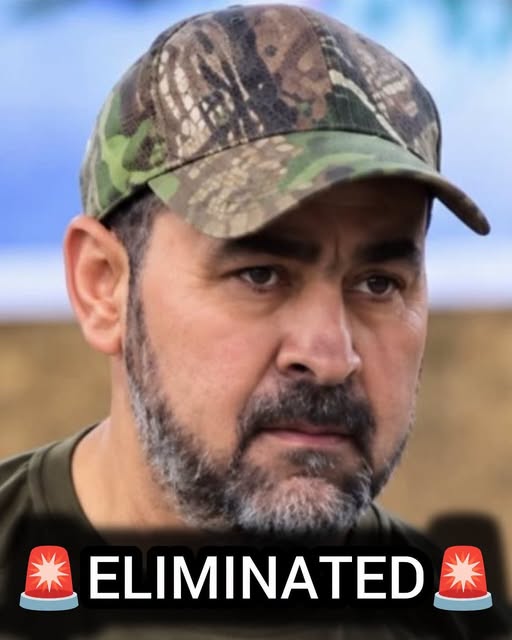
The Israel Defense Forces (IDF) and Israel’s Shin Bet security agency said on September 15, 2026, that Nael Abu Obeid, commander of Hamas’s Rafah Brigade and head of its military operations array, was killed in a strike in the southern Gaza Strip. The announcement identified Abu Obeid as a senior figure in Hamas’s armed wing and described his role as central to the group’s military activity. Israeli media reported the agencies’ statement and the confirmation by Israeli officials.
According to the IDF and Shin Bet, Abu Obeid assumed command of the Rafah Brigade after his predecessor, Muhammad Shabana, was killed in May 2025. Before taking the leadership position, Abu Obeid had reportedly served as deputy commander of the brigade and as commander of the Tel al-Sultan and Yibna battalions. The Israeli agencies said he had worked to restore the brigade’s capabilities and direct attacks against Israeli forces. Those descriptions reflect the Israeli authorities’ account of his activities.
The Israeli military did not publicly provide all operational details surrounding the strike. Reports said it took place in southern Gaza, while officials said Abu Obeid had been tracked for a period before the attack. Defense Minister Israel Katz confirmed his death, and Prime Minister Benjamin Netanyahu and Katz issued statements asserting that Hamas leaders remained targets of Israeli operations. Their remarks framed the strike as part of Israel’s continuing campaign against Hamas’s military structure.
A senior role in Hamas
The Rafah Brigade is one of Hamas’s regional military formations in Gaza. Abu Obeid’s reported responsibilities placed him within the group’s senior command structure, including leadership in Rafah and oversight of its military operations array. Israeli authorities said his predecessor’s death created a vacancy that Abu Obeid filled in 2025. His reported history of commanding battalions in the Rafah area suggests he had experience at several levels of the brigade’s organization.
The IDF said Abu Obeid was involved in directing attacks on Israeli troops and efforts to rebuild the brigade after it sustained significant losses during the war. Such claims are consequential in a conflict where both sides use military announcements to explain their operations and portray the other’s actions. Independent verification of individual command decisions can be difficult during active hostilities, particularly when access to the locations and relevant records is limited.
A strike amid a fragile ceasefire
The reported killing occurred amid a ceasefire arrangement that began in October 2025, according to reporting by Reuters. Despite the agreement, violence has continued, with Israel and Hamas accusing each other of violations. The persistence of strikes and armed activity has underlined how fragile the arrangement remains and how difficult it has been to convert a pause in fighting into a durable political settlement.
Reuters reported that Israeli strikes in Gaza on September 15 killed at least five Palestinians, according to medical sources, including children. Israeli forces confirmed targeting a senior Hamas commander, while other reported incidents in Gaza included casualties in residential areas. The circumstances of each incident and the relationship, if any, between the strikes and Abu Obeid’s killing were not fully established in the initial reports.
Palestinian sources reported that a strike in the al-Mawasi area of Khan Younis killed a man and an eight-year-old girl and wounded 14 people. The IDF and Shin Bet did not specify the precise location where Abu Obeid was hit in their initial public statement. Consequently, reports about the commander’s death and reports of civilian casualties should not automatically be treated as describing the same strike unless further evidence confirms that connection.
Military significance and uncertainty
If the Israeli account is accurate, Abu Obeid’s death removes a commander who held two senior roles in Hamas’s military organization. The immediate effect on the Rafah Brigade will depend on the group’s command arrangements, the condition of its remaining forces, its ability to appoint a successor and whether it can maintain communication and operational coordination. The loss of a senior figure does not by itself establish that a unit has been dismantled or that its capacity to fight has ended.
Hamas has repeatedly faced leadership losses during the war, while Israeli operations have targeted commanders, infrastructure and weapons networks. Armed groups can sometimes replace leaders, redistribute responsibilities or continue operating through decentralized structures. Assessing the long-term consequences of a strike therefore requires more information than the identity and rank of the person killed. Independent reporting and subsequent developments may clarify whether Abu Obeid’s removal substantially altered activity in Rafah.
Civilian impact and humanitarian concerns
The military announcement comes against a backdrop of extensive civilian suffering in Gaza. Repeated rounds of fighting, displacement, damage to homes and essential infrastructure, and restrictions or disruptions affecting humanitarian assistance have left many residents in precarious conditions. Civilians remain protected under international humanitarian law, which requires parties to distinguish between civilians and combatants, take feasible precautions to reduce civilian harm and ensure that attacks comply with the rules of distinction, proportionality and precaution.
The reported deaths of children and other civilians in strikes around the same period have renewed attention to the human cost of continued hostilities. The circumstances of each attack require careful investigation, including the intended target, the information available to those planning the operation, the expected civilian harm and the precautions taken. Public statements from a party to a conflict are important evidence of its position, but they are not a substitute for independent assessment.
What happens next?
The killing could influence Hamas’s military leadership and Israel’s operations in southern Gaza, but the scale of any effect remains uncertain. Relevant indicators will include whether Hamas announces a successor, whether fighting or attacks in the Rafah area change, and whether the ceasefire’s mediators can prevent further escalation. The situation also depends on decisions by Israeli leaders, Hamas officials and outside governments involved in diplomacy and humanitarian coordination.
For now, the central confirmed point is that the IDF and Shin Bet announced Abu Obeid’s death and identified him as commander of Hamas’s Rafah Brigade and head of its military operations array. The Israeli agencies attributed a range of military activities to him; those claims should be understood as their account unless independently corroborated. The wider context includes ongoing violence despite a ceasefire, civilian casualties reported by medical sources and continuing uncertainty about security and humanitarian conditions in Gaza. Independent reporting will be needed to assess the consequences.