Should Sports Create a Separate Category for Transgender Athletes? The Debate Over Fairness and Inclusion
The question of how transgender athletes should participate in competitive sports continues to generate discussion among athletes, coaches, sports organizations, and fans. One proposal receiving attention is the creation of a separate competition category for transgender athletes, allowing everyone to participate while addressing concerns about fairness, safety, and equal opportunities.
Supporters of this idea argue that establishing additional categories could provide transgender athletes with meaningful opportunities to compete without forcing sports organizations to choose between inclusion and competitive fairness. Others question whether a separate category would be practical, particularly in sports with limited participation numbers, and whether it could unintentionally isolate the athletes it is intended to accommodate.
The discussion highlights a broader challenge facing modern sports: how to develop competition rules that recognize differences among athletes while treating everyone with dignity and respect.
Understanding the Proposal
The idea of creating a separate category is not entirely unfamiliar to competitive sports. Many sports already use different classifications to organize competition.
Boxing and wrestling, for example, use weight classes. Paralympic sports use classifications designed to account for eligible impairments and their effects on athletic performance. Age-group competitions also allow athletes to compete against others within designated categories.
These systems demonstrate that sports organizations can establish different competitive divisions when particular characteristics are relevant to participation and competition.
A transgender-specific category would represent a different application of classification. Its purpose would be to establish another pathway for eligible transgender athletes, potentially alongside existing men’s, women’s, or open competitions.
However, the precise design would matter considerably. A category could be organized differently depending on the sport, the number of participants, the competitive level, and the governing body’s eligibility requirements.
The proposal therefore raises several questions: Who would qualify? Would the category operate at recreational, school, collegiate, or elite levels? Would it be available in individual and team sports? And would enough athletes participate to create meaningful competitions?
There is no single answer that automatically applies to every sport.
Why Fairness Is Central to the Discussion
Fairness is one of the most frequently cited concerns in debates about transgender participation, particularly in women’s competitive categories.
Some athletes and sporting organizations argue that physiological characteristics associated with male puberty can affect strength, speed, power, endurance, and other performance-related factors. They maintain that eligibility rules should account for relevant differences when those differences affect competitive opportunities or safety.
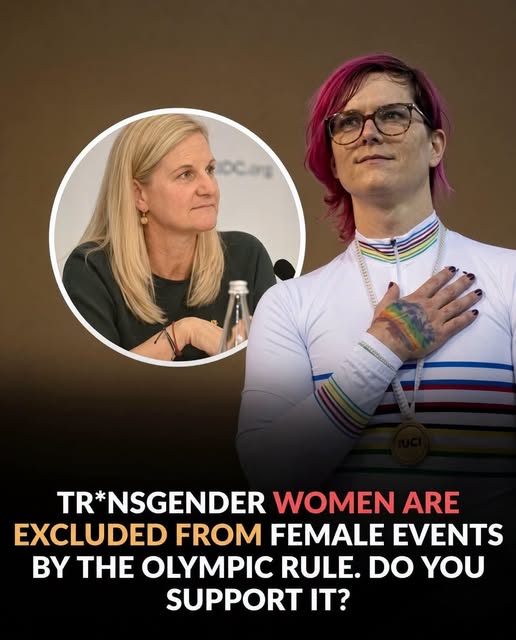
The International Olympic Committee’s March 2026 policy established a sex-based eligibility requirement for the female category at Olympic events, with implementation beginning at the Los Angeles 2028 Olympic Games. The policy does not apply to grassroots or recreational sports.
These rules illustrate how governing bodies may prioritize eligibility requirements intended to protect female-category competition.
However, sports differ substantially. The physical characteristics that matter in rugby, swimming, archery, gymnastics, and distance running are not identical.
Consequently, discussions about eligibility frequently involve questions about the particular demands of each discipline rather than simply applying one universal approach.
A separate category is one proposed way to address some of these competing considerations, although its effectiveness would depend on the rules and circumstances surrounding its implementation.
The Importance of Inclusion
For transgender athletes, participation in sport can offer much more than the opportunity to win medals.
Sports provide opportunities to develop friendships, build confidence, improve physical fitness, learn teamwork, and become part of a community.
Exclusion from organized competition can therefore affect an athlete’s experience beyond the playing field.
Supporters of inclusion argue that transgender people should have opportunities to participate in sports without experiencing unnecessary discrimination or humiliation.
The United States Olympic & Paralympic Committee has previously emphasized the importance of both fairness and participation, describing the challenge as one that requires sports organizations to consider inclusion alongside competitive opportunity and safety.
A separate category could potentially provide another competitive pathway for athletes who cannot meet the eligibility requirements of an existing category.
Nevertheless, inclusion advocates may also question whether separating transgender athletes would create a genuinely welcoming environment or instead make them feel singled out.
That concern deserves consideration when evaluating the proposal.
A category intended to expand participation would need to be designed carefully so that athletes are not stigmatized or treated as less legitimate competitors.
Could a Separate Category Work in Practice?
One of the biggest practical questions concerns participation numbers.
At major international competitions, there may be enough athletes in particular sports to support additional divisions. At smaller schools, local clubs, and community competitions, the situation could be very different.
Imagine a school with hundreds of athletes participating in basketball but only a small number of transgender students interested in organized competition.
Creating a separate category might not produce enough players to form complete teams or sustain a regular competition schedule.
Individual sports could face similar challenges. A running event, for example, might attract only one or two eligible participants in a particular location.
Organizers would need to consider whether athletes could compete across schools, clubs, regions, or national boundaries to create viable competitions.
Another possibility would be to establish open categories in which eligibility is not restricted to a particular sex category, while maintaining other divisions according to the relevant sport’s rules.
Such arrangements already exist in some sports.
Swim England, for example, introduced female and open categories under its transgender and non-binary competition policy in 2023. The organization described the approach as an effort to provide competitive opportunities while protecting fairness.
That model is not identical to a transgender-specific category, but it demonstrates that alternative competition structures can be considered.
Whether a similar arrangement would work elsewhere would require careful assessment.
Different Sports May Need Different Solutions
A major difficulty in this debate is that athletic performance and safety considerations vary across disciplines.
In collision sports, differences in size, strength, and power may be particularly relevant to discussions about participant safety.
In sports emphasizing endurance, physiological characteristics may influence performance in different ways.
Meanwhile, some activities place greater emphasis on precision, technique, coordination, or strategy.
This does not mean that every sport can easily eliminate questions about eligibility. Rather, it highlights why sporting organizations may need to examine their individual circumstances.
World Rugby, for example, has developed transgender participation guidelines that explicitly discuss safety and fair competition in rugby.
A policy designed for rugby cannot automatically be assumed to work for tennis, swimming, or recreational athletics.
A separate category might be practical in one discipline but difficult to sustain in another.
For that reason, any proposal would need to account for the sport’s competitive structure, available evidence, participant numbers, and governing rules.
The Concerns About Creating Another Division
Critics of a separate transgender category raise several questions.
Some argue that creating an additional division could unintentionally isolate transgender athletes instead of integrating them into the wider sporting community.
Others point to the possibility that a small category could offer limited competitive opportunities, particularly for athletes living in rural communities or attending smaller schools.
There are also questions about administration, funding, eligibility verification, scheduling, and access to facilities.
Sports organizations would need to decide how to establish categories, communicate their rules, protect athletes’ privacy, and handle disputes.
If the category attracted very few participants, organizers might struggle to provide regular competitions, championships, and development opportunities.
These concerns do not automatically establish that the proposal cannot work. They demonstrate that creating a category would require more than simply announcing a new division.
It would involve detailed planning and consultation with the people affected.
Finding a Way Forward
The discussion surrounding transgender athletes is unlikely to be resolved through slogans or assumptions about what every athlete experiences.
A constructive approach would involve listening to transgender athletes, female athletes, coaches, medical and scientific researchers, and sports administrators.
Governing bodies could examine available evidence, identify the specific demands of each sport, and assess whether alternative categories would create meaningful opportunities.
They could also evaluate pilot programs, participation numbers, athlete experiences, and the practical costs of different arrangements.
Policies would need to be communicated clearly, applied consistently, and reviewed when new evidence or circumstances emerge.
Importantly, athletes should be treated with dignity regardless of which category they are eligible to enter.
Competitive rules and respect for individuals are not mutually exclusive principles.
Sports organizations have a responsibility to explain their decisions transparently while recognizing that eligibility policies can have significant personal consequences.
Conclusion
The proposal to create a separate category for transgender athletes raises important questions about fairness, inclusion, safety, and access to competition.
For some sports, alternative categories might offer a practical way to expand participation while maintaining established competitive divisions. In others, limited participation numbers or the physical demands of the sport could make implementation more complicated.
There is no guarantee that a single model would work everywhere.
Ultimately, the debate is about how sports organizations can create competition structures that are meaningful, understandable, and appropriate for the athletes involved.
A serious examination of the proposal would require evidence, consultation, and careful attention to the realities of individual sports.
The goal of that discussion should be to understand the available options, their benefits, their limitations, and the consequences they may have for everyone involved.