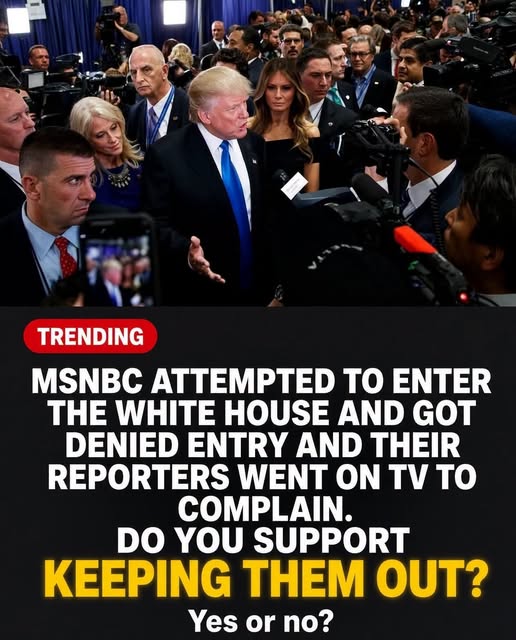
Do You Support Keeping Them Out? A Closer Look at Fairness, Safety, and Inclusion
The question “Do you support keeping them out?” is short, direct, and emotionally powerful. It invites an immediate yes-or-no response, but the issue behind it cannot be understood responsibly without knowing who “them” refers to, what they are being excluded from, and why the restriction is being considered. Those details matter. A debate about entry to a secure facility is different from a debate about access to education, employment, public services, sports, or community life.
Before reaching a conclusion, it is useful to examine the principles that often collide in exclusion debates: safety, fairness, individual rights, practical administration, and the effects on people who may be affected by a rule. These principles can point in different directions, and slogans rarely capture the trade-offs.
Supporters of restrictions may argue that a particular boundary is necessary to protect people, preserve limited resources, enforce agreed standards, or ensure that an institution can carry out its purpose. In some settings, access rules are routine and widely accepted. A hospital may restrict entry to certain areas for infection control. A workplace may require qualifications for safety-sensitive duties. A private event may impose capacity limits. In each example, the rationale and the details of the policy help determine whether the restriction is reasonable.
Yet invoking safety or fairness does not automatically settle a question. Decision-makers should explain what specific risk or problem a rule is intended to address, what evidence supports that concern, and whether the restriction is likely to work. Clear criteria, consistent enforcement, and a process for reviewing individual circumstances can help prevent unnecessary or arbitrary exclusion.
People who oppose restrictions often emphasize equal treatment, dignity, and the possibility that exclusion can deepen existing disadvantages. Being denied access may affect more than a single opportunity. It can limit education, income, social connection, public participation, or a person’s ability to demonstrate their abilities. When a rule targets a group based on a characteristic unrelated to the purpose of the setting, critics may question whether the policy is justified or discriminatory.
The impact of a restriction should therefore be considered alongside its stated aim. Who benefits? Who bears the costs? Are the effects temporary or lasting? Do affected people have meaningful alternatives, or does exclusion effectively shut them out of an important part of society? These questions can reveal consequences that are easy to overlook when a debate is framed only as a contest between two sides.
A careful discussion also distinguishes between individuals and assumptions about groups. Group-level claims can obscure differences in experience, conduct, qualifications, and circumstances. Rules based on relevant behavior or objectively assessed requirements may be more closely connected to a setting’s needs than rules based on stereotypes. At the same time, decision-makers may need to consider whether individualized assessments are practical, reliable, and consistent, especially when many cases must be handled.
Evidence is central. Anecdotes and viral posts can draw attention to a concern, but they do not necessarily show how common a problem is or whether a proposed response would solve it. Reliable data, transparent methods, and independent scrutiny can help establish the scale of an issue. Evidence should also be current and relevant to the population and setting being discussed. Information from a different place or period may offer context, but it should not be treated as a direct description of present conditions.
The wording of the question matters, too. “Keeping them out” can imply that exclusion is the only available option, when policymakers or organizations may have several choices. They might revise eligibility standards, improve supervision, provide additional resources, create separate procedures, establish time-limited restrictions, or introduce an appeals process. Whether any alternative is appropriate depends on the facts. The point is not that compromise is always possible, but that the available options should be examined rather than assumed.
Those affected should also have an opportunity to be heard. Consultation cannot guarantee agreement, and not every decision can satisfy every interest. Nevertheless, listening to people with direct experience may identify practical problems, unintended consequences, or workable adjustments that decision-makers have missed. Respectful discussion does not require anyone to abandon deeply held principles. It requires participants to represent opposing arguments accurately and to distinguish evidence from speculation.
Legal and institutional obligations may further shape the debate. Depending on the jurisdiction and context, rules may be constrained by constitutional protections, human-rights standards, anti-discrimination laws, contractual duties, or an organization’s own policies. The precise requirements vary, so broad claims about legality should be checked against applicable law and reliable legal guidance. A policy can be popular yet still require legal scrutiny; equally, a legal rule may remain open to public debate about its effects.
Ultimately, the headline’s question cannot be answered fairly without identifying the group, the setting, the proposed restriction, and the evidence offered in its support. A responsible assessment asks what problem needs to be solved, whether the restriction is proportionate to that problem, whether it treats people consistently, and what consequences it creates. It also considers whether less restrictive measures could achieve the same legitimate goal.
Public conversations become more useful when people move beyond a reflexive yes or no. Instead of treating disagreement as proof of bad motives, participants can ask for clear definitions, examine reliable information, and explain which principles they believe should guide the decision. They can acknowledge uncertainty where evidence is incomplete and revise their views if credible new information emerges.
So, do you support keeping them out? The most meaningful answer begins with a more precise question: who is being excluded, from what, for what reason, and under what rules? Only then can the competing concerns be evaluated in context. The goal should be a decision that is transparent, evidence-based, legally sound, and attentive both to legitimate safety or operational needs and to the dignity and rights of the people affected. It gives the public the information needed to discuss the issue seriously, then make its own judgment.