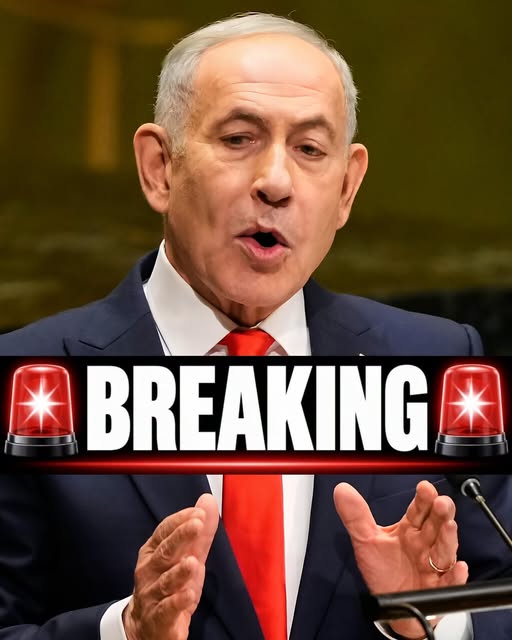
A dramatic confrontation unfolded at the United Nations General Assembly as Israeli Prime Minister Benjamin Netanyahu began his address and dozens of diplomats walked out of the chamber in protest. The walkout immediately became one of the most visible moments of the session, with Netanyahu responding by calling those who left “moral cowards” and accusing his critics of hypocrisy.
The incident took place on September 24, 2026, during Netanyahu’s address at the 81st session of the United Nations General Assembly in New York. As he approached the podium, numerous delegations rose from their seats and began leaving the hall. Reports said the departing representatives included diplomats from Arab and Muslim-majority countries as well as several other nations.
The walkout had been anticipated. The Palestinian delegation had encouraged other diplomatic missions to participate in a coordinated protest against Netanyahu’s appearance. The demonstration was intended to draw attention to the continuing international dispute over Israel’s military operations in Gaza and its broader policies toward Palestinians.
As the diplomats streamed toward the exits, the atmosphere inside the General Assembly became visibly tense. Cheers and boos could be heard, while members of the Israeli delegation and supporters in the gallery applauded Netanyahu. The president of the General Assembly repeatedly called for order as the disruption continued.
Netanyahu immediately addressed the departing diplomats. He said that if there were any additional “moral cowards” who had not yet left, they should do so. The remark became one of the defining lines of his speech and was quickly reported around the world.
The Israeli prime minister then presented the walkout as evidence of what he described as hypocrisy among Israel’s international critics. He argued that Israel was defending itself against threats from Iran and other armed groups and claimed that some governments privately appreciated Israeli military actions even while criticizing Israel publicly.
One of the major subjects of Netanyahu’s address was the war in Gaza and the international accusation that Israel has committed genocide there. Netanyahu categorically rejected that accusation, describing it as an enormous falsehood and arguing that Israel had taken measures to protect civilians.
Israel has consistently rejected allegations of genocide, saying that its military campaign is directed against Hamas and other armed groups rather than Palestinians as a population. Israeli officials have also argued that Hamas operates in densely populated areas and that Israel has attempted to reduce civilian casualties.
At the same time, accusations against Israel have been made by international organizations, governments, legal experts and Palestinian representatives. The legal and political dispute over whether Israel’s conduct meets the definition of genocide remains highly consequential. Different institutions and experts have reached different conclusions, while Israel strongly disputes the allegations.
The International Criminal Court has separately issued an arrest warrant for Netanyahu in connection with allegations of war crimes and crimes against humanity. The warrant is not a conviction, and Netanyahu and Israeli authorities reject the allegations. The legal proceedings and international debate surrounding the warrant have contributed to the intense diplomatic controversy surrounding his appearance at the United Nations.
Netanyahu used much of his speech to defend Israel’s military actions beyond Gaza as well. He discussed Iran and portrayed Israel’s recent military campaign against Iranian nuclear facilities as necessary for national security. He argued that Israel was acting not only for its own protection but also for the protection of other countries.
He specifically claimed that some leaders whose representatives had walked out privately thanked Israel for its actions against Iran. Netanyahu did not publicly identify those leaders in the remarks reported from the speech.
The prime minister also attacked critics in the United States, including New York City Mayor Zohran Mamdani, who has sharply criticized Netanyahu and Israel’s conduct in Gaza. Netanyahu accused Mamdani of spreading what he described as false accusations against Israel, while Mamdani has continued to characterize Israel’s actions in Gaza in extremely critical terms.
The confrontation at the United Nations reflects a much wider diplomatic divide. Israel says it is defending itself against Hamas, Iran and other armed organizations following the October 7, 2023 Hamas attack on Israel, in which approximately 1,200 people were killed and 251 people were taken hostage. Israel subsequently launched its military campaign in Gaza.
Palestinian authorities have reported a very large number of deaths in Gaza during the resulting war. The figures include civilians and combatants, and the precise breakdown has been disputed. The scale of destruction and civilian suffering has generated widespread international concern and accusations of violations of international humanitarian law.
The walkout therefore cannot be separated from the broader diplomatic battle surrounding the war. For Netanyahu and his supporters, the protest represents another example of what they consider unfair international treatment of Israel. For the governments and diplomats who left, the action represented a public expression of opposition to Netanyahu’s policies and Israel’s conduct of the war.
The symbolism of the nearly empty chamber was particularly striking. Television images showed large numbers of delegates leaving as Netanyahu began speaking, creating a powerful visual that quickly spread across social media and news organizations.
Yet the walkout itself does not establish whether any particular accusation against Israel is legally or factually correct. It demonstrates the depth of disagreement among governments over Israel’s policies and the war in Gaza. Those questions remain subjects of international investigation, legal proceedings and political debate.
Netanyahu nevertheless used the moment to deliver a forceful defense of Israel. He argued that Israel had survived attacks from multiple directions and that its military had prevented threats from becoming even more serious. He praised Israeli soldiers and emphasized Israel’s determination to defend itself.
The speech also came at a politically sensitive moment for Netanyahu. His government faces continuing domestic and international pressure over the war, while Israel’s relations with several governments have become increasingly strained.
The UN confrontation consequently became more than a routine diplomatic speech. It provided a dramatic picture of the divisions surrounding the Middle East conflict: diplomats leaving the chamber, supporters applauding, protesters outside, and Netanyahu continuing to speak from the podium.
For viewers seeing short clips online, however, context remains important. Viral posts may describe the event in highly partisan language, but the underlying facts are clearer. Dozens of delegates did walk out as Netanyahu began his address, and Netanyahu did call those who left “moral cowards.” He also strongly rejected allegations that Israel committed genocide in Gaza.
The episode illustrates how deeply contested the Gaza war remains on the international stage. Netanyahu used the UN podium to defend Israel’s actions and challenge his critics, while the diplomats who walked out used their departure to make a public statement of opposition.
Whatever position governments ultimately take, the confrontation demonstrated that the dispute over Gaza, Israel’s military campaign, and the competing accusations surrounding the conflict remain among the most divisive issues facing the international community.
The images of diplomats leaving the General Assembly as Netanyahu began speaking are likely to remain one of the most memorable scenes from this year’s UN gathering. They captured, in a single moment, the enormous political divide surrounding Israel, Gaza, Iran, and the future of the Middle East.