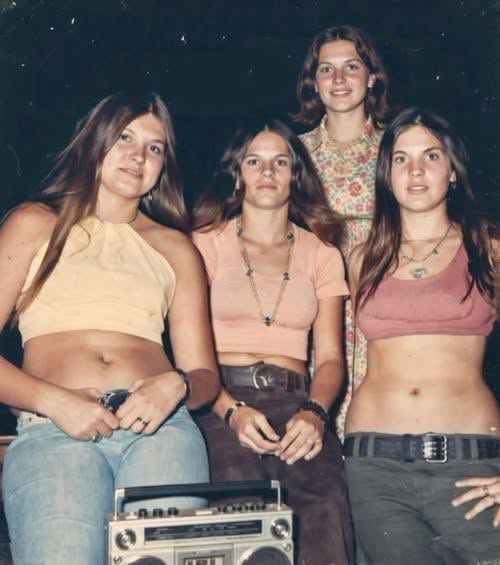
Women in the 70s: What Do You Notice? 🧐
Women in their 70s today are part of a generation that has witnessed enormous changes in society, fashion, technology, family life, and ideas about aging. When photographs from the 1970s are compared with images of women in their 70s today, the differences can be striking, but so can the similarities.
The 1970s were a distinctive period in fashion and culture. Women wore everything from flowing dresses and wide-legged trousers to tailored suits, patterned blouses, denim, and bold accessories. Hairstyles were often dramatic, with long layers, feathered looks, short cuts, and natural textures all becoming popular.
Beauty standards were also different. Makeup trends emphasized particular styles of eyeliner, eyeshadow, lipstick, and complexion, while hairstyles often played an important role in completing an overall look. Fashion magazines and television helped spread these trends, but women often adapted them according to their own personalities.
One thing many people notice when looking at photographs from the era is the clothing. Everyday fashion could appear surprisingly expressive. Bright patterns, earthy colors, flared trousers, platform shoes, and statement accessories were common. Clothing was often designed to make a visible impression rather than simply blend into the background.
Another noticeable difference is the way photographs were produced. Before smartphones and digital cameras, most everyday photographs were taken with film cameras. People often had to wait for photographs to be developed, meaning that casual photography did not have the instant quality people take for granted today.
That difference affected how people presented themselves. A photograph was often a more deliberate event. Families might gather for a picture, friends might pose together, or someone might carefully choose an outfit before being photographed.
Women growing up during the 1970s also experienced major social changes. Opportunities for women in education and employment were expanding, while conversations about independence, family roles, and equality were becoming increasingly prominent.
The generation that came of age during that period encountered a rapidly changing world. Women entered professions that had previously been less accessible, pursued higher education in greater numbers, and increasingly challenged traditional expectations about what their lives should look like.
Today, women in their 70s represent a remarkably diverse group. Some remain professionally active, others have retired, and many spend their time pursuing hobbies, traveling, volunteering, caring for family members, or enjoying new experiences.
Modern technology has also changed everyday life dramatically. A woman who was young in the 1970s has lived through the arrival of home computers, the internet, mobile phones, social media, streaming entertainment, and artificial intelligence.
That technological journey is difficult to appreciate unless it is viewed across the entire span of a person’s life. Someone could have grown up using landline telephones, handwritten letters, physical photographs, and printed encyclopedias before eventually communicating through smartphones and video calls.
Fashion has changed just as dramatically. Modern women have access to an enormous range of clothing styles, and older women are increasingly visible in fashion advertising, social media, television, and other forms of popular culture.
This visibility challenges older assumptions about what people are supposed to look like as they age. Women in their 70s can have varied personal styles, interests, personalities, and approaches to appearance.
Perhaps the most interesting thing to notice is that there is no single way to look or live at any particular age.
Some women embrace contemporary fashion, while others prefer classic clothing. Some enjoy maintaining traditional routines, while others are constantly experimenting with new activities and technologies.
Photographs from the 1970s can therefore tell us something about cultural change, but they cannot tell us everything about the people pictured. A photograph captures an individual moment, not an entire life.
When people look at old pictures and say that women “looked different,” they may actually be noticing several things at once: clothing, hairstyles, photography techniques, makeup, cultural expectations, and the way people posed for photographs.
Even body standards have changed over time. What was considered fashionable or desirable in one decade may look completely different in another. Modern audiences should therefore be careful about treating historical images as evidence of universal differences between generations.
Another fascinating element is the confidence visible in many photographs. Whether women were dressed casually or formally, many images capture strong personalities and individual styles. These photographs provide a glimpse into ordinary life during a period that now feels increasingly distant.
For women who lived through the 1970s, these images can also bring back memories of music, television, friendships, family gatherings, school, work, and social events.
For younger generations, they can offer an opportunity to see how dramatically everyday life has changed.
Yet some things remain familiar. People still enjoy spending time with friends, celebrating milestones, dressing for special occasions, taking photographs, and creating memories with family.
The technology may have changed, but the desire to connect with other people has remained remarkably consistent.
That is perhaps the biggest lesson hidden inside old photographs. Fashion changes. Hairstyles change. Technology changes. Social expectations change. But people’s desire to express themselves and preserve memories remains.
Women who were young during the 1970s have now reached an age when they can look back across several decades of transformation. Their lives have stretched across an extraordinary period of technological and cultural development.
The photographs from their younger years are more than fashion snapshots. They are records of a particular moment in history.
So, when looking at women from the 1970s and asking, “What do you notice?” the answer depends on what catches your attention. You might notice the clothes, hairstyles, poses, photography, or cultural differences.
But beyond those surface details, you may notice something more enduring: individuality.
Every generation develops its own style, and every person brings something different to that style. The women of the 1970s were not simply representatives of a fashion era. They were students, workers, mothers, daughters, friends, artists, professionals, adventurers, and individuals building lives in a rapidly changing world.
Decades later, their photographs continue to attract attention because they provide a fascinating window into the past while reminding us that every generation eventually becomes part of history.