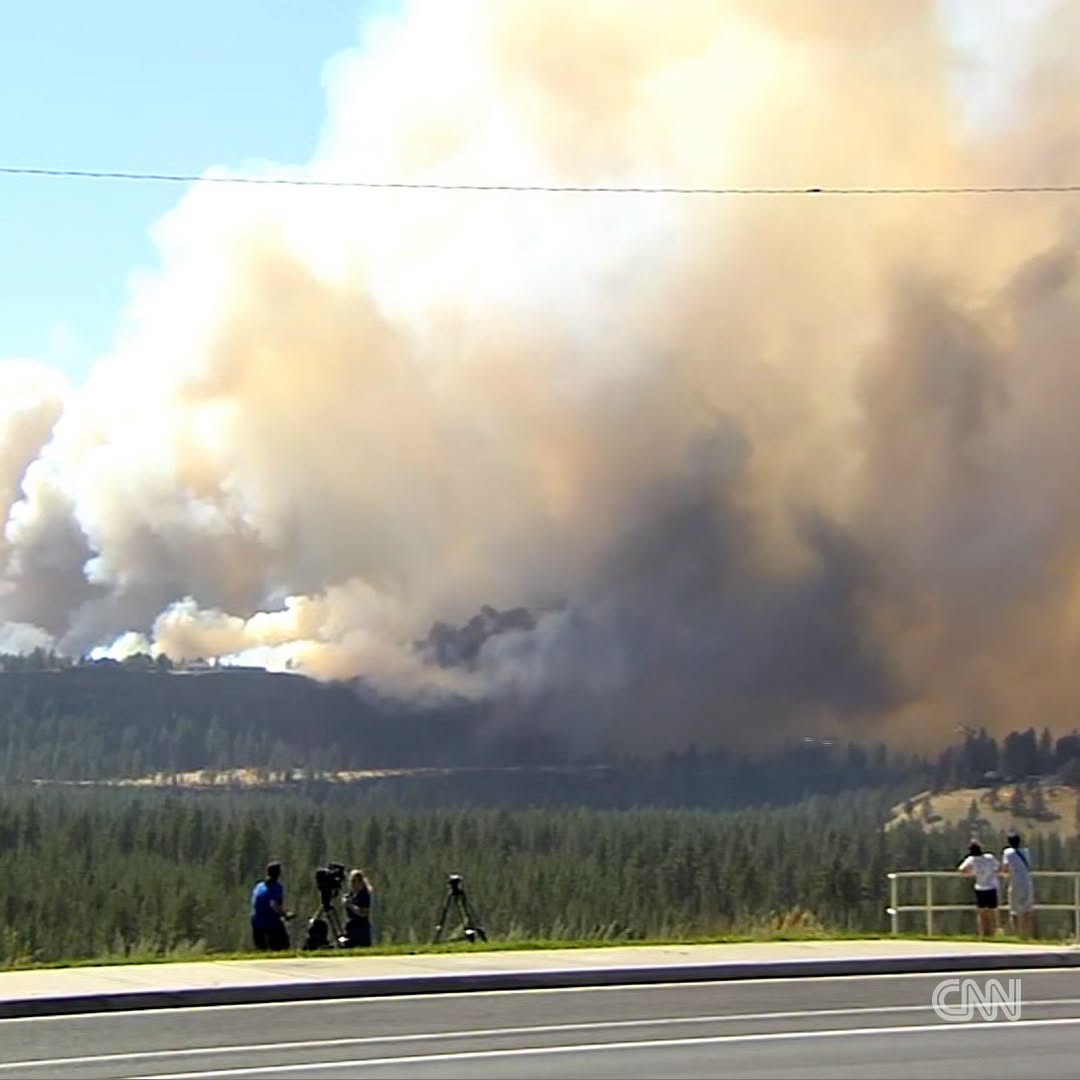
Authorities in Spokane County, Washington, have declared a state of emergency as rapidly spreading wildfires force thousands of residents to flee their homes. Fueled by hot temperatures, dry vegetation, and strong winds, the fires have expanded across large areas in a matter of hours, threatening neighborhoods, businesses, and critical infrastructure. Emergency officials have issued mandatory evacuation orders for multiple communities, while firefighters continue working around the clock to slow the advancing flames and protect lives.
The emergency declaration allows local authorities to mobilize additional resources more quickly and request assistance from state and federal agencies. Fire crews from neighboring counties have joined the response, bringing extra personnel, engines, bulldozers, and aerial firefighting equipment. Officials say the declaration is necessary because of the scale and speed of the wildfire, which has overwhelmed local firefighting capacity.
Residents described chaotic scenes as evacuation notices arrived. Many families had only minutes to gather essential belongings before leaving their homes. Cars lined roads leading away from threatened neighborhoods as people packed clothing, medications, important documents, family photographs, and pets into their vehicles. Emergency shelters quickly opened to provide temporary housing, food, water, and medical assistance for displaced residents.
Firefighters continue battling challenging conditions. High winds have carried burning embers far ahead of the main fire line, creating new spot fires and making containment efforts increasingly difficult. Dense smoke has reduced visibility for both ground crews and aircraft, while steep terrain in some areas has complicated access for emergency responders. Officials say changing weather patterns remain one of the greatest uncertainties, as even minor shifts in wind direction can dramatically alter the fire’s behavior.
Authorities have urged everyone in evacuation zones to leave immediately rather than waiting for visible flames. Wildfires can move unpredictably, and smoke can significantly reduce escape routes. Emergency management officials stressed that evacuation orders are issued based on fire modeling, weather forecasts, and real-time observations from firefighters working on the front lines.
The human impact of the wildfire extends well beyond the immediate danger posed by flames. Thousands of families now face uncertainty about whether their homes will survive. Parents have sought reassurance for frightened children, while elderly residents and individuals with medical conditions require specialized support at evacuation centers. Volunteers from community organizations, churches, and relief agencies have stepped forward to distribute meals, clothing, hygiene supplies, and emotional support to those displaced by the disaster.
Schools and businesses located within affected areas have temporarily closed as officials prioritize public safety. Some roads remain blocked to allow firefighting equipment to move freely and to prevent civilians from entering hazardous zones. Utility companies have also monitored power lines and gas infrastructure threatened by the advancing fire, with some services intentionally shut off to reduce additional risks.
Air quality has deteriorated significantly across parts of Spokane County due to thick wildfire smoke. Health officials advise residents to remain indoors whenever possible, keep windows closed, and avoid strenuous outdoor activities. Smoke from large wildfires contains fine particles that can irritate the eyes, nose, and throat while worsening respiratory conditions such as asthma and chronic obstructive pulmonary disease. Young children, older adults, and individuals with existing heart or lung conditions are considered especially vulnerable.
Wildfires have become an increasingly common challenge across the western United States in recent years. Experts point to a combination of prolonged drought, hotter temperatures, reduced snowpack, and the accumulation of dry vegetation as factors contributing to longer and more intense fire seasons. Strong seasonal winds can rapidly transform a manageable fire into a fast-moving emergency capable of threatening entire communities.
Modern firefighting operations rely on a combination of technology and traditional methods. Aircraft drop water and fire retardant ahead of advancing flames, while bulldozers construct firebreaks intended to slow the spread. Ground crews remove vegetation, extinguish hot spots, and defend structures using hoses, pumps, and specialized equipment. Fire behavior analysts continuously monitor weather conditions and use computer models to predict where the fire is likely to move next.
Emergency communication has played a critical role throughout the response. Officials have encouraged residents to monitor official alerts through emergency notification systems, local government websites, and trusted news organizations. Social media has also become an important tool for sharing evacuation information, road closures, shelter locations, and safety updates. However, authorities caution the public against spreading unverified reports that could create confusion during an already stressful situation.
Animal welfare organizations have also mobilized to assist families forced to evacuate with their pets and livestock. Temporary shelters have accepted dogs, cats, and other companion animals, while larger facilities have coordinated space for horses and farm animals displaced by the wildfire. Veterinarians and volunteers continue providing food, medical care, and temporary housing for animals separated from their owners.
The economic consequences of major wildfires often continue long after the flames are extinguished. Homeowners may face extensive rebuilding efforts, businesses can suffer prolonged closures, and agricultural operations may experience significant losses. Infrastructure damage, including destroyed utility lines, roads, and public facilities, can require months or even years to fully repair. Insurance companies and government disaster assistance programs frequently become essential sources of financial support during the recovery process.
Environmental impacts are equally significant. Wildfires destroy forests, wildlife habitat, and vegetation while increasing the risk of soil erosion and flooding after heavy rainfall. At the same time, fire is also a natural ecological process in many western ecosystems, helping clear dead vegetation and promoting the regeneration of certain plant species. The challenge for modern land management lies in balancing these natural processes with the need to protect expanding communities located near forests and grasslands.
Officials have expressed gratitude to the firefighters, law enforcement officers, emergency medical personnel, volunteers, and utility workers risking their safety to protect affected communities. Many crews are working long shifts under hazardous conditions, often with limited rest, as they attempt to contain the wildfire and prevent additional destruction.
While firefighters continue making progress where conditions allow, authorities caution that the situation remains highly dynamic. Weather forecasts, wind changes, and fuel conditions will determine how quickly the fire can be brought under control. Residents are urged to remain patient, follow evacuation orders, and avoid returning to restricted areas until officials determine it is safe to do so.
As Spokane County confronts this wildfire emergency, the resilience of local communities is once again being tested. Families, first responders, volunteers, and government agencies are working together through an extraordinarily difficult situation, demonstrating the importance of preparation, cooperation, and community support during one of nature’s most destructive disasters. Recovery may take considerable time, but protecting lives remains the highest priority as emergency crews continue their efforts to contain the wildfire and help affected residents begin the long path toward rebuilding.