The Trump Photo That Continues to Capture Attention 🇺🇸
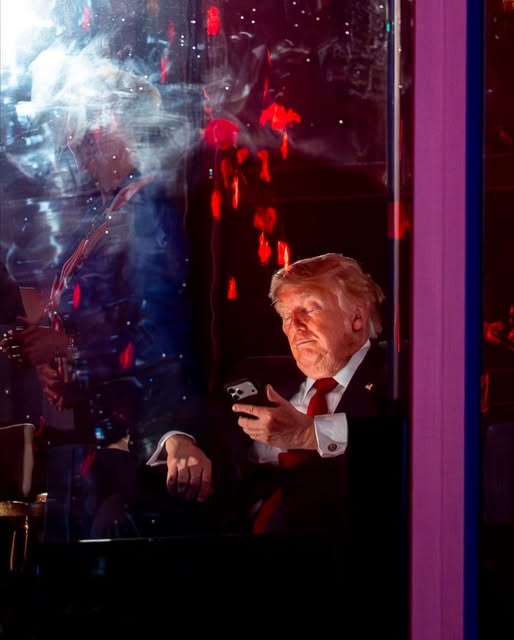
Some photographs become memorable because of the people in them. Others remain in the public conversation because of the moment they capture, the setting surrounding them, or the emotions they create among viewers. One photograph of Donald Trump continues to circulate online, with supporters and social-media users describing the image as one of his most striking photographs.
The image has attracted attention for its dramatic composition and the way Trump appears in the frame. For many people who encounter it online, the photograph immediately creates an impression of confidence, determination and political symbolism. The American flag adds another layer to the image, making the photograph particularly suited to social-media posts centered on patriotism and American identity.
Photographs have always played an important role in American politics. Long before social media existed, presidents and political candidates understood that a single carefully captured image could communicate an idea more quickly than a lengthy speech. A photograph can show emotion, body language, surroundings and symbolism simultaneously.
In the modern digital era, that effect has become even stronger.
A photograph can be shared thousands of times within minutes. Supporters can turn it into a profile picture, campaign graphic, meme or inspirational post. Critics can circulate the same image for entirely different reasons. The photograph itself remains unchanged, but the meaning audiences attach to it can vary dramatically.
That is part of what makes politically recognizable photographs so powerful.
Trump has been one of the most photographed political figures of the modern era. His distinctive public style, frequent rallies, campaign appearances and highly visible presidency have produced an enormous collection of images. Some photographs emphasize formal presidential moments, while others capture spontaneous reactions, interactions with supporters or scenes involving the American flag.
The photograph currently being shared is being described by enthusiastic viewers as “epic,” reflecting the emotional response it generates rather than an objective measurement of photographic quality.
For supporters, such an image may represent strength, confidence or national pride. The American flag can reinforce those associations because it is one of the most recognizable symbols of the United States.
For other viewers, the photograph may simply stand out as a particularly memorable political image without carrying the same emotional meaning.
That difference is important because political photography is rarely interpreted in exactly the same way by everyone.
Images can become symbols because of timing. A photograph taken during an important political event can become associated with that moment for years. Even an ordinary-looking image can gain historical significance if it captures a person, event or period that later becomes important.
Trump’s political career has generated numerous such moments.
From his presidential campaign rallies to major events at the White House, photographs have documented his rise from political newcomer to president and later his continued role in American politics. His visual identity has become familiar to millions of people around the world.
Social media has also changed the life cycle of political photographs.
In earlier decades, an image might appear in a newspaper or magazine and then gradually disappear from public attention. Today, an old photograph can suddenly become popular again when someone posts it on Facebook, X, Instagram or another platform.
A caption can give an old photograph a completely new context.
That appears to be part of the appeal of posts describing this particular Trump photograph as one of his greatest. The wording encourages viewers to stop scrolling, look closely at the picture and decide for themselves what makes the image memorable.
The simplicity of the message is also significant. Rather than providing a long explanation, the caption relies on emotional language: “greatest,” “EPIC,” and the American flag emoji. Such language is common in social-media culture, where short captions are often designed to create an immediate reaction.
The photograph itself becomes the centerpiece.
This kind of post also demonstrates how political communication has evolved. Traditional campaign advertisements often contain carefully written slogans and detailed policy messages. Social-media posts can communicate political identity through a single photograph and a few words.
That does not necessarily tell viewers what policies a politician supports. Instead, it creates an emotional or visual association.
For Trump supporters, photographs featuring the former president and the American flag can become expressions of patriotism and political identity. For others, they may simply be examples of contemporary political imagery.
Either way, the photograph can become part of a larger online conversation.
There is also an interesting distinction between historical importance and internet popularity. A photograph can become extremely popular online without necessarily being historically significant. Conversely, a photograph that attracts little attention when first published can become historically important years later.
The difference often becomes clearer with time.
Historians studying political periods frequently examine photographs alongside speeches, documents, interviews and other primary sources. A photograph can provide visual evidence of how a politician presented himself, how supporters responded, and how political events were staged or experienced.
But photographs also have limitations.
A picture captures only one fraction of a second. It cannot show everything that happened before or after the shutter clicked. Camera angle, lighting, framing and editing can influence how viewers interpret what they see.
That is why a memorable political photograph should be understood as a visual record rather than a complete explanation of an event.
Still, the emotional power of photography should not be underestimated.
A single image can make people feel nostalgic, proud, angry, hopeful or inspired. Political movements throughout history have relied heavily on visual symbols because humans naturally respond to faces, gestures, colors and recognizable national imagery.
The American flag is perhaps one of the clearest examples.
Whenever the flag appears beside a political figure, it can immediately communicate ideas about the nation, citizenship and patriotism. Different audiences may interpret those ideas differently, but the symbolism remains powerful.
That helps explain why photographs like this continue to circulate.
For the people sharing the image, the photograph may represent a moment they personally admire. For someone else, it may simply be an interesting example of political photography. Either way, its continued circulation demonstrates the ability of images to remain culturally relevant long after they were originally taken.
In the end, whether this particular photograph deserves to be called one of Trump’s greatest is a matter of personal opinion. What can be observed more objectively is that the image has captured attention and continues to inspire strong reactions among people who encounter it online.
Its combination of a recognizable political figure, dramatic presentation and American symbolism makes it naturally suited to social media.
And that may be the real reason such photographs endure.
In an age when people encounter hundreds of images every day, the photographs that remain memorable are often those that communicate something instantly. They do not require a long explanation. A glance can be enough to understand why someone decided to share the picture.
For those who admire Trump, this image may represent leadership, patriotism or a powerful political moment. For others, it may simply be an example of how political images are presented and interpreted in the digital age.
Either way, the photograph continues to demonstrate the extraordinary ability of a single image to capture attention, generate conversation and become part of the constantly changing story of American political culture.