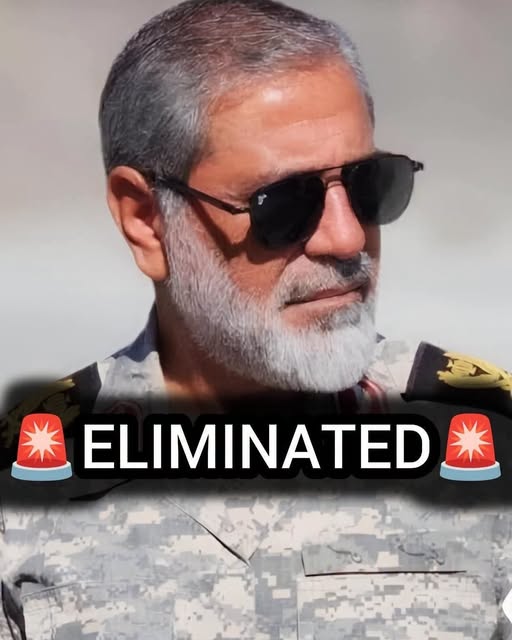
IRGC Commander Hossein Zarifi Killed in Clashes in Southeastern Iran
A senior commander of Iran’s Islamic Revolutionary Guard Corps has been killed during armed clashes in southeastern Iran, according to Iranian authorities and multiple reports from regional and international news organizations.
Brigadier General Hossein Zarifi, identified as the commander of the IRGC’s Shahid Sajjad Operations Base in Saravan, was killed during fighting in Sistan and Baluchestan province on September 23, 2026. The incident took place in the Jihadabad area of Saravan, a region near Iran’s border with Pakistan that has experienced recurring clashes involving Iranian security forces and armed opposition groups.
The development quickly spread across social media, where posts described Zarifi as having been “eliminated” by armed Iranians. While that wording has been widely circulated online, available reporting provides a more detailed account: Zarifi was killed during an armed confrontation involving Iranian security forces and an armed group. The circumstances surrounding the clash have been described differently by Iranian authorities and local sources.
According to the IRGC, Zarifi died during what it described as an operation carried out by forces from the Sajjad base in the Saravan area. Iranian authorities characterized the opposing fighters as an armed or “enemy-backed” militant group. The IRGC also said security forces had been conducting an operation against an armed cell in the area.
Local reporting offered additional details about the fighting.
The National reported that heavy gunfire was heard in the Jihadabad area and that fighting continued around Saravan. The newspaper reported that Zarifi was killed while participating in an operation against an armed group and identified him as the head of the IRGC’s Shahid Sajjad base in the region.
The location is significant.
Sistan and Baluchestan is one of Iran’s most troubled provinces from a security perspective. It borders Pakistan and Afghanistan and has experienced repeated attacks, clashes and insurgent activity. Various armed groups have operated in the region, while Iranian security forces have maintained a substantial presence there.
The province is also home to a large Baluch population and has experienced longstanding political, economic and security tensions.
Reports about the September fighting indicate that the confrontation was serious. IranWire reported that Zarifi was killed during armed clashes and that Ahmad Harati Zeraati, described as an intelligence official associated with the Sajjad operational base, was also killed. The same report cited local sources saying that at least 13 military and security personnel were wounded.
Other reports similarly described a prolonged firefight.
Shafaq News reported that the IRGC identified Zarifi as the commander of the Sajjad Operations Base and said he was killed during an operation against an armed group in Sistan and Baluchestan. Iranian authorities said security forces had dismantled an armed cell in the Jihadabad area, killing five members of the cell and arresting others.
The competing descriptions of the incident illustrate why headlines about the event can be misleading when stripped of context.
A social-media post may describe the incident as armed Iranians “eliminating” a senior commander. Iranian official statements, by contrast, describe a security operation against militants. Local sources provide another perspective on how the fighting unfolded.
The underlying fact that appears consistently across the available reporting is that Zarifi died in the fighting.
His death is significant because he was not an ordinary member of Iran’s security forces. He held a senior command position at the Shahid Sajjad operational headquarters, which is responsible for security operations in the Saravan area.
The IRGC is one of Iran’s most powerful military and political institutions. Its commanders have played important roles in domestic security, regional operations and Iran’s broader national-security structure.
The death of a senior commander in a firefight inside Iran therefore attracts considerable attention, particularly when it occurs in a region where armed opposition groups have repeatedly challenged government forces.
The incident also highlights the continuing security problems in Sistan and Baluchestan.
The region has experienced attacks involving groups opposed to the Iranian government, including Jaish al-Adl, an armed Sunni Baluch organization that has previously claimed responsibility for attacks against Iranian security personnel. Shafaq News noted that the province has faced recurring unrest and attacks targeting Iranian security forces and the IRGC.
Iranian officials have repeatedly accused foreign governments of supporting militant activity in the province. Those allegations are politically sensitive and have been disputed, so they should be distinguished from independently established facts about individual attacks.
The September 23 clash appears to have involved a substantial deployment of Iranian security forces.
According to reports, the operation involved elements of the IRGC as well as other Iranian security organizations. The fighting reportedly resulted in multiple casualties, including senior personnel.
The death of Zarifi therefore represents a significant loss for the local IRGC command structure.
It also demonstrates the risks faced by Iranian security personnel operating in a province where armed confrontations can erupt suddenly.
For residents of Saravan and surrounding communities, however, the incident represents more than the death of a military commander. The continuing presence of armed groups and security operations affects civilians who live in the region. Prolonged gun battles can disrupt daily life, create fear and restrict movement.
Information from conflict zones can also be difficult to verify immediately.
Social-media accounts frequently publish dramatic claims before independent journalists have access to the area. Names may be misspelled, military positions may be inaccurately translated and descriptions of who initiated an attack may differ significantly.
That appears to be relevant to the circulating claim about Zarifi.
The viral wording refers to the “Sajjad Sarvan Headquarters,” while established reports identify Zarifi as commander of the Shahid Sajjad Operations Base in Saravan. The basic identification is supported by several sources, but the exact circumstances of the engagement remain dependent on accounts from Iranian authorities and local reporting.
This distinction is important when reporting deaths connected to armed conflict.
The confirmed element is that Brigadier General Hossein Zarifi was killed during clashes in Saravan. The broader descriptions of the operation, the identity and objectives of the opposing fighters, and the precise sequence of events should be treated according to their respective sources.
The incident is likely to receive continued attention because of Zarifi’s rank and the location of the fighting.
Sistan and Baluchestan remains a strategically sensitive part of Iran. Its proximity to Pakistan, longstanding local grievances and presence of armed groups make security operations particularly consequential.
For the IRGC, losing a regional commander during an armed confrontation underscores the challenges facing its forces in the province.
For observers, the episode provides another example of the continuing instability in southeastern Iran.
And for social-media audiences, it is a reminder that dramatic breaking-news claims often require additional context.
The phrase “eliminated” may dominate viral posts, but the more complete picture is that a senior IRGC commander was killed during an armed clash in Saravan on September 23. Iranian authorities acknowledged his death, while reports from outside official channels provided additional details about the fighting and casualties.
As more information becomes available, the exact circumstances of the confrontation may become clearer.
For now, the central facts remain that Brigadier General Hossein Zarifi commanded the Shahid Sajjad operational base in Saravan, that he was killed during fighting in Sistan and Baluchestan, and that the incident occurred amid continuing tensions between Iranian security forces and armed groups operating in the region.
The episode adds another serious incident to the long-running security conflict in southeastern Iran and demonstrates how quickly developments in the region can become international news.